Sponsored

How long to wait before waxing?

AZ_Ryan

Well-Known Member
Joined
May 31, 2016
Threads
32
Messages
3,402
Reaction score
4,670
Location
Arizona
Vehicle(s)
2024 GT Premium
And Factory Ferrari doesn't know how to detail their cars. yeah... got it. You're smarter, more educated, and more informed than they. You should apply for a job there!
And you should take a detail class and stop being a snowflake ❄.
Sponsored


OldCoastie

Well-Known Member
Joined
Dec 12, 2025
Threads
17
Messages
214
Reaction score
313
Location
Kissimmee,Fl
Vehicle(s)
2020 Cadillac XT4, 2026 Mustang GT Premium Convertible, Race Red
I highly recommend using a Carnauba wax, hand applied and hand removed for the first time. THis wax is a very hard wax that give a very reflective shine, and protects for over three months. Once you put a nice coat on, finish it with a mist. Use a nice cloth applicator, and micro clothes to remove and another very soft and plush micro cloth for final polish. YOU CANNOT put ceramic over Carnauba, but can put Canaub over ceramic. I stated in previous post I found the best is Pinnacle Products. I have been using this brand for over 20 years and have MANY awards at car shows over the years. STAY AWAY from Silicone base waxes, not good in hot sunshine, can bake to the paint surface. So it is very safe to say, Carnauba wax is more for a short term fix, and ceramic is for a much longer fix.... Many professional detailers actually use both, apply ceramic coating for protection, and apply Carnauba wax on top of the ceramic for that extra gloss before shows.
 

AZ_Ryan

Well-Known Member
Joined
May 31, 2016
Threads
32
Messages
3,402
Reaction score
4,670
Location
Arizona
Vehicle(s)
2024 GT Premium
I highly recommend using a Carnauba wax, hand applied and hand removed for the first time. THis wax is a very hard wax that give a very reflective shine, and protects for over three months. Once you put a nice coat on, finish it with a mist. Use a nice cloth applicator, and micro clothes to remove and another very soft and plush micro cloth for final polish. YOU CANNOT put ceramic over Carnauba, but can put Canaub over ceramic. I stated in previous post I found the best is Pinnacle Products. I have been using this brand for over 20 years and have MANY awards at car shows over the years. STAY AWAY from Silicone base waxes, not good in hot sunshine, can bake to the paint surface. So it is very safe to say, Carnauba wax is more for a short term fix, and ceramic is for a much longer fix.... Many professional detailers actually use both, apply ceramic coating for protection, and apply Carnauba wax on top of the ceramic for that extra gloss before shows.
Now you're talking. 😎
 

DFB5.0

Well-Known Member
Joined
Mar 15, 2017
Threads
38
Messages
1,460
Reaction score
2,040
Location
Australia
Vehicle(s)
Mustang GT Fastback


OldCoastie

Well-Known Member
Joined
Dec 12, 2025
Threads
17
Messages
214
Reaction score
313
Location
Kissimmee,Fl
Vehicle(s)
2020 Cadillac XT4, 2026 Mustang GT Premium Convertible, Race Red
So what did i learn from this post? Person asking for advice was provided several options, but what does a car wash have to do with how long before you can wax/polish a new car? Hostilities exchanged on subject has nothing to do with wax/polishing a new car. Focus on the questions and provide what is asked for. So lets just try to get along, please. We all share the same passion, but lets try to help the person out, and just answer the question asked....CHEERS ALL.
 

Trella

Well-Known Member
Joined
Apr 29, 2025
Threads
20
Messages
110
Reaction score
109
Location
Rotonda Florida / From Chicago
Vehicle(s)
2024 Mustang GT Premium RTR Spec 2 / 2018 Mustang GT Premium / 2018 F-150 Sport
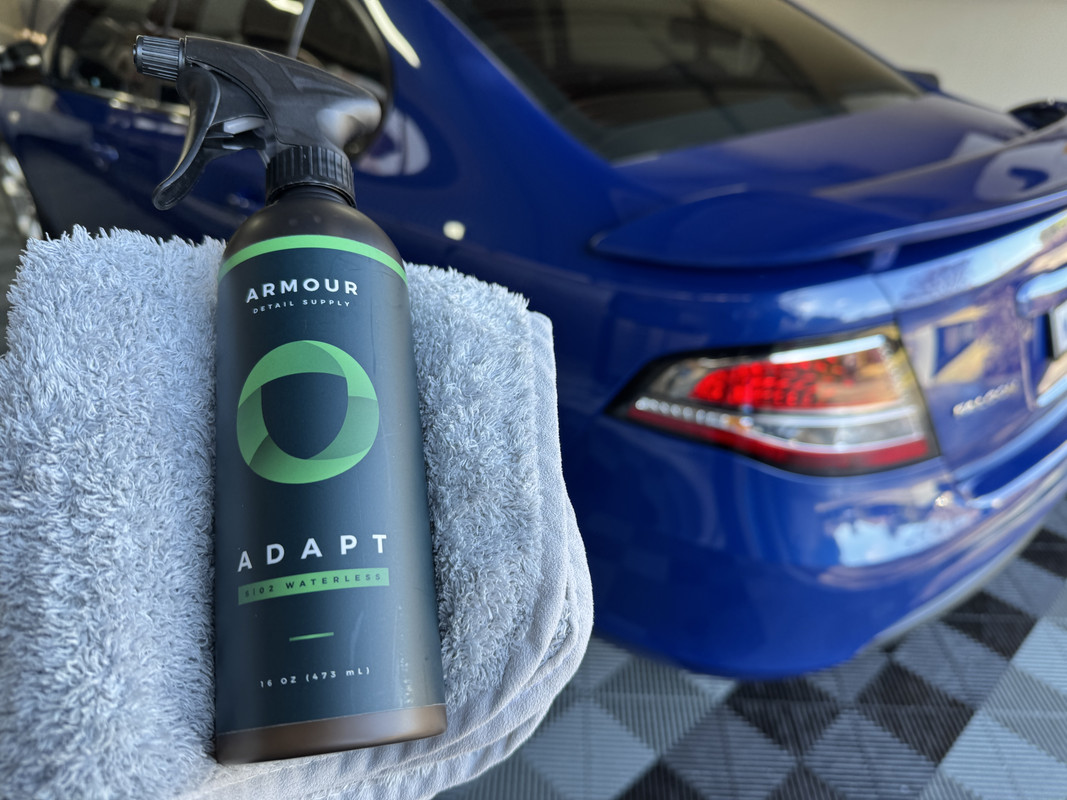
That's what I initially thought. Then one day my car detailer (who works for Ferrari) was doing my 488GTB and this is what he was using. The stuff is amazing. There is something in it that coats the dirt particles in a way they don't scratch the paint... at all. zero. And it puts a light coat of wax on the car at the same time. You can feel it. Just spray on, wipe off. Dirt goes to the rag (I use costco white terry cloth rags...). Will not scratch the paint even on a filthy car. I use it also on the headlights/tail lights, and even the black trim (splitter/diffuser/side skirts). No white residue either. Use it on the wheels (rims) too. I ran out and tried a couple of other brands that claim to do the same thing but they don't. This stuff is like magic. I rarely go to car washes any more because of this. You will love it
Thanks for getting back to me, I'll give it a shot. Take Care.
 

Garcia172

Well-Known Member
Joined
Jul 20, 2025
Threads
7
Messages
205
Reaction score
115
Location
Florida
Vehicle(s)
S650

AZ_Ryan

Well-Known Member
Joined
May 31, 2016
Threads
32
Messages
3,402
Reaction score
4,670
Location
Arizona
Vehicle(s)
2024 GT Premium
So what did i learn from this post? Person asking for advice was provided several options, but what does a car wash have to do with how long before you can wax/polish a new car? Hostilities exchanged on subject has nothing to do with wax/polishing a new car. Focus on the questions and provide what is asked for. So lets just try to get along, please. We all share the same passion, but lets try to help the person out, and just answer the question asked....CHEERS ALL.
See post #28

"@tankcj - to answer your original question, factory baked finishes can be waxed right away. Spray waxes are a decent short term product for a finish that has already been sealed or treated. By themselves they will look shiney, but won't last long or be that effective in protection.👍🏻"
 

Ryunker

Well-Known Member
Joined
Apr 2, 2023
Threads
21
Messages
589
Reaction score
728
Location
Madison South Dakota
Vehicle(s)
2013 convertible, 1971 Mach1, 2024 DH 700A
Anyone know if there is a waiting period (for paint cure) before waxing?

i ordered a GT in California and will be driving it home to AZ . Just did the same route yesterday and the bugs were pretty bad. I’d like to get a quick (spray) coat of wax on before heading back to make the cleanup a little easier.
This thread kinda got side tracked. Did you get your answer? I got my '24 in February and measured the paint thickness every month. It was into September before the finish stopped shrinking on my car.

The real correct answer is the paint is cured when it stops shrinking (different everywhere). Back in the 80's I was a painter and the firm answer was "a month". Older and wiser I am now.

Wax it after the paint is cured. That being said, many people ceramic coat their cars upon delivery. So I think about that often and ask myself, with ceramic being so hard, what happens when the paint cures and shrinks? I really have no answer. I kept track of mine for the reason to know when to do the paint repair and ceramic after it is cured. Ended up doing the paint correction followed by carnauba was as I prefer that look over ceramic coatings. The ceramic to me looks fake glossy and the good old wax has depth along with much more work, effort and maintenance.
 
OP
OP
tankcj

tankcj

Well-Known Member
Joined
Oct 20, 2024
Threads
12
Messages
92
Reaction score
159
Location
Lake Havasu City, AZ
Vehicle(s)
2017 Jeep Grand Cherokee, 2026 Mustang GT.
This thread kinda got side tracked. Did you get your answer? I got my '24 in February and measured the paint thickness every month. It was into September before the finish stopped shrinking on my car.

The real correct answer is the paint is cured when it stops shrinking (different everywhere). Back in the 80's I was a painter and the firm answer was "a month". Older and wiser I am now.

Wax it after the paint is cured. That being said, many people ceramic coat their cars upon delivery. So I think about that often and ask myself, with ceramic being so hard, what happens when the paint cures and shrinks? I really have no answer. I kept track of mine for the reason to know when to do the paint repair and ceramic after it is cured. Ended up doing the paint correction followed by carnauba was as I prefer that look over ceramic coatings. The ceramic to me looks fake glossy and the good old wax has depth along with much more work, effort and maintenance.
actually, most of the stuff that I found on the Internet and on this post mention that you can wax right away because of the high heat that the paint is baked at the factory. I’m surprised to hear that your paint was shrinking all the way from February to September. In any case, I’m gonna go ahead and apply a spray wax just so that when I get home, the bugs will wash off a little easier. And I’m only gonna do the front of the car.
 

AZ_Ryan

Well-Known Member
Joined
May 31, 2016
Threads
32
Messages
3,402
Reaction score
4,670
Location
Arizona
Vehicle(s)
2024 GT Premium
This thread kinda got side tracked. Did you get your answer? I got my '24 in February and measured the paint thickness every month. It was into September before the finish stopped shrinking on my car.

The real correct answer is the paint is cured when it stops shrinking (different everywhere). Back in the 80's I was a painter and the firm answer was "a month". Older and wiser I am now.

Wax it after the paint is cured. That being said, many people ceramic coat their cars upon delivery. So I think about that often and ask myself, with ceramic being so hard, what happens when the paint cures and shrinks? I really have no answer. I kept track of mine for the reason to know when to do the paint repair and ceramic after it is cured. Ended up doing the paint correction followed by carnauba was as I prefer that look over ceramic coatings. The ceramic to me looks fake glossy and the good old wax has depth along with much more work, effort and maintenance.
Modern car paint is baked and cured at the factory. It should not "shrink" over several months after. I can not explain the difference in your paint depth readings over several months months.

Ceramic coat and wax upon delivery of a new car is common. Ive never never heard of an issue doing so. You could maybe make an argument for waiting on Ceramic for a short period, but wax is totally fine. Of course non factory paint jobs are a totally different thing and do require waiting period (usually 3 months). Also keep in mind there are newer Ceramic coatings that are flexible. Usually they are used on top of PPF.
 

OldCoastie

Well-Known Member
Joined
Dec 12, 2025
Threads
17
Messages
214
Reaction score
313
Location
Kissimmee,Fl
Vehicle(s)
2020 Cadillac XT4, 2026 Mustang GT Premium Convertible, Race Red
This thread kinda got side tracked. Did you get your answer? I got my '24 in February and measured the paint thickness every month. It was into September before the finish stopped shrinking on my car.

The real correct answer is the paint is cured when it stops shrinking (different everywhere). Back in the 80's I was a painter and the firm answer was "a month". Older and wiser I am now.

Wax it after the paint is cured. That being said, many people ceramic coat their cars upon delivery. So I think about that often and ask myself, with ceramic being so hard, what happens when the paint cures and shrinks? I really have no answer. I kept track of mine for the reason to know when to do the paint repair and ceramic after it is cured. Ended up doing the paint correction followed by carnauba was as I prefer that look over ceramic coatings. The ceramic to me looks fake whiney and the hood old wax has depth along with much more work, effort and maintenance.
Since you were a painter back in the 80's you had to be painting i Solvent-based enamel or lacquer paints, that contained high VOC (volatile organic compounds) content, that many cars still used single-stage paint (color and gloss in one layer), as water base urethanes were not really used at shops yet.

The most common types used in the 80's were Acrylic lacquer, Acrylic enamel and after 1988 the newer urethane paints with clear coats were introduced. So these paints dried mostly by solvent evaporation resulting in a much softer base that tended to fade and oxidized much faster then todays waterbased paints. Thus you are correct to delay waxing for over a 30 day period as paint dried by evaporation only.

Today's world the Modern Paint Systems have advanced since the first urethane base being introduced on or about 1982 by DuPont. Today Ford, GM, Chrysler and almost all manufacturers use the new Water-based basecoat Urethane and clearcoat paints in layers at the factory. These system layers are: Electrocoat (anti-corrosion) on the bear metal lalyers, speciality developed primers surface with adhesion additives, Waterborne basecoat (color), 2K urethane clearcoat

So the advantage to the paints used today as opposed to the paints used in the 1980 when you where a painter the new paints contain a much lower VOC emissions, higher durability, and much etter color effects (metallic, pearl, tri-coat).

1980's Clearcoat paints existed early in the 80's in the shops but were not widely used until environmental laws made all lacquer, enamels and oil based or solvent base paints illegal forcing the use of water base urethans, and clearcoat did not exist at first. Yes, illegal but some of these restrictions were lifted in around 2004 for limited use. So when used back then both factory and shops, they were Single stage paint, with NO protetive clearcoats. This is why you say many cars from that era the paint would chalk or fade or badly oxidize which was a really bad problem.

As a result many of the major paint makers went back to develop what we are using today.

THIS IS THE POINT OF WHY YOU CAN WAX OR POLISH TODAYS CARS THE DAY YOU TAKE DELIVERY as opposed to the 1980's era..... The Two-component (2K) urethane clearcoat employs Chemically hardened with catalysts that once applied has full , UV protection, Chemical resistance, Scratch resistance and Long-term gloss retention. So the modern clearcoat can last 15–25 years with proper care.

So the curing process at the factory as opposed to the 1980 shop curing is what allows the as unlike shop paints, the factory curing process are the car bodies go through large industrial bake ovens with temperatures often 275–320°F (135–160°C), and the entire metal body is baked, allowing very hard curing.

The best of best Body Shop, Cars are usually baked around 140–180°F (60–82°C) in a booth, higher heat could damage plastics, electronics, trim already installed and Clearcoat cures chemically (catalyzed) more than heat cured.

✔ Result: Factory paint often ends up slightly harder and more durable.

Sorry for being so long as much of the paint process is not fully understood, especiall the process between old and new paints, and the process used today at both the shops and the factory, this is wny you can wax and polish the day you buy the car.
 
Last edited:

OldCoastie

Well-Known Member
Joined
Dec 12, 2025
Threads
17
Messages
214
Reaction score
313
Location
Kissimmee,Fl
Vehicle(s)
2020 Cadillac XT4, 2026 Mustang GT Premium Convertible, Race Red
Oh, when I was in the Corvette Camaro world my best friend had a world class shop and was contracted by the Corvette factory to find a solution to the bad peel issued and thus Corvette rebuild and entire new paint shop. I worked with him to restore Corvettes and learned so much about old vs new paints, nothing is perfect but it is better. He is sill up in Virginia, and I miss working with him so much. Did learn alot about body work and painting....
 

Ryunker

Well-Known Member
Joined
Apr 2, 2023
Threads
21
Messages
589
Reaction score
728
Location
Madison South Dakota
Vehicle(s)
2013 convertible, 1971 Mach1, 2024 DH 700A
Since you were a painter back in the 80's you had to be painting i Solvent-based enamel or lacquer paints, that contained high VOC (volatile organic compounds) content, that many cars still used single-stage paint (color and gloss in one layer), as water base urethanes were not really used at shops yet.

The most common types used in the 80's were Acrylic lacquer, Acrylic enamel and after 1988 the newer urethane paints with clear coats were introduced. So these paints dried mostly by solvent evaporation resulting in a much softer base that tended to fade and oxidized much faster then todays waterbased paints. Thus you are correct to delay waxing for over a 30 day period as paint dried by evaporation only.

Today's world the Modern Paint Systems have advanced since the first urethane base being introduced on or about 1982 by DuPont. Today Ford, GM, Chrysler and almost all manufacturers use the new Water-based basecoat Urethane and clearcoat paints in layers at the factory. These system layers are: Electrocoat (anti-corrosion) on the bear metal lalyers, speciality developed primers surface with adhesion additives, Waterborne basecoat (color), 2K urethane clearcoat

So the advantage to the paints used today as opposed to the paints used in the 1980 when you where a painter the new paints contain a much lower VOC emissions, higher durability, and much etter color effects (metallic, pearl, tri-coat).

1980's Clearcoat paints existed early in the 80's in the shops but were not widely used until environmental laws made all lacquer, enamels and oil based or solvent base paints illegal forcing the use of water base urethans, and clearcoat did not exist at first. Yes, illegal but some of these restrictions were lifted in around 2004 for limited use. So when used back then both factory and shops, they were Single stage paint, with NO protetive clearcoats. This is why you say many cars from that era the paint would chalk or fade or badly oxidize which was a really bad problem.

As a result many of the major paint makers went back to develop what we are using today.

THIS IS THE POINT OF WHY YOU CAN WAX OR POLISH TODAYS CARS THE DAY YOU TAKE DELIVERY as opposed to the 1980's era..... The Two-component (2K) urethane clearcoat employs Chemically hardened with catalysts that once applied has full , UV protection, Chemical resistance, Scratch resistance and Long-term gloss retention. So the modern clearcoat can last 15–25 years with proper care.

So the curing process at the factory as opposed to the 1980 shop curing is what allows the as unlike shop paints, the factory curing process are the car bodies go through large industrial bake ovens with temperatures often 275–320°F (135–160°C), and the entire metal body is baked, allowing very hard curing.

The best of best Body Shop, Cars are usually baked around 140–180°F (60–82°C) in a booth, higher heat could damage plastics, electronics, trim already installed and Clearcoat cures chemically (catalyzed) more than heat cured.

✔ Result: Factory paint often ends up slightly harder and more durable.

Sorry for being so long as much of the paint process is not fully understood, especiall the process between old and new paints, and the process used today at both the shops and the factory, this is wny you can wax and polish the day you buy the car.
Your reply is very much welcomed and based in facts. Your knowledge here is very good. One question why did the paint take so long to fully cure on my '24?

It is hard to compare to other cars as many folks do not have knowledge on how to measure the thickness.
Sponsored


Top