Sponsored

New Motor

bountifulgoose

Well-Known Member
Joined
Mar 22, 2025
Threads
0
Messages
201
Reaction score
227
Location
arizona
Vehicle(s)
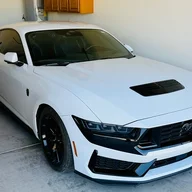
2025 mustang dark horse, 25 f150 Raptor
OK, we may be talking about different engines. The one's I was referring to were late 80's, early 90's
Those were nice, practically bullet proof engines. The one I was talking about was a joint venture between ford and mazda that was introduced in 2007 -2013 in the mazda speed 3 and 2006-2007 in the mazda speed 6.
Sponsored


LouG

Well-Known Member
Joined
Mar 11, 2025
Threads
33
Messages
2,586
Reaction score
2,983
Location
New Zealand
Vehicle(s)
2025 Mustang GT
Those were nice, practically bullet proof engines. The one I was talking about was a joint venture between ford and mazda that was introduced in 2007 -2013 in the mazda speed 3 and 2006-2007 in the mazda speed 6.
They were apparently, 300+ rwhp in a 1000kg MX5 is not to be sneezed at.
 

Deleted member 64156

Guest
Thanks for all the feedback. I can say that the dealer rep told me that they never saw a failure specifically like I had, and that since ā€˜24s came out they have had two other 2.3 Ecoboost 24/25 motors let go. Out of how many I have no idea. But he also told me that all day everyday they are doing blown motors and transmissions on F series. Ecoboost and 5.0 he said. How much truth lies here who knows, but when I went to the lot to empty out my car after the diagnosis, it was full of late model F series I would assume still under warranty.

Related my GF’s VW Taos just had a head gasket repair at 30K miles, thankfully under warranty, and a friend just did a GMC tranny out of warranty- cost big $. All in all very disappointing.

I remember in the 60’s a lot of times engines were burning oil by 50k miles but I can’t remember anybody I knew having one just blow unless it was gross beating on it. I knew guys who purposely ran without air cleaners even. Where I lived cars rusted out before engines quit.

What’s sad is i love driving this Mustang, the power, handling, steering, etc., it’s just a blast. So I guess I’ll just try to treat it right, enjoy, and hope for the best.

I’ve put 250 miles on my new motor now, runs fine, keeping eye on fluids, fingers crossed!
Keep an eye on the oil pressure if you can pull up auxiliary gauges. I noticed 15-20 psi on the digital analog gauge at idle. I had over 60% oil life left, but it suddenly dropped to 0% after a service. I changed the oil immediately, and the pressure came back to a normal range of about 35psi at idle. The oil life reading available on the FordPass app is a complex algorithm that monitors driving habits, engine temperatures, idle time, and other parameters to indicate when to change the oil. It also reads oil pressure in its calculation, so it doesn't directly monitor viscosity, but alerts us with just "hey dummy, it's time to change the oil." Low oil pressure can cause Aeration(bubbles in the oil) from fast-moving parts, like the crankshaft. Low viscosity makes it easier for bubbles to stabilize in the oil through aeration. This happened to my Chevy 427 super stock race boat engine at 7,400 RPM. That motor went Kablammo! Thank god for the whirlaway V-Drive.
 
Last edited by a moderator:

Deleted member 64156

Guest
Keep an eye on the oil pressure if you can pull up auxiliary gauges. I noticed 15-20 psi on the digital analog gauge at idle. I had over 60% oil life left, but it suddenly dropped to 0% after a service. I changed the oil immediately, and the pressure came back to a normal range of about 35psi at idle. The oil life reading available on the FordPass app is a complex algorithm that monitors driving habits, engine temperatures, idle time, and other parameters to indicate when to change the oil. It also reads oil pressure in its calculation, so it doesn't directly monitor viscosity, but alerts us with just "hey dummy, it's time to change the oil." Low oil pressure can cause Aeration(bubbles in the oil) from fast-moving parts, like the crankshaft. Low viscosity makes it easier for bubbles to stabilize in the oil through aeration. This happened to my Chevy 427 super stock race boat engine at 7,400 RPM. That motor went Kablammo! Thank god for the whirlaway V-Drive.
Windage is the term created by the assembled crank and rods moving through the oil vapor and air resistance within the crankcase. The drag creates aeration. Also, overfilling your oil will do the same when the crank whips up the oil in the pan by contact. The effect is more dramatic the higher the RPMs. The circular impact of parts breaking down rapidly increases aeration. A low oil level causes the oil pick-up to suck air during high g's from hard cornering directly. So maintaining the correct level is vital.
 

Deleted member 64156

Guest
Windage is the term created by the assembled crank and rods moving through the oil vapor and air resistance within the crankcase. The drag creates aeration. Also, overfilling your oil will do the same when the crank whips up the oil in the pan by contact. The effect is more dramatic the higher the RPMs. The circular impact of parts breaking down rapidly increases aeration. A low oil level causes the oil pick-up to suck air during high g's from hard cornering directly. So maintaining the correct level is vital.
The Seventh Gen Mustang includes a windage tray to separate the crank assembly from the oil in the oil pan, which can rob horsepower, on both the EcoBoost 2.4 and Coyote 5.0. The Coyote in the Dark Horse enhances the oil system by adding baffles to the oil pan, creating a constant reservoir of oil around the oil pick-up for track use. The standard Coyote in the GT and the EcoBoost lack adequate baffling for track use or hard cornering. Aftermarket oil pans are recommended.


DeluxeStang

Well-Known Member
Joined
Dec 13, 2021
Threads
47
Messages
1,741
Reaction score
2,305
Location
Utah
Vehicle(s)
Explorer
Having a spark plug break and destroy an engine is unusual

Having an ecoboost fail with low mileage and normal use is not

IMHO they are pure garbage and most dealer techs would agree with me.

Longevity and ecoboost are never said in the same sentence
The Ecoboost 3.5 these days is arguably seen as being about as reliable than the 5.0, that wasn't the case for awhile, but I'm talking about newer ones that resolved most or all of the issues the 3.5 had. The 2.7 seems pretty solid, and the 2.0 in newer iterations isn't bad. I've heard the 1.0/1.5 isn't great but most engines with that displacement seem to be problematic across brands.
 

DeluxeStang

Well-Known Member
Joined
Dec 13, 2021
Threads
47
Messages
1,741
Reaction score
2,305
Location
Utah
Vehicle(s)
Explorer
again, ask any Ford dealer tech how many ecoboosts he or she sees with major issues vs a Coyote
To be fair, I think the better question to ask a dealer tech is have Ecoboost engines gotten more reliable as they've received design changes? Most would say yes. You still have horror stories on forums, like we have here, but they exist for basically any vehicle you can find. Hell, I've found a lot of reliability horror stories on tundras and Tacoma's, and yet people say those trucks are unkillable. My truck, a maverick hybrid, has had pretty stellar reliability ratings from day 1, the hybrid 2.5 is probably going in the top 10 most reliable powertrains of any modern vehicle you can buy, it's that good. It's legendary for lasting 500k in escape taxis.


But even then, if you go on maverick forums, you see this issue or that issue. My point is even on very reliable vehicles, you'll see your fair share of horror stories on forums because those forums are a spotlight for those sorts of things. Would I trust certain Ecoboost engines like the 2.3 over the 5.0? No, but writing Ecoboost engines as a whole off is a mistake imo.
 
OP
OP

Jeff Ross

Member
Joined
May 10, 2025
Threads
1
Messages
20
Reaction score
24
Location
El Paso Texas
Vehicle(s)
2024 Ecoboost Premium High
Keep an eye on the oil pressure if you can pull up auxiliary gauges. I noticed 15-20 psi on the digital analog gauge at idle. I had over 60% oil life left, but it suddenly dropped to 0% after a service. I changed the oil immediately, and the pressure came back to a normal range of about 35psi at idle. The oil life reading available on the FordPass app is a complex algorithm that monitors driving habits, engine temperatures, idle time, and other parameters to indicate when to change the oil. It also reads oil pressure in its calculation, so it doesn't directly monitor viscosity, but alerts us with just "hey dummy, it's time to change the oil." Low oil pressure can cause Aeration(bubbles in the oil) from fast-moving parts, like the crankshaft. Low viscosity makes it easier for bubbles to stabilize in the oil through aeration. This happened to my Chevy 427 super stock race boat engine at 7,400 RPM. That motor went Kablammo! Thank god for the whirlaway V-Drive.
So far so good I’ve done over 500 miles on the 2.3 motor and oil and antifreeze levels are unchanged. It runs and sounds exactly like before so I’m hopeful this motor will be OK now. Actually I’m a little amazed that with all the complexities of the new vehicles it seems to be a successful motor transplant.
Back in ā€˜69 we pulled a 348 Chevy off a farmers back lot, the carb was open to rain and snow, and in a Sunday afternoon installed it into my uncles ā€˜65 Impala SS with Powerglide and it was running fine a year later when I left town. No power steering, no AC, no power brakes, just a big motor in a big engine compartment. After about 6 months a motor mount let go, I think there was a recall on that.
Sponsored


Top