DFB5.0
Well-Known Member
- Thread starter
- #1
DFB’s Guide to Trim Restoration and Protection
There are two questions I get asked more than any other. In my horticultural world, it’s “why is my lemon tree not growing”, and in my detailing world, by fair margin I’m constantly asked “what do I use to fix faded black plastic trim?”.
(Actually, working in the nursery, the most asked questions were “where is the toilet” or “where is the cat”, drove me insane. I don't know about you, but I go to the toilet BEFORE I go out, just saying.)

What?
Before going further, there are two different types of black plastic trim. This is important to know as they both require different treatments for enhancement and protection. High chances are, you have a vehicle with both types, such as the current Mustang.

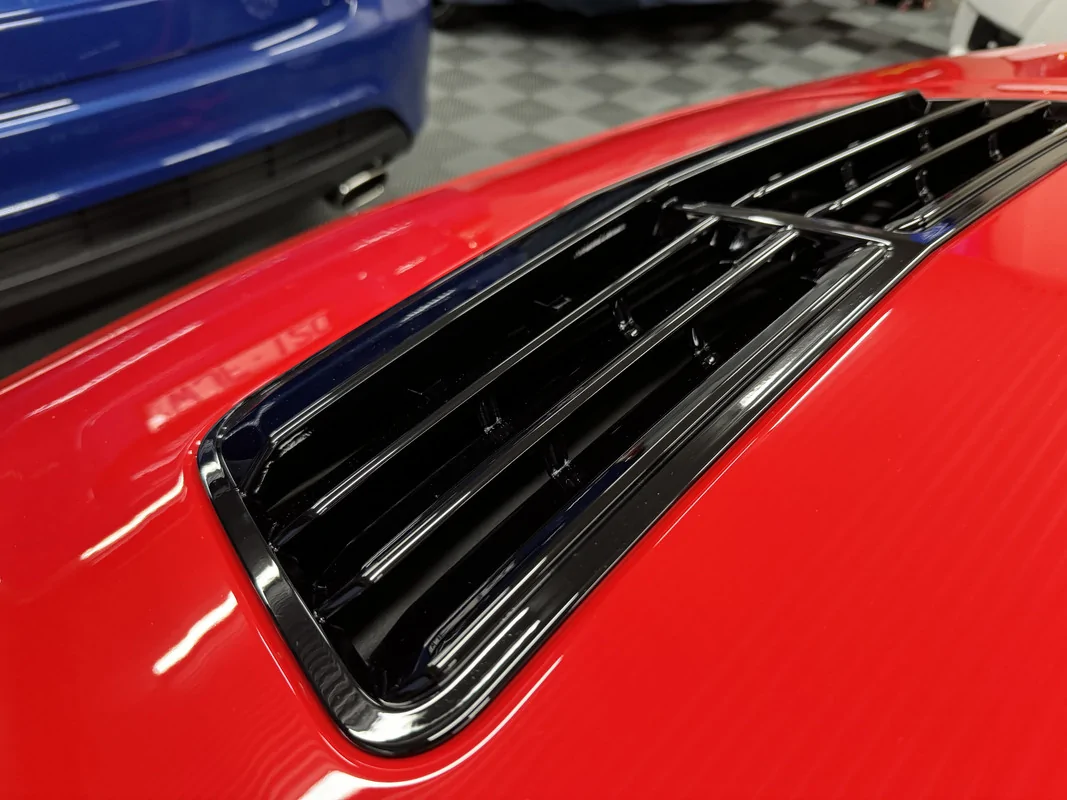
Gloss Black Trim - These materials have become widely used over the last decade as a substitute for chrome, usually as window trims, B-pillar trims, diffuser panels, hood and fender vents, wing mirrors and bumper accents. In simple terms, you are treating these areas as you would paint, so they can be polished and protected in the similar ways.

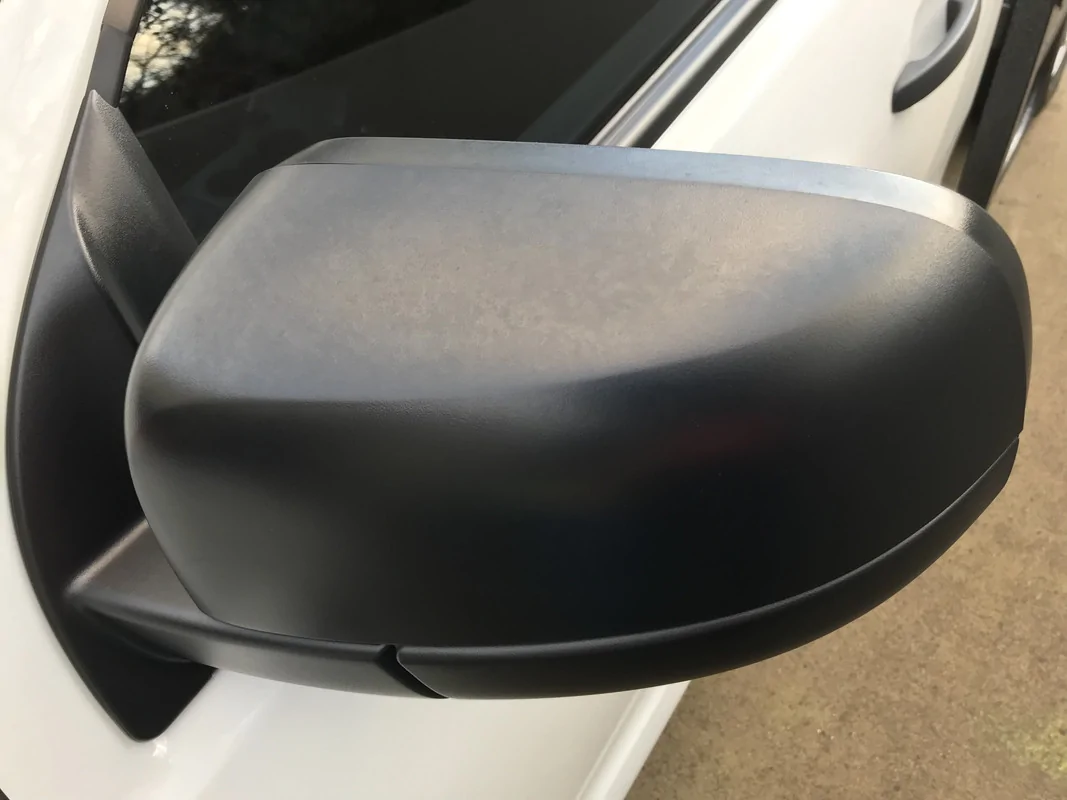
Un-painted Black Plastic – This trim is used as an accent or body extension, think wheel arch flairs, bumper inserts, side skirts and splitters, windscreen scuttle panels, door handles, B-pillar trims, fender vents, and wing mirrors. These materials can be smooth or textured plastic and require very different methods to restore and protect.
For this post, we are focusing on the later, unpainted black plastic.
Why?
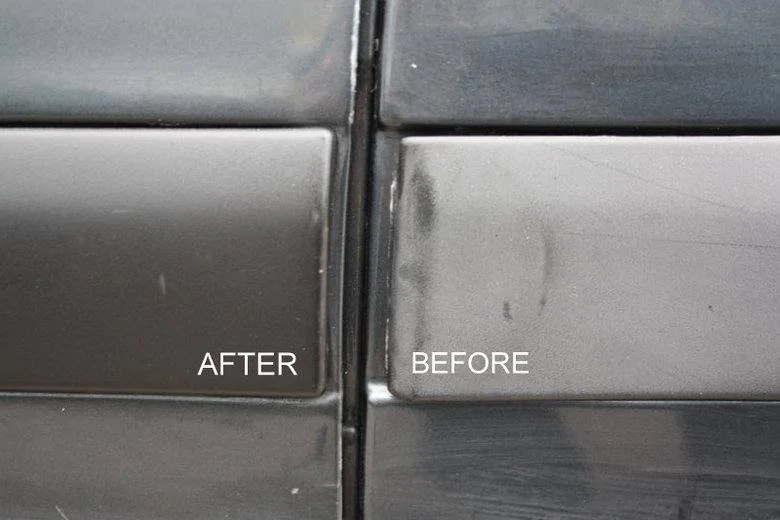
Because these materials are not clear coated, black plastic is vulnerable to UV damage over time. While black plastics have in-built IV blockers, they only last for so long and have nowhere near the UV resistance of a clear coat. That means these areas of the car show age much faster and can really drag down the appearance of the car as a whole.

How?
There are two different paths to follow here -
1. Protecting and maintaining
2. Restoration and maintaining.
Obviously, prevention is the best cure, so let’s cover that first………………………
Trim Protection –
As mentioned, keeping trim protected is easier than having to restore that factory fresh finish. In basic terms, you have three different options when it comes to protecting black plastic.
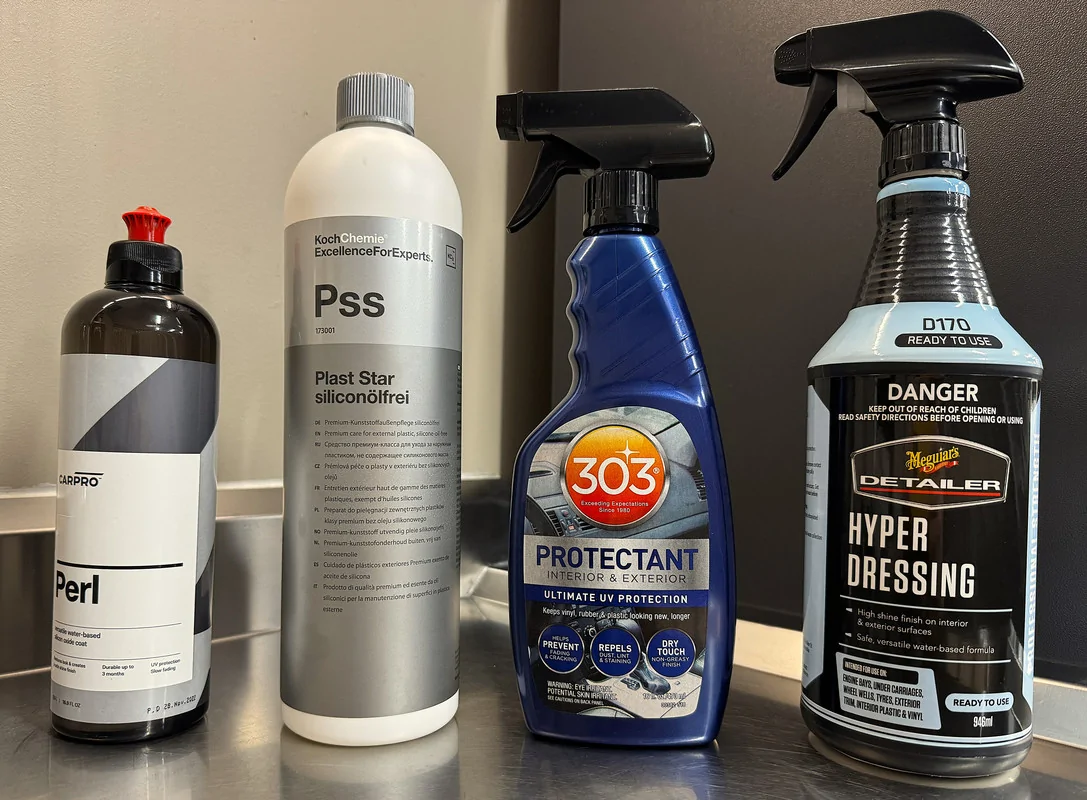
Rubber & Plastic Dressings – These products are water-based dressings that can be used on plastic, vinyl and rubber surfaces inside and outside the vehicle. They require the least preparation and skill to apply, but to get proper UV protection, you need to apply them regularly. Being water based, this means they will degrade quickly when washed or exposed to rain. That’s not to say don’t use them, but just be realistic in what they can achieve and be prepared to apply them after each wash.
Application - Dressings can be applied with microfiber towels or applicators, or even foam blocks.
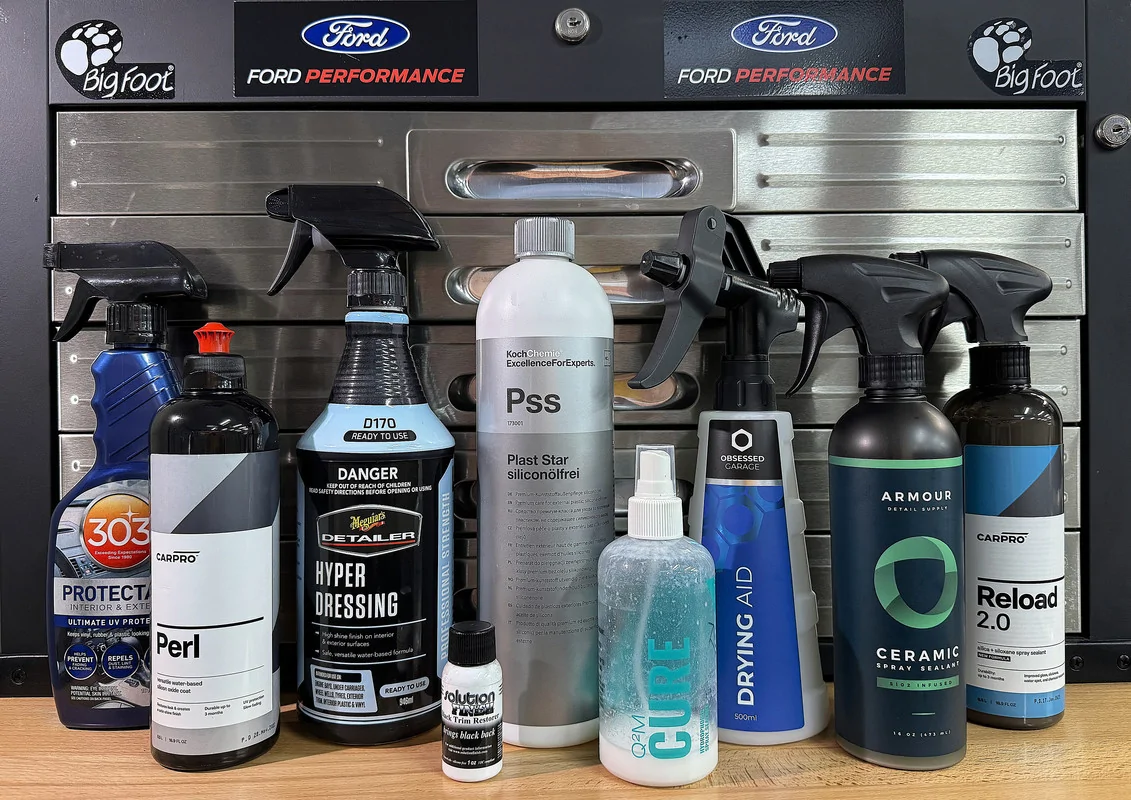
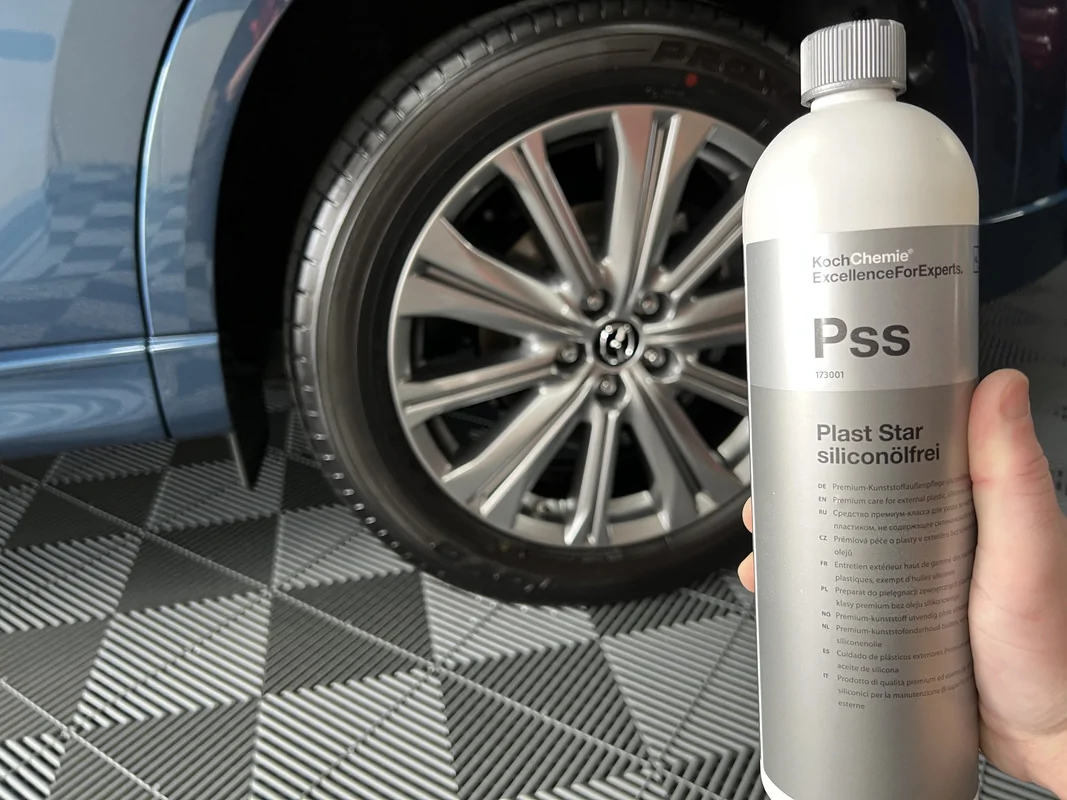
Product Suggestions – 303 Protectant, Carpro Perl, Meguiar’s Hyper Dressing and Koch Chemie PSS
Longevity – Days

Spray Sealants – This may not be an obvious choice, but from experience, I’ve found spray sealants to be a very attractive option here. They are just as easy to apply as a dressing, but much less messy in terms of getting it on surrounding paintwork or glass. And because the product bonds to the plastic, it won’t simply wash off in the rain or next wash. That means you can apply it every few months, rather than every few days. I also appreciate the subtle enhancement a sealant provides, a deep and dark appearance without looking like an oil slick.
Application – A microfiber towel or applicator is best here, apply heavy and lightly buff afterwards.
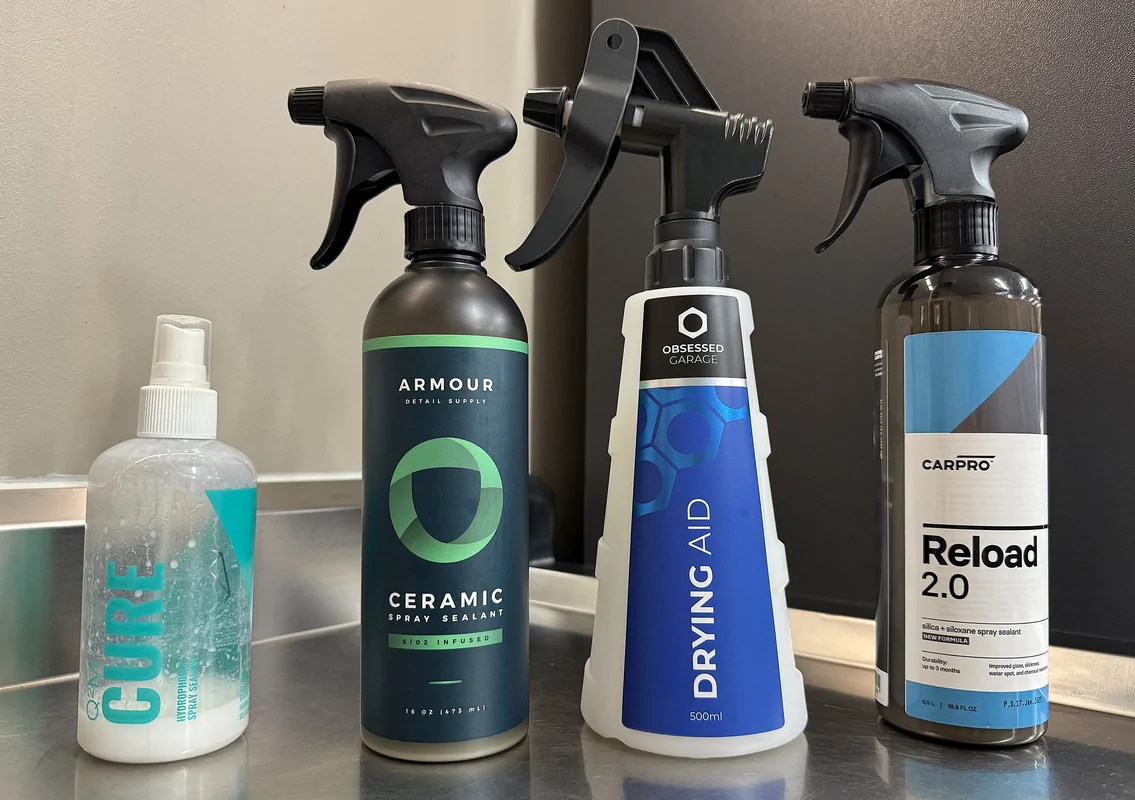
Product Suggestions – Something like Bead Maker or Obsessed Garage Drying Aid are nice for trim, but Carpro Reload is THE winner here. The specific oil/solvent used in Reload is what provides that deep-dark look, while the high Si02 content locks it in and provides UV protection. If you are on the fence, just buy the small 100ml bottle and try it out.
Longevity – Months

Ceramic Coatings – These are going to give the longest durability but require more involvement prep work and application skill. Trim coatings in particular bond to the plastic and become a flexible barrier to UV damage. These products add richness to the plastic, without being glossy or greasy looking. Coatings also have the most restorative ability of the three options in this category.
But………………..the use of these products comes with the most risk. In rare instances, the coating can react badly with the plastic, usually on brand new plastic that hasn’t fully off-gassed and cured. Also, if applied too heavily, you can have the plastic turn chalky white. Unlike paint, you can’t simply polish it off. You have been warned.
Note - If you coat trim, you will be maintaining that coating with a spray sealant, not a dressing.
Application – You need to ensure that the surface is clean and dry before application, so cleaning with APC and a wipe down with a prep solution is crucial. You can then apply the coating with a small microfiber applicator (the Gtechniq, Carpro, Gyeon or Klinn finger mitts would be ideal).
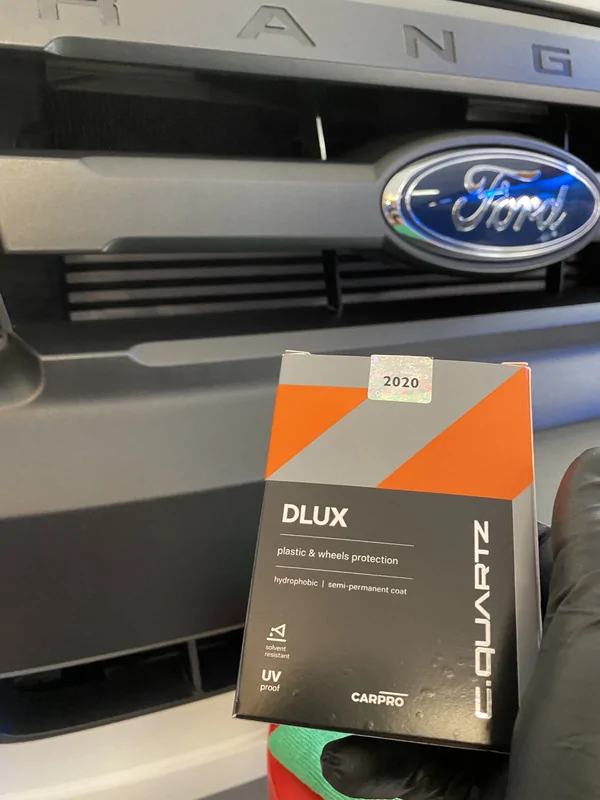
Product Suggestions – Any ceramic paint coating will work here, although products like Gtechniq EXO v5, Carpro DLUX and Gyeon Can Coat EVO are the ones I’d consider.
Longevity - Years


Trim Restoration –
This is where we are trying to reverse the damage already caused by exposure to UV. As per the previous category, you have a few options. In broad terms, the products are the same as above, but their effectiveness will depend on how badly degraded the trim is, and how long you want it to last.
Note – In some cases, a heat gun can be used to bring oils to the surface of the plastic, restoring that black finish. However, do so at your own risk, not all plastics will respond to this method.
Rubber & Plastic Dressings – As per the previous section, a water-based dressing will provide a short-term improvement and will require frequent re-applications. In some cases, I have seen where a dressing won’t actually make an improvement, so it's very dependant of the plastic used by the manufacturer.
Spray Sealants – Sometimes this method works, sometimes it doesn’t. Again, it depends on the plastic, but in most cases, a spray sealant is going to offer the least restorative effect. Worth a try on lightly faded trim.
Application and product selection as above, again Reload for the win.
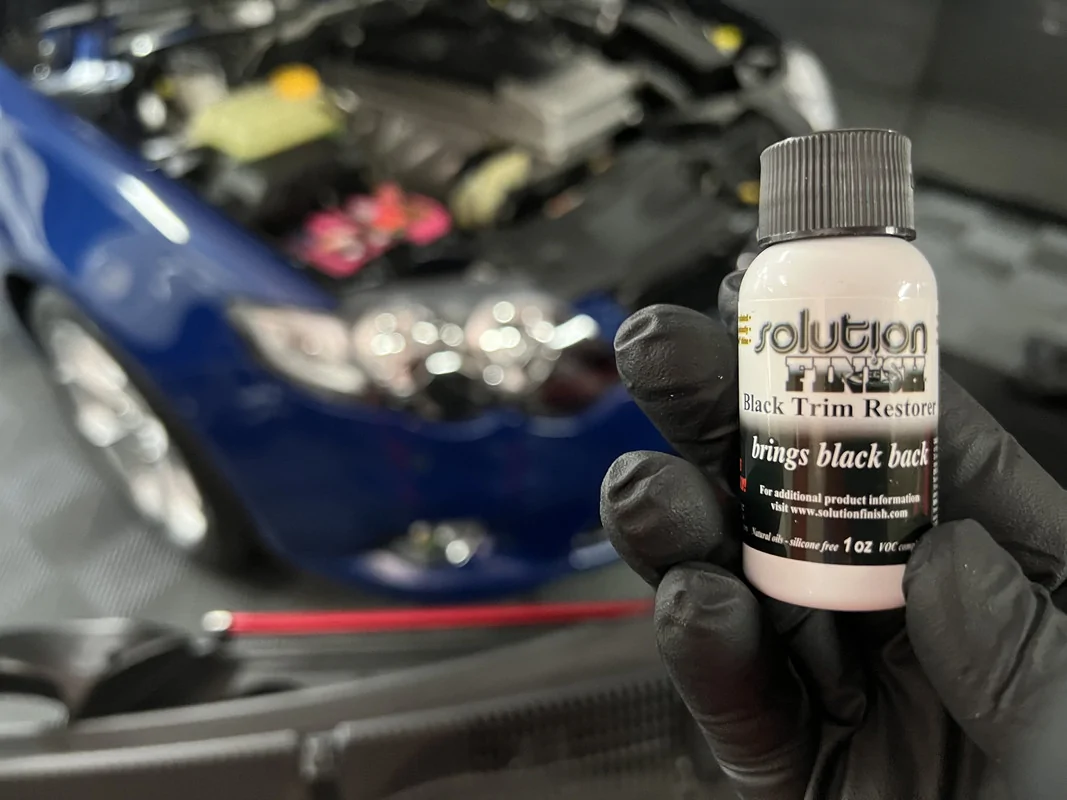
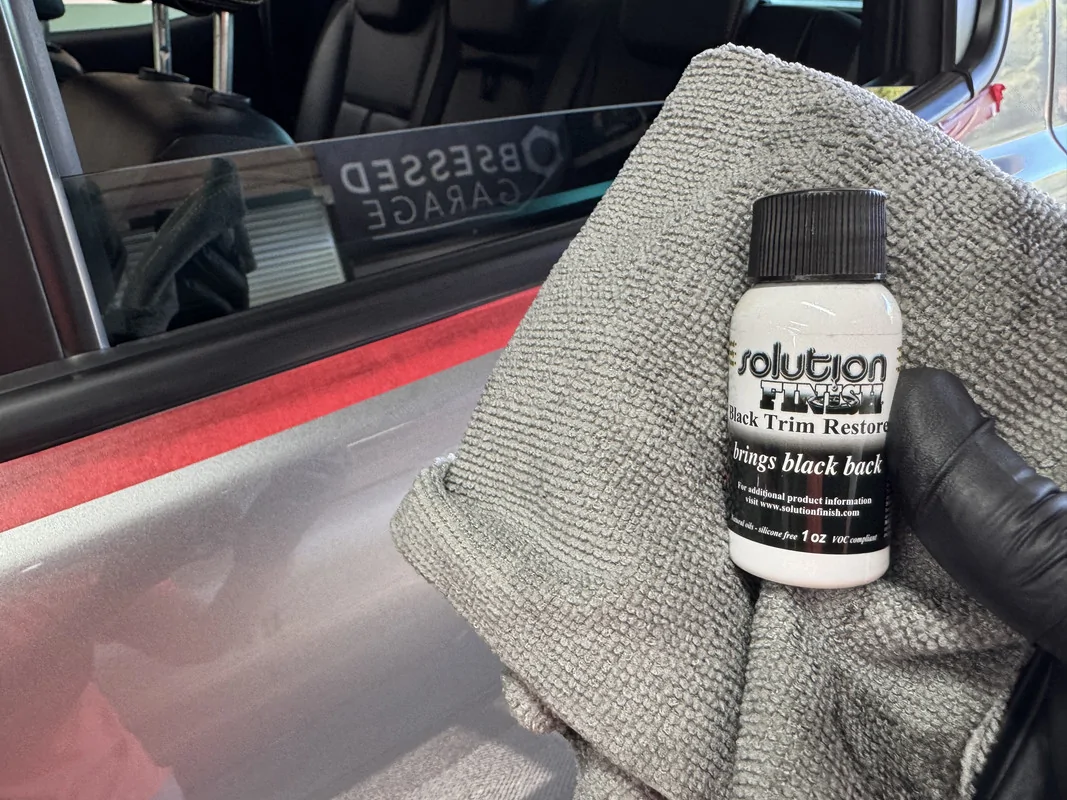
Trim Restoration Dyes – There are few of these on the market, but I would stick with Solution Finish. This is a black dye that soaks into and bonds to the plastic, which can last up to and beyond 12 months. You can prolong and maintain this revived finish with a spray sealant or trim dressing. Solution Finish also sells a sealant called Over The Top.
Application – Be sure to thoroughly clean plastic surfaces with an APC, followed by an IPA wipe down, which Solution Finish suggest using proper IPA and not a prep spray for this role. You may also want to tape the surrounding paint or glass. If you do get Solution Finish on those areas, it’s easily wiped off if still wet, or a little IPA if its dried. I use a small microfiber applicator or sponge, wipe it on and allow to soak in for a few minutes, then wipe any remaining residue with a towel (you will destroy both applicator and towel here).
Longevity – About 12 months, expect longer on garage queens, shorter if not maintained.
Product Suggestions – Solution Finish, which is available in black or grey depending on your trim colour.
Ceramic Coatings – The solvents within a coating can offer a substantial improvement in the appearance of black plastic. For mildly faded trim, a regular paint coating will be fine. However, to revive heavy fading, I would stick with the trim-specific coatings. You can also lock in a product like Solution Finish with a coating, just not the other way around. Like a trim dye, you want to endure the treated surfaces are squeaky clean before application. And as outlined above, there is risk to using a coating, however, you will unlikely run into those risks here due to the age of faded plastic.
Application – Thoroughly clean and dry plastic before application, then wipe down with a prep spray or IPA. Apply the coating with a small microfiber applicator, ensuring to follow the specific directions of your chosen coating. For example, Carpro suggests not leveling DLUX, which is contrary to accepted wisdom.
Longevity – Years (12 - 24 months)
Product Suggestions – Carpro DLUX, Gyeon Trim, Gtechniq C4

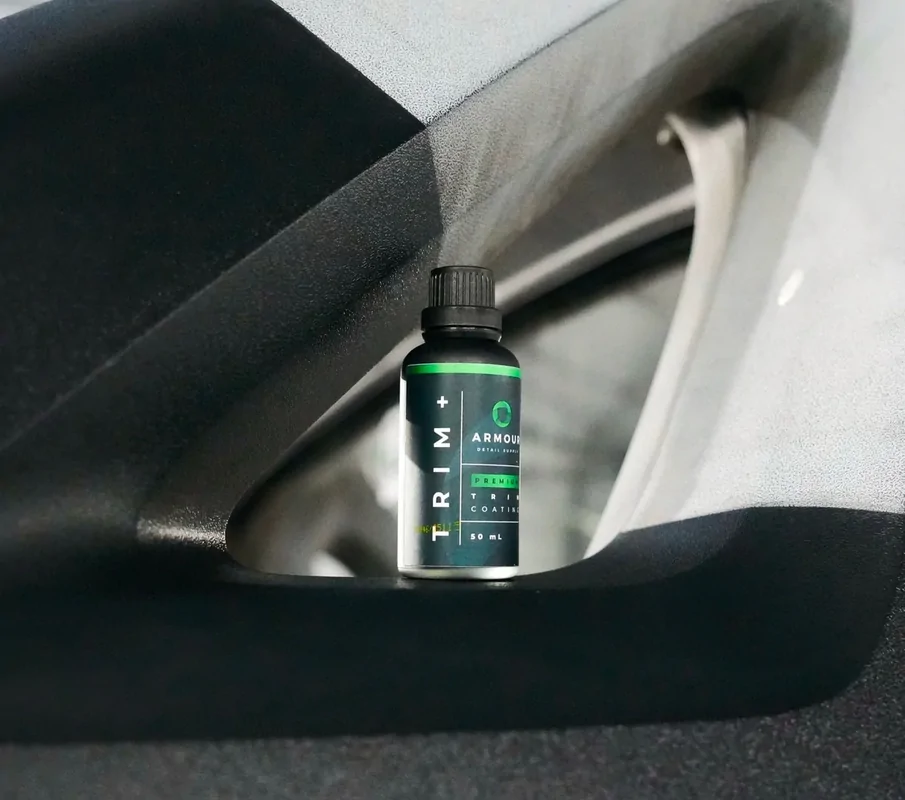
Wildcard – Until recently, you either used a trim dye or ceramic coating to provide a longer lasting trim restoration. Or, you could combine the two by applying the dye, then coating over the top to lock it in. However, Armour Detail Supply has recently added a product called Trim+ to their range. This is a combined trim dye and coating, which offers the best of both worlds. This coating was designed around the dye and not just some black dye added to an existing coating.
Application – As per other coatings, you want to clean and prep the plastic prior to coating. See the below videos for a full run down.
Longevity – Up to 2-years)

Personal Preference –
For trim protection, I tend to prefer the use of a spray sealant, Reload in particular. This provides a nice balance between safety, longevity, ease of application and the look I’m going for, ie a natural factory look.
For restoration, at the moment that would be Solution Finish. Its slightly more involved, but more foolproof than ceramic coating. When used in conjunction with a spray sealant, you will maintain that deep black OEM finish.
There are two questions I get asked more than any other. In my horticultural world, it’s “why is my lemon tree not growing”, and in my detailing world, by fair margin I’m constantly asked “what do I use to fix faded black plastic trim?”.
(Actually, working in the nursery, the most asked questions were “where is the toilet” or “where is the cat”, drove me insane. I don't know about you, but I go to the toilet BEFORE I go out, just saying.)
What?
Before going further, there are two different types of black plastic trim. This is important to know as they both require different treatments for enhancement and protection. High chances are, you have a vehicle with both types, such as the current Mustang.
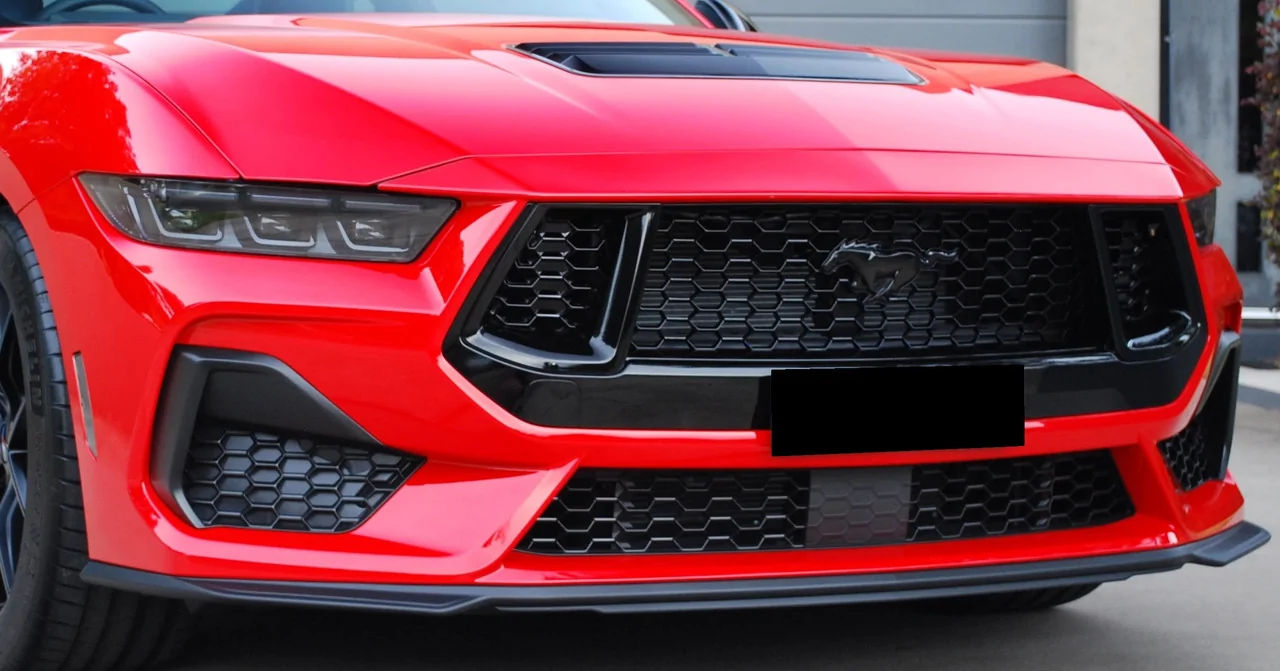
Gloss Black Trim - These materials have become widely used over the last decade as a substitute for chrome, usually as window trims, B-pillar trims, diffuser panels, hood and fender vents, wing mirrors and bumper accents. In simple terms, you are treating these areas as you would paint, so they can be polished and protected in the similar ways.
Un-painted Black Plastic – This trim is used as an accent or body extension, think wheel arch flairs, bumper inserts, side skirts and splitters, windscreen scuttle panels, door handles, B-pillar trims, fender vents, and wing mirrors. These materials can be smooth or textured plastic and require very different methods to restore and protect.
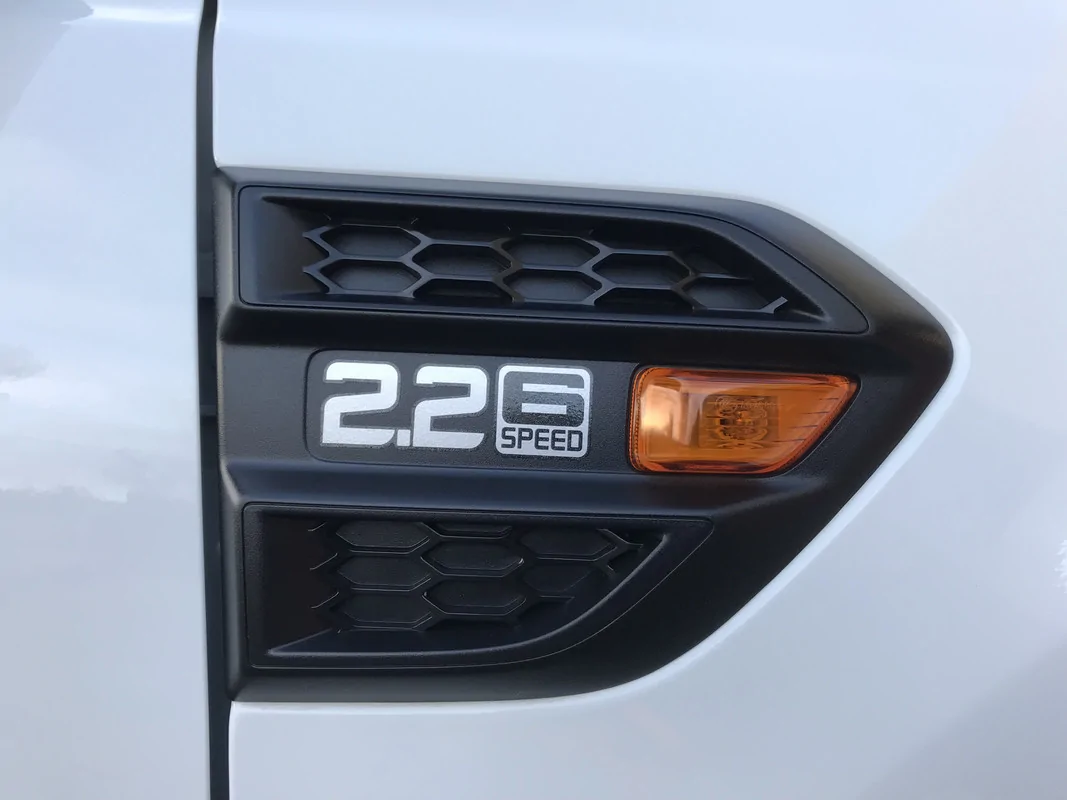
For this post, we are focusing on the later, unpainted black plastic.
Why?
Because these materials are not clear coated, black plastic is vulnerable to UV damage over time. While black plastics have in-built IV blockers, they only last for so long and have nowhere near the UV resistance of a clear coat. That means these areas of the car show age much faster and can really drag down the appearance of the car as a whole.
How?
There are two different paths to follow here -
1. Protecting and maintaining
2. Restoration and maintaining.
Obviously, prevention is the best cure, so let’s cover that first………………………
Trim Protection –
As mentioned, keeping trim protected is easier than having to restore that factory fresh finish. In basic terms, you have three different options when it comes to protecting black plastic.
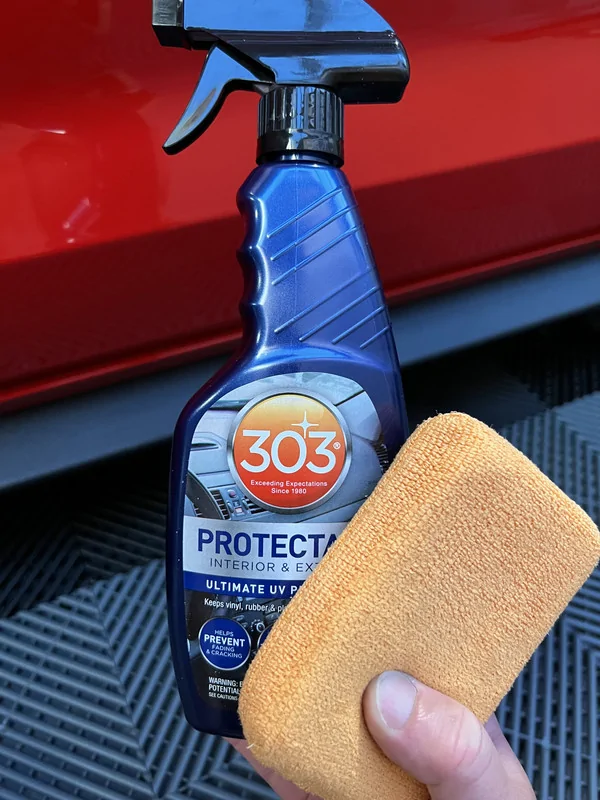
Rubber & Plastic Dressings – These products are water-based dressings that can be used on plastic, vinyl and rubber surfaces inside and outside the vehicle. They require the least preparation and skill to apply, but to get proper UV protection, you need to apply them regularly. Being water based, this means they will degrade quickly when washed or exposed to rain. That’s not to say don’t use them, but just be realistic in what they can achieve and be prepared to apply them after each wash.
Application - Dressings can be applied with microfiber towels or applicators, or even foam blocks.
Product Suggestions – 303 Protectant, Carpro Perl, Meguiar’s Hyper Dressing and Koch Chemie PSS
Longevity – Days
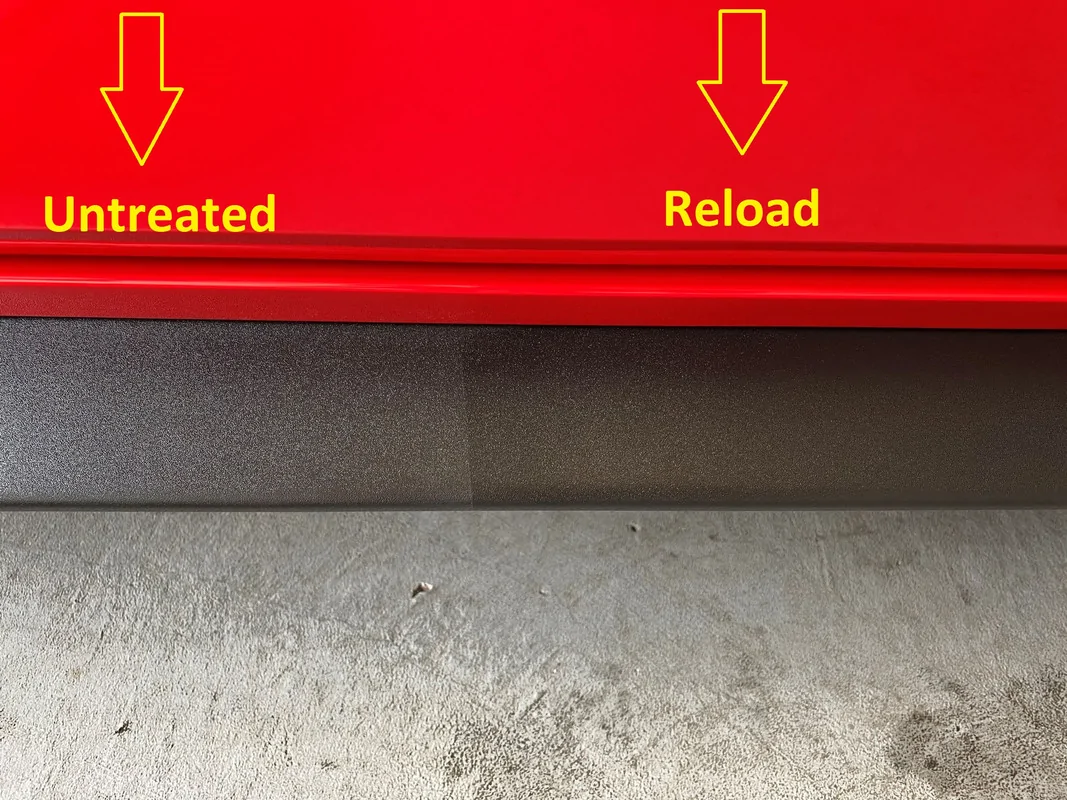
Spray Sealants – This may not be an obvious choice, but from experience, I’ve found spray sealants to be a very attractive option here. They are just as easy to apply as a dressing, but much less messy in terms of getting it on surrounding paintwork or glass. And because the product bonds to the plastic, it won’t simply wash off in the rain or next wash. That means you can apply it every few months, rather than every few days. I also appreciate the subtle enhancement a sealant provides, a deep and dark appearance without looking like an oil slick.
Application – A microfiber towel or applicator is best here, apply heavy and lightly buff afterwards.
Product Suggestions – Something like Bead Maker or Obsessed Garage Drying Aid are nice for trim, but Carpro Reload is THE winner here. The specific oil/solvent used in Reload is what provides that deep-dark look, while the high Si02 content locks it in and provides UV protection. If you are on the fence, just buy the small 100ml bottle and try it out.
Longevity – Months
Ceramic Coatings – These are going to give the longest durability but require more involvement prep work and application skill. Trim coatings in particular bond to the plastic and become a flexible barrier to UV damage. These products add richness to the plastic, without being glossy or greasy looking. Coatings also have the most restorative ability of the three options in this category.
But………………..the use of these products comes with the most risk. In rare instances, the coating can react badly with the plastic, usually on brand new plastic that hasn’t fully off-gassed and cured. Also, if applied too heavily, you can have the plastic turn chalky white. Unlike paint, you can’t simply polish it off. You have been warned.
Note - If you coat trim, you will be maintaining that coating with a spray sealant, not a dressing.
Application – You need to ensure that the surface is clean and dry before application, so cleaning with APC and a wipe down with a prep solution is crucial. You can then apply the coating with a small microfiber applicator (the Gtechniq, Carpro, Gyeon or Klinn finger mitts would be ideal).
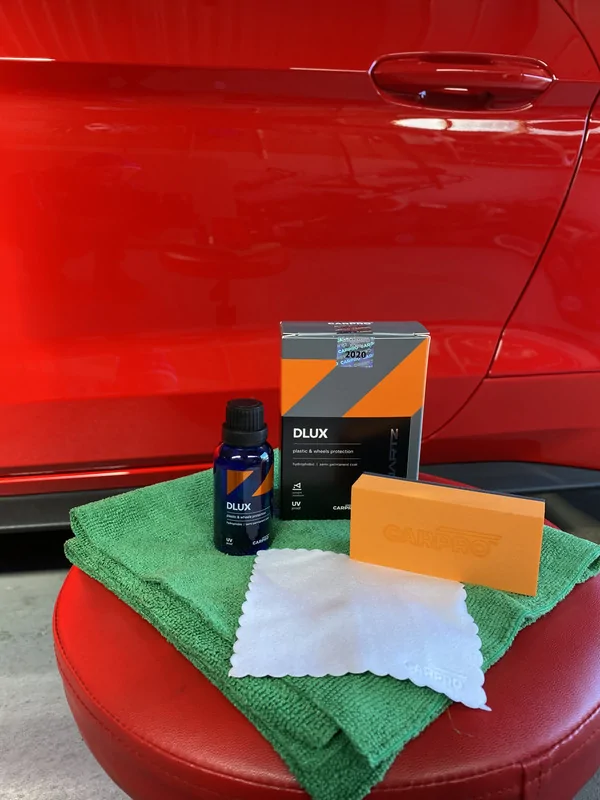
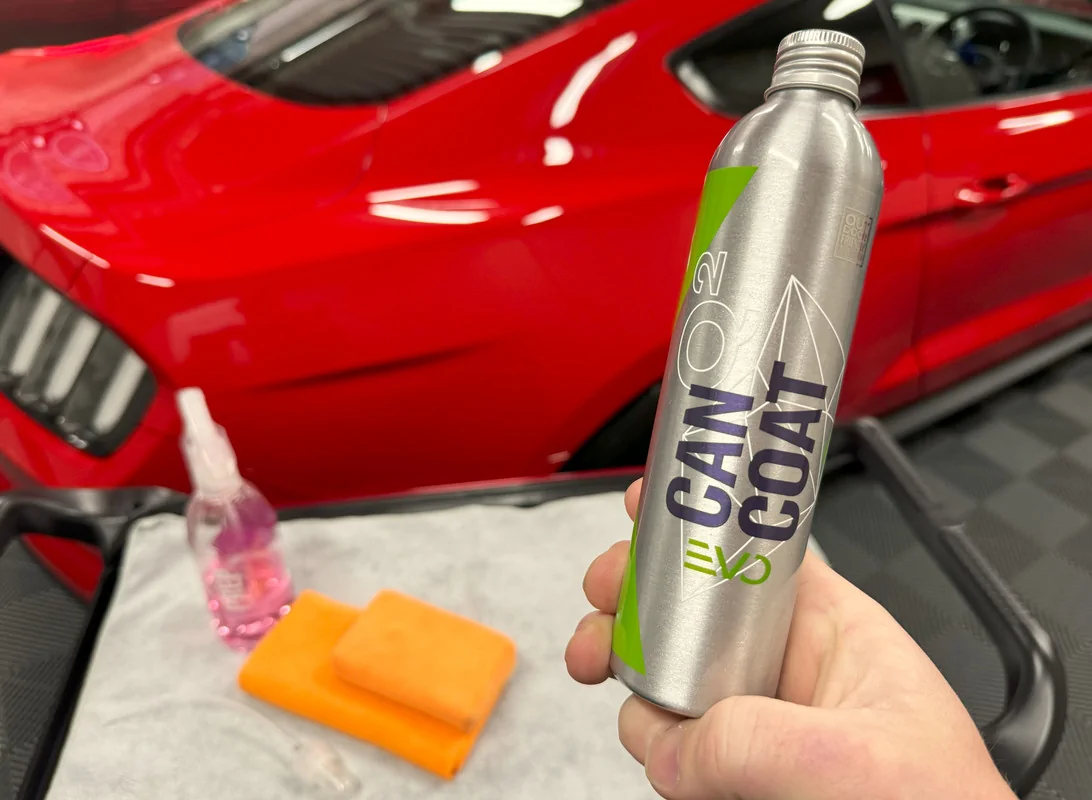
Product Suggestions – Any ceramic paint coating will work here, although products like Gtechniq EXO v5, Carpro DLUX and Gyeon Can Coat EVO are the ones I’d consider.
Longevity - Years
Trim Restoration –
This is where we are trying to reverse the damage already caused by exposure to UV. As per the previous category, you have a few options. In broad terms, the products are the same as above, but their effectiveness will depend on how badly degraded the trim is, and how long you want it to last.
Note – In some cases, a heat gun can be used to bring oils to the surface of the plastic, restoring that black finish. However, do so at your own risk, not all plastics will respond to this method.
Rubber & Plastic Dressings – As per the previous section, a water-based dressing will provide a short-term improvement and will require frequent re-applications. In some cases, I have seen where a dressing won’t actually make an improvement, so it's very dependant of the plastic used by the manufacturer.
Spray Sealants – Sometimes this method works, sometimes it doesn’t. Again, it depends on the plastic, but in most cases, a spray sealant is going to offer the least restorative effect. Worth a try on lightly faded trim.
Application and product selection as above, again Reload for the win.
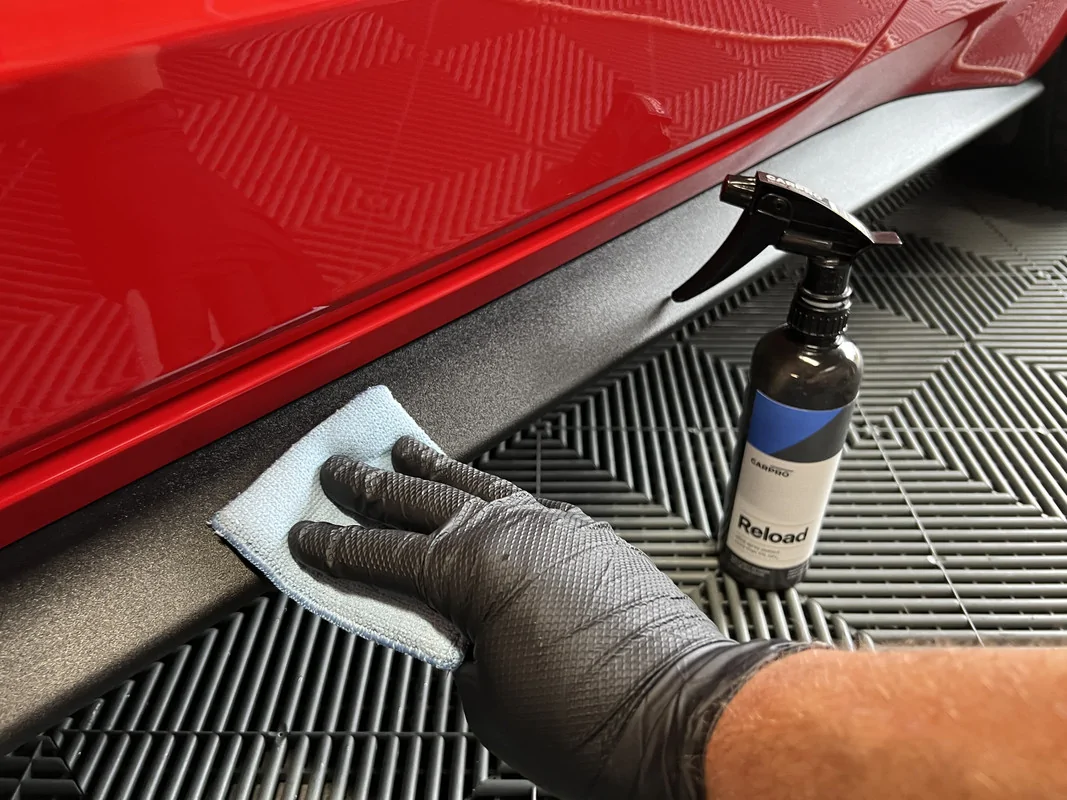
Trim Restoration Dyes – There are few of these on the market, but I would stick with Solution Finish. This is a black dye that soaks into and bonds to the plastic, which can last up to and beyond 12 months. You can prolong and maintain this revived finish with a spray sealant or trim dressing. Solution Finish also sells a sealant called Over The Top.
Application – Be sure to thoroughly clean plastic surfaces with an APC, followed by an IPA wipe down, which Solution Finish suggest using proper IPA and not a prep spray for this role. You may also want to tape the surrounding paint or glass. If you do get Solution Finish on those areas, it’s easily wiped off if still wet, or a little IPA if its dried. I use a small microfiber applicator or sponge, wipe it on and allow to soak in for a few minutes, then wipe any remaining residue with a towel (you will destroy both applicator and towel here).
Longevity – About 12 months, expect longer on garage queens, shorter if not maintained.
Product Suggestions – Solution Finish, which is available in black or grey depending on your trim colour.
Ceramic Coatings – The solvents within a coating can offer a substantial improvement in the appearance of black plastic. For mildly faded trim, a regular paint coating will be fine. However, to revive heavy fading, I would stick with the trim-specific coatings. You can also lock in a product like Solution Finish with a coating, just not the other way around. Like a trim dye, you want to endure the treated surfaces are squeaky clean before application. And as outlined above, there is risk to using a coating, however, you will unlikely run into those risks here due to the age of faded plastic.
Application – Thoroughly clean and dry plastic before application, then wipe down with a prep spray or IPA. Apply the coating with a small microfiber applicator, ensuring to follow the specific directions of your chosen coating. For example, Carpro suggests not leveling DLUX, which is contrary to accepted wisdom.
Longevity – Years (12 - 24 months)
Product Suggestions – Carpro DLUX, Gyeon Trim, Gtechniq C4
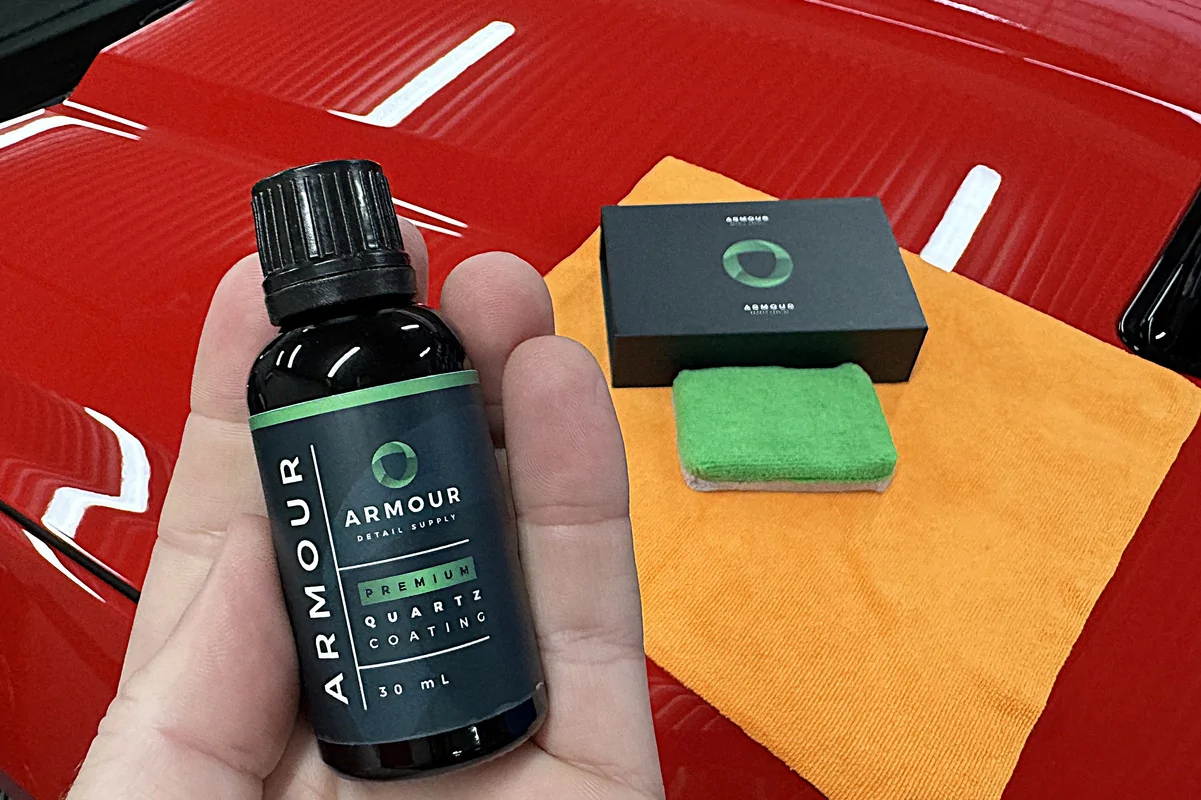
Wildcard – Until recently, you either used a trim dye or ceramic coating to provide a longer lasting trim restoration. Or, you could combine the two by applying the dye, then coating over the top to lock it in. However, Armour Detail Supply has recently added a product called Trim+ to their range. This is a combined trim dye and coating, which offers the best of both worlds. This coating was designed around the dye and not just some black dye added to an existing coating.
Application – As per other coatings, you want to clean and prep the plastic prior to coating. See the below videos for a full run down.
Longevity – Up to 2-years)
Personal Preference –
For trim protection, I tend to prefer the use of a spray sealant, Reload in particular. This provides a nice balance between safety, longevity, ease of application and the look I’m going for, ie a natural factory look.
For restoration, at the moment that would be Solution Finish. Its slightly more involved, but more foolproof than ceramic coating. When used in conjunction with a spray sealant, you will maintain that deep black OEM finish.
Sponsored