DFB5.0
Well-Known Member
- Thread starter
- #1
Glass Cleaning With Rinse-less Wash
One of the key attributes of a rinse-less wash concentrate is their versatility. I was late to the rinse-less wash party, mainly because I just didn’t understand and therefore trust this type of washing. Over time I have become more comfortable with this alternative wash method, to the point where it’s now a valuable skill set to have. However, I probably use these products more for their alternative uses than I do for actual rinse-less washing. And that’s why I have been championing these products, they cover so many bases and do so for very little outlay.
In addition to rinse-less and water-less washing (they are different processes, I promise), you can use these products for the following roles –
- Clay Lubricant (Handy because you tend use a lot of this when claying, so you can mix up as much as you need for minimal outlay)
- Interior Cleaning
- Quick Detailer
- Drying Aid
- Water Softener
- Pad Lubricant
- Windscreen Washer Additive
- Waterless Wash for cleaning door jambs, engine bays, bird dropping removal
- Glass Cleaning
And its that last point I want to expand on, glass cleaning.
I HATE cleaning glass, there, I said it! For that reason, I want a chemical and towel combo that just works, no tick-tac-toe special treatments, no special towels, no overpriced junk that makes the situation worse, no 14-step processes. Just spray, wipe, buff, done. I also have a big problem with products that require kid gloves to make work, cough, Carpro ClarifyPhobic, cough, Bilt Hamber Traceless.
So how would a basic, cheap and very safe product like a rinse-less wash perform as a glass cleaner? After all, most of them on the market suggest glass cleaning as a potential use. That’s what I aim to find out.

The Test -
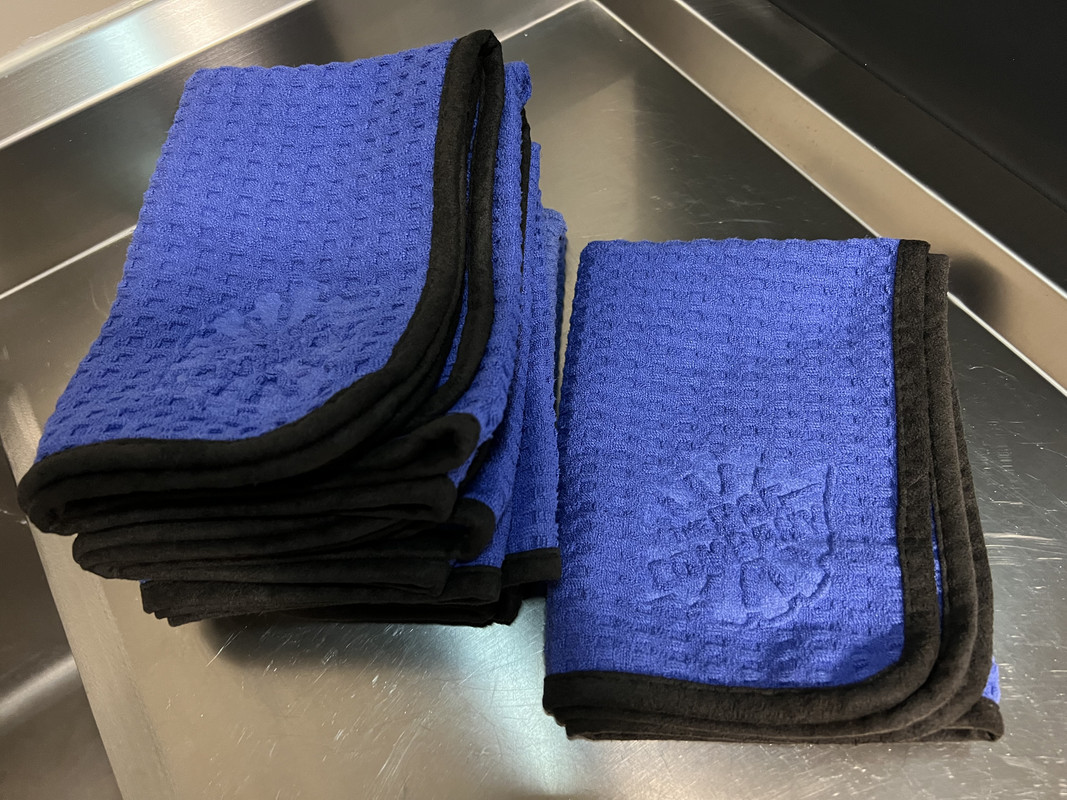
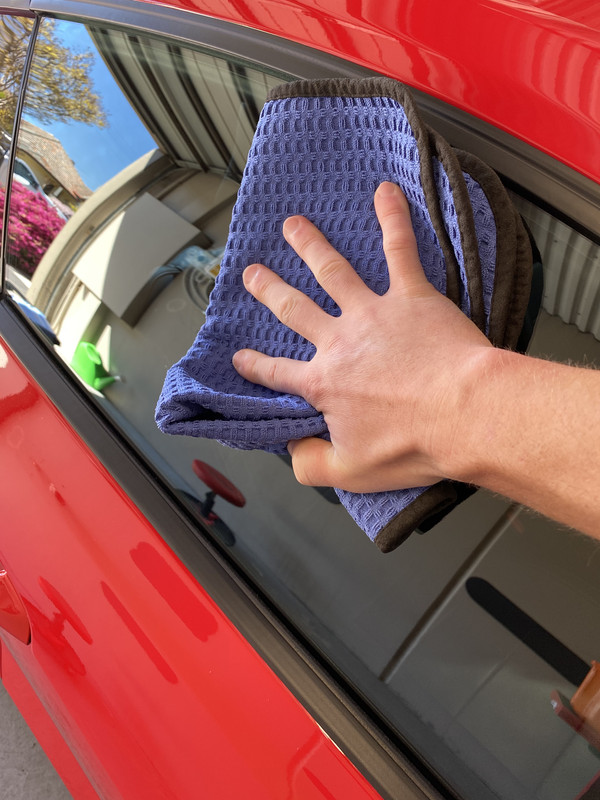
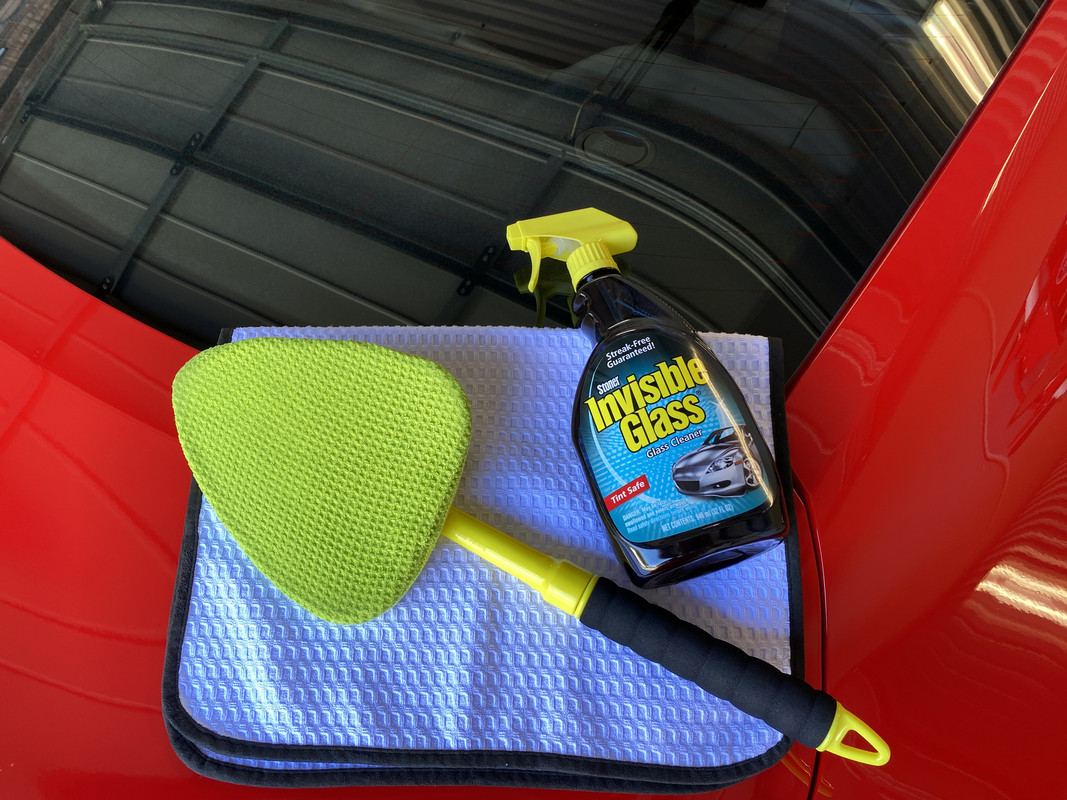
The following test was spread across a few weeks, multiple cars and multiple ambient temperatures. Some rinse-less products provide suggested dilution ratios for glass, others don’t so I had to pick an appropriate number. I also did not buy any specific product for this test, rather I used what was already on hand. Some of these products are surfactant based, some polymer based, some with Si02. Each was mixed using distilled water for consistency, and each used with my preferred TRC Dry Me A River glass towels. The control product was my go-to, never-fail…………..Stoner’s Invisible Glass in liquid form (there is an aerosol version as well. At the end, I calculated a per 500ml cost, which includes the product mixed with demineralized water purchased at $5.49 per 5-litre bottle.
Here are my findings –
Armour Detail Supply Hero – This is the product that spurred the comparison, mainly because I was hearing so much positive comment about using Hero as a glass cleaner. This product is a hybrid non-residue surfactant/polymer/Si02 based rinse-less wash, and the key attribute that matters here being the "non-streak formula".
In use, Hero doesn’t quite flash as quickly as a IPA-based glass cleaner, but it's not far behind. I was actually surprised at how it flashed away with ease, and you also get a lovely slick finished result. Some feedback that I have come across suggests 128:1 to 256:1 is the sweet spot for glass, I'm told the 64:1 waterless rate can be a little streaky.
NOTE – Unlike some, Hero is safe for use on interior glass and tint. Bradley from ADS provided me the following quote -
“……yes totally (fine) as there is no SiO2 left behind with Hero. The SiO2 in Hero is bonded to the surfactants and it's made to boost cleaning and slickness. The only thing left behind by Hero is a slight polymer film that evaporates in a few days…............…”
In regard to other rinse-less products with a level of “protection” in them, this is what he has to say about them being used on interior glass -
“………I think as long as you aren't using them every day, you'll be fine with any (rinse-less product), especially at the 128:1 to 256:1 dilutions, there's very little activity in that level of solution……..”
Type – Hybrid Polymer/Surfactant
Protection – Non-durable Si02
Suggested Dilution Ratio – Not stated, but 128:1 seems to be the consensus
Tested Dilution Ratio – 128:1
Flash Factor – 4/5
DFB Score – 4/5

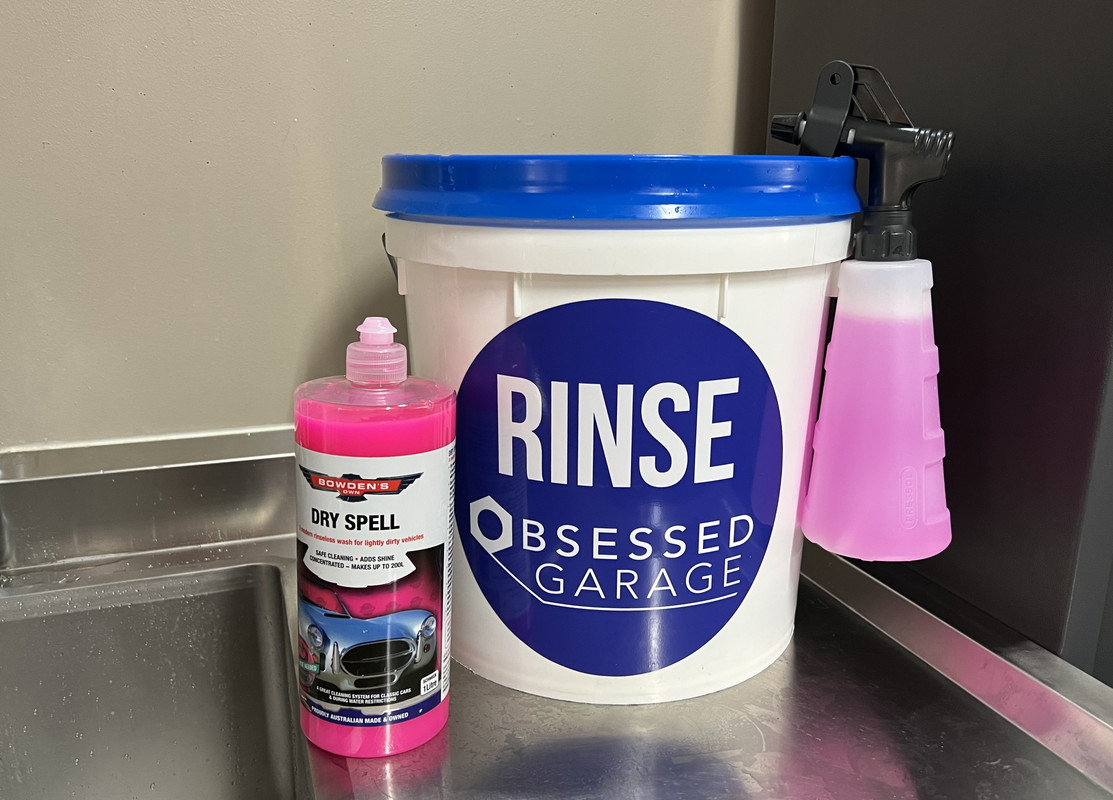
Bowden’s Dry Spell – This is a surfactant-based rinse-less wash, basically the only one you can guy in a bricks and mortar store in Australia.
As a rinse-less wash, its ok but nothing special. The same plays out on glass. Actually, Dry Spell was the only major disappointment of the bunch. The first wipes basically push the liquid around, it then requires considerably more wiping to deliver a dry/clear surface. It’s also one of the more expensive per 500ml. Not a product I can recommend in any application.
Type – Surfactant-based
Protection – Nil
Suggested Dilution Ratio – Not Stated
Tested Dilution Ratio – 150:1
Flash Factor – Minimal
DFB Score – 1/5

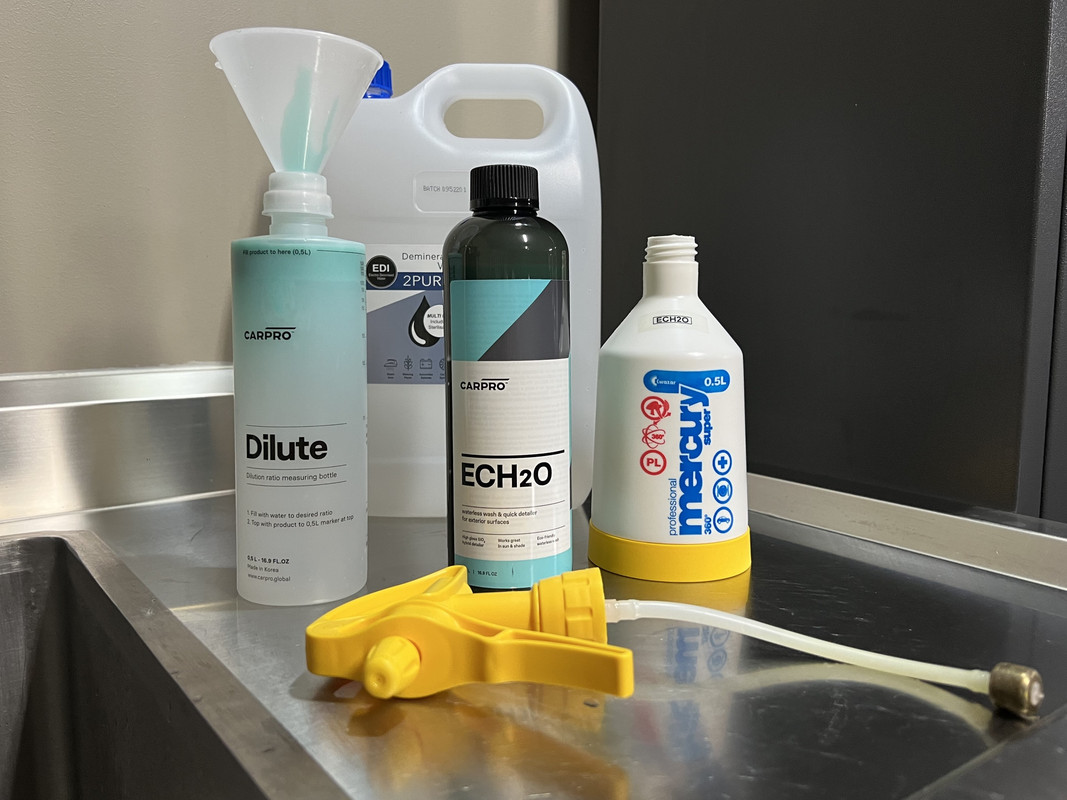
Carpro ECH20 – This has been a favourite of mine for quite a while now, primarily mixed at the water-less rate for cleaning/drying door jambs and engine bays. It’s primary benefit is the slick, glossy finish it leaves behind. ECH20 is another hybrid, utilizing an Si02 and carnauba wax additives to increase slickness and gloss. But how does that translate to glass cleaning?
In my case, knowing this product can be a little streaky at the usual 15:1 to 25:1 dilutions, I pushed out to a 100:1 ratio. For context, the rinse-less ratio is suggested at 200:1. I have to say, ECH20 has been highly impressive as a glass cleaner. A few sprays to prime the towel, then a light mist onto the glass, the initial wipes spread easily and begin to flash, the final wipes with the dry side of the towel finish it off to a lovely slick feel. And streak free too, which is the whole point after all.
NOTE – I’m not entirely sure you should use this product on interior glass surfaces, especially those that are tinted. See the notes provided with Hero above.
Type – Hybrid Si02
Protection – Mild, Si02 and carnauba wax
Suggested Dilution Ratio – Not stated
Tested Dilution Ratio – 100:1
Flash Factor – Excellent
DFB Score – 5/5
DIY Detail Rinse-less Wash – Despite my dislike of the brands antics, I’ve always liked this product. Out of the others here, DIY aligns with other surfactant-based products such as N-914 and Dry Spell. According to DIY, you can also foam this product, which is permitted by its surfactant base. But who is going to foam a rinse-less wash, you may as well just use soap. If you do want to try it like this, compared to the usual 30ml to 7.5-litres of water in a bucket, you need 120ml-150ml for foaming, which is ridiculous from a cost point of view.
So, how does DIY stack up as a glass cleaner? Being one of the last to try, I was expecting DIY to perform like the other surfactant-based products on test (N-914 and Dry Spell). And yet, it was the complete opposite. For this test, I opted for 128:1 dilution ratio. Where the other two need more wiping to achieve streak free results, DIY seems to flash off very nicely. The only mark against DIY is the lack of slickness when compared directly to the likes of ECH20 or Eco Wash, but then those tend to overachieve on that metric.
Overall, DIY used for glass cleaning exceeded my expectations. A very impressive and surprising result.
NOTE – For this test I used v1 and not the updated v2 formula.
Type – Surfactant
Protection – Nil
Suggested Dilution Ratio – Not stated
Tested Dilution Ratio – 128:1
Flash Factor – 5/5
DFB Score – 5/5
Gyeon Eco Wash – A relative late comer to the rinse-less wash arena, Eco Wash has gone largely unnoticed. For rinse-less washing, I prefer this product over many for its fine mix of lubrication and slickness it leaves behind. The classic Gyeon scent wins me over as well. Where most on the market focus on cleaning, I’ve found Eco Wash to be very similar to Carpro ECH20 in that it probably leans more towards waterless washing and quick-detailer roles.
On glass, Eco Wash is impressive! Like ECH20, I was expecting this to be a little streaky. However, at 100:1 I found it to be surprisingly forgiving. I also love that slick feeling towards the end of the secondary wipes. A very underrated product.
Type – Undetermined
Protection – Yes, Si02
Suggested Dilution Ratio – Not stated
Tested Dilution Ratio – 100:1
Flash Factor – Good
DFB Score – 4.5/5

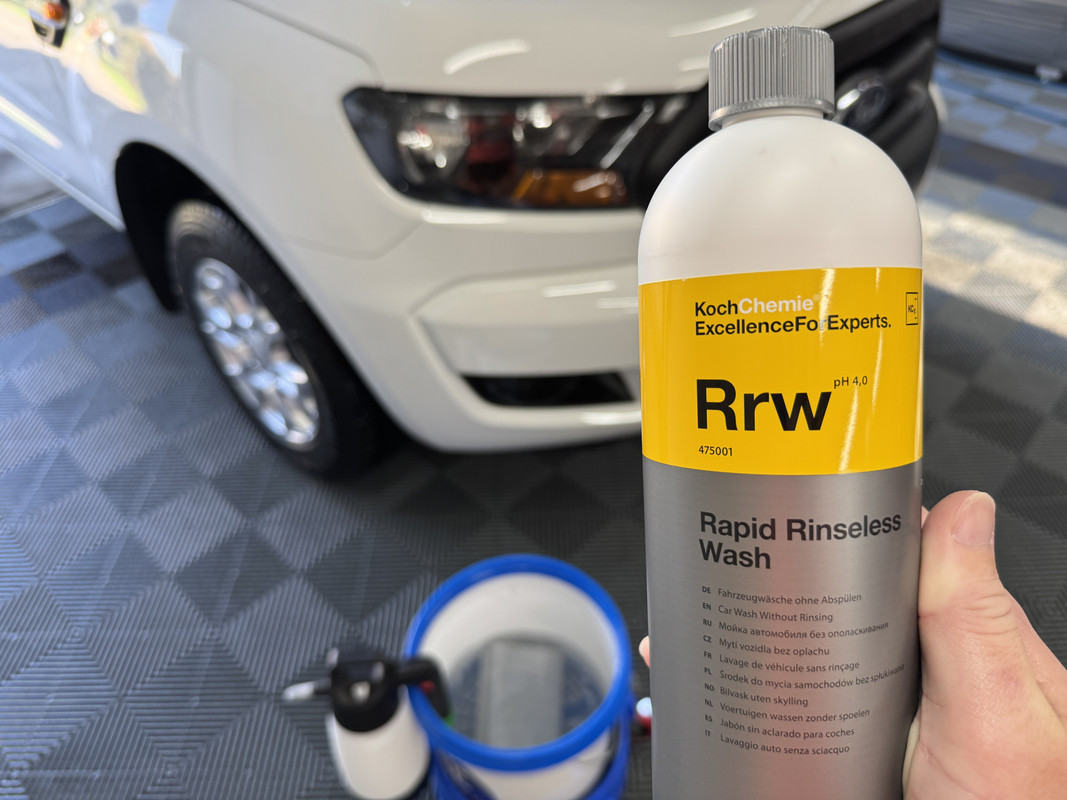
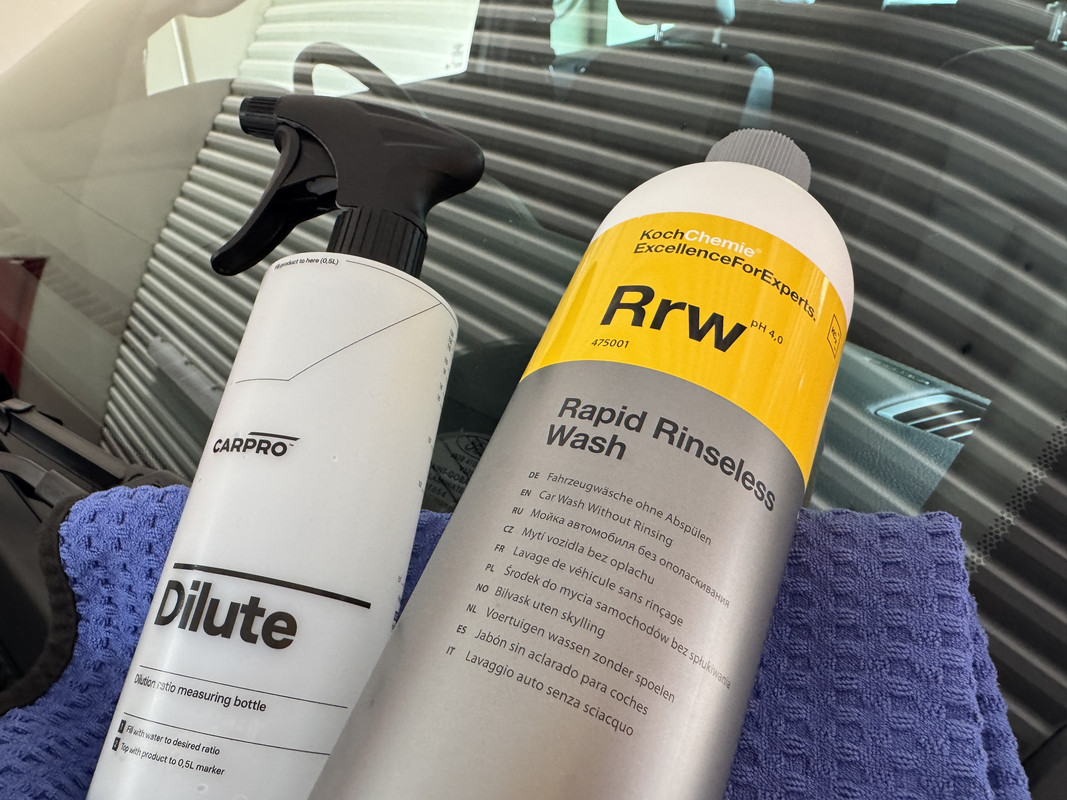
Koch Chemie Rapid Rinse-less Wash RRW – KCx were late to the rinse-less party, which considering how flooded the market is for these products, I suspect many overlook RRW. Compared to most rinse-less wash concentrates, RRW is acid leaning with a pH of 4.0, however it does move to pH neutral when diluted. I also really like how this product smells, not that it influences the performance, but it's certainly a pleasant difference to others on the market.
So, how does RRW perform on glass. One word, impressive! I had no expectations for this product, but almost instantly I knew this was going to be vying for top spot here. What makes it a winner is how nicely it flashes away, the majority being on those initial wipes before flipping the towel for the final buff. So impressed, RRW ended up being the control product, allowing me to gauge the performance of the other rinse-less products on test.
RRW is known to be one of the stronger rinse-less wash products in terms of outright cleaning ability. That would cause me to caution its use for interior work. However, I’ve been told following –
“A pH of 4 isn't bad, it’s probably closer to neutral once it's diluted down. Interior surfaces like to stay around 4-5 pH………”
Either way, RRW became the biggest surprise of this test.
Type – Hybrid Si02
Protection – Yes, Si02
Suggested Dilution Ratio – Not stated
Tested Dilution Ratio – 128:1
Flash Factor – Excellent, the best on test
DFB Score – 5/5
McKee’s N-914 – For quite a while there, N-914 was the go-to rinse-less product. However, with the massive growth in the rinse-less sector in recent years, I suspect McKee’s have lost ground as the fresher products have hit the market. That doesn’t mean it's not worth buying, just that we now have a flooded market.
For whatever reason, I was expecting more from N-914. Can you use it for glass cleaning, for sure. Is it the best option for glass cleaning, not really. The main problem is the slower flash rate and need for additional wipes. This would be a “in a pinch” type situation with N-914, whereas ECH20 and RRW could easily replace a dedicated glass cleaner.
NOTE – For this test I used v1 and not the updated v2 formula, I doubt it would have made much difference.
Type – Surfactant-based
Protection – Nil
Suggested Dilution Ratio – 128:1
Tested Dilution Ratio – 128:1
Flash Factor – Slow
DFB Score – 2/5

P&S Absolute – This is the product that won me over to rinse-less washing, mainly because of the super slick feeling under the towel, which gave me the confidence to trust the process. I will say, you have to work with a few certain quirks, such as the gloopy nature of the concentrate, and its preference for warm rather than cold water. However, the benefits outweigh the negatives. Team it with a little Bead Maker during the drying step and you will have the slickest and glossiest car on the road!
On glass, Absolute proved to be an excellent option. The “flash factor” is there, and as on paint, the finished result is a lovely slick feel. In my case, I used the 256:1 dilution ratio, I’d probably bump it to 128:1 for a little extra flash and slickness. Along with ONR, Absolute would be one of the safer options for interior glass.
Not the standout here, but the cheapest on test and a worthy option on glass.
Type – Polymer
Protection – Nil
Suggested Dilution Ratio – Not stated
Tested Dilution Ratio – 256:1
Flash Factor – Good
DFB Score – 4/5
Optimum No Rinse – The OG rinse-less wash that has gone through several revisions since it was launched in 2006, each subtly improving the formula. While revision 6 is current, I’m still working through v4 and v5.
Of all of the products here, I was expecting ONR to be the strong performer on glass. And yet, I found it mid-pack average. That’s not to say ONR is a subpar product, rather it just didn’t really meet my expectations here. While I used it at the suggested 256:1, I found that less is more on glass, a very light mist on the surface and a slightly primed towel. Like Absolute, ONR for interior glass cleaning would be a safe bet. A workable product overall, just not excellent for glass.
Type – Polymer
Protection – Nil
Suggested Dilution Ratio – 256:1
Tested Dilution Ratio – 256:1
Flash Factor – Minimal
DFB Score – 2/5
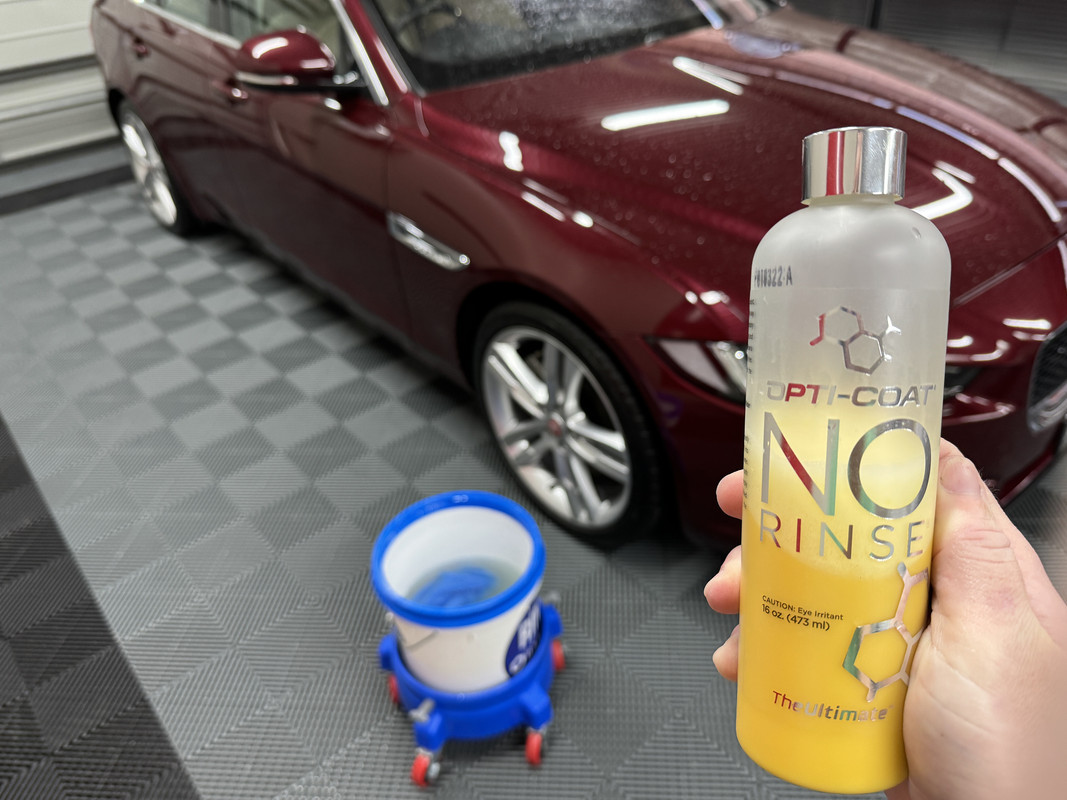
Opti-Coat No Rinse – This is the Opti-Coat version of classic ONR, which differs in that it’s been tailored for use on Opti-Coat coatings. There are also wax infused versions of ONR, and the recently introduced Foaming No Rinse. This Si02 "yellow ONR" is the best of the range.
On glass, this version of ONR performed about the same of the normal type. Again, less is more, but even then, I felt it needed more towel strokes to get to that steak free finish. Not terrible, but not great either.
NOTE - What annoys me about Opti-Coat maintenance line is the lack of information included with the product descriptions. For the considerable price premium, it’s a little rude to make the customer trawl the internet trying to figure out dilution ratios and usage instructions. Granted, some of this is on the bottle, but none of it printed online, which must surely cost them sales as customers put it in the too hard basket. A shame because there are some gems in the range.
Type – Polymer
Protection – Yes, Si02
Suggested Dilution Ratio – No stated
Tested Dilution Ratio – 256:1
Flash Factor – Minimal
DFB Score – 3/5
Cost Considerations -
Probably the most notable aspect of this test was the cost equation. I knew these products would be cheaper than a traditional glass cleaner, I just didn’t expect the gap to be as pronounced as it turned out to be. The following numbers are an average across the 10 products tested, which includes demineralized water -
Average Product Used – 3.18 ml
Average Product Cost Per Bottle Of Concentrate – $0.11c per ml
Average Product Cost Per Dilution - $0.17c per ml
Average Water Used – 496 ml
Average Water Cost Per ml - $0.0011c
Average Water Cost Per Dilution – $0.55c per ml
Total Average Cost - $0.67c per 500ml
For context, this is how Invisible Glass shapes up -
Average Cost - $18.95 for 946-ml bottle
Average Cost Per ml – $0.02c
Average Cost Per 500 ml - $10.03
So, Invisible Glass is on average over 15 times more expensive than a rinse-less wash mixture. I’m all for setting fire to cash when it comes to detailing products, but that price difference is remarkable.
Glass Cleaning Notes –
- When it comes to “cleaning” exterior glass, I’m not sure how much “cleaning” is going on. In that I mean the glass will have been cleaned during the wash phase, so realistically, we are simply using a glass cleaner product to ensure a streak free surface.
- For interior glass, yes, glass will need periodic “cleaning” to remove a build up of film, usually from off-gassing plastics, oily fingerprints and nicotine haze. In these instances, you may need to clean twice, once to remove the bulk, then a second time with fresh towels for a streak free finish.
- If you do end up needing to clean glass between washes, I’d wager you will get a better “clean” from using these rinse-less wash products instead of IPA-based products, which are basically just IPA and water with a colour and/or scent added. The rinse-less products break down and encapsulate contamination for safer/easier removal.
- I think you would still follow basic glass cleaning rules when using the above products. That would include working out of the sun with cool-to-touch glass, using dense/low pile towels, and working with the box method. For interior glass, never apply directly, always into the towel.
- With the rinse-less products, I found less is more. After an initial priming of a fresh towel, one light mist onto each section of glass is usually enough product to achieve the desired streak-free result.
- Don't be the dork who thinks cleaning glass with newspaper is some sort of magical solution. Originally, petroleum-based newspaper ink provided a light polishing effect on glass, leaving a bright and glossy finish. However, those inks have not been used since the early 90's, so you are better off just using a towel. You also don't waste money buying newspapers.
- There is one product missing from this test, Labocosmetica Idrosave. I have reason to believe my bottle came from a batch that was defective. The first time I used this product, well it ended in tears. After some feedback, its possible my bottle came from a known bad batch. As such, I don’t dare touch it again. I’m sure you will understand.
The Standouts -
Carpro ECH20 – As mentioned earlier, I had expected this to struggle on glass, but I came away very impressed. At the usual water-less/quick detailer rate, it may well have streaked. But at 100:1, ECH20 was nothing but delightful. As on paint, you are left with a lovely slick surface.
Gyeon Eco Wash – In reality, what I said about ECH20 applies here too. However, I feel like this product is worth highlighting as it appears to be slept on. It's way slicker than most products mentioned here, be that on paint or glass. It’s super easy to work with and smells lovely too. While many products listed here I wouldn’t buy again, Eco Wash has earnt my respect for repeat purchases.
DIY Detail – Considering how the traditional polymer and surfactant-based rinse-less products struggled on test, I wasn’t expecting much from DIY. And yet, it became the biggest surprise here. The question I now have is, does the performance of the newer v2 version match the original tested here?
The Winner -
Koch Chemie RRW – This was easily my favourite on test. Actually, I think it performed better than the control product, Invisible Glass. I just love how easily it flashes away and the slick surface it creates. A surprise winner.
One of the key attributes of a rinse-less wash concentrate is their versatility. I was late to the rinse-less wash party, mainly because I just didn’t understand and therefore trust this type of washing. Over time I have become more comfortable with this alternative wash method, to the point where it’s now a valuable skill set to have. However, I probably use these products more for their alternative uses than I do for actual rinse-less washing. And that’s why I have been championing these products, they cover so many bases and do so for very little outlay.
In addition to rinse-less and water-less washing (they are different processes, I promise), you can use these products for the following roles –
- Clay Lubricant (Handy because you tend use a lot of this when claying, so you can mix up as much as you need for minimal outlay)
- Interior Cleaning
- Quick Detailer
- Drying Aid
- Water Softener
- Pad Lubricant
- Windscreen Washer Additive
- Waterless Wash for cleaning door jambs, engine bays, bird dropping removal
- Glass Cleaning
And its that last point I want to expand on, glass cleaning.
I HATE cleaning glass, there, I said it! For that reason, I want a chemical and towel combo that just works, no tick-tac-toe special treatments, no special towels, no overpriced junk that makes the situation worse, no 14-step processes. Just spray, wipe, buff, done. I also have a big problem with products that require kid gloves to make work, cough, Carpro ClarifyPhobic, cough, Bilt Hamber Traceless.
So how would a basic, cheap and very safe product like a rinse-less wash perform as a glass cleaner? After all, most of them on the market suggest glass cleaning as a potential use. That’s what I aim to find out.
The Test -
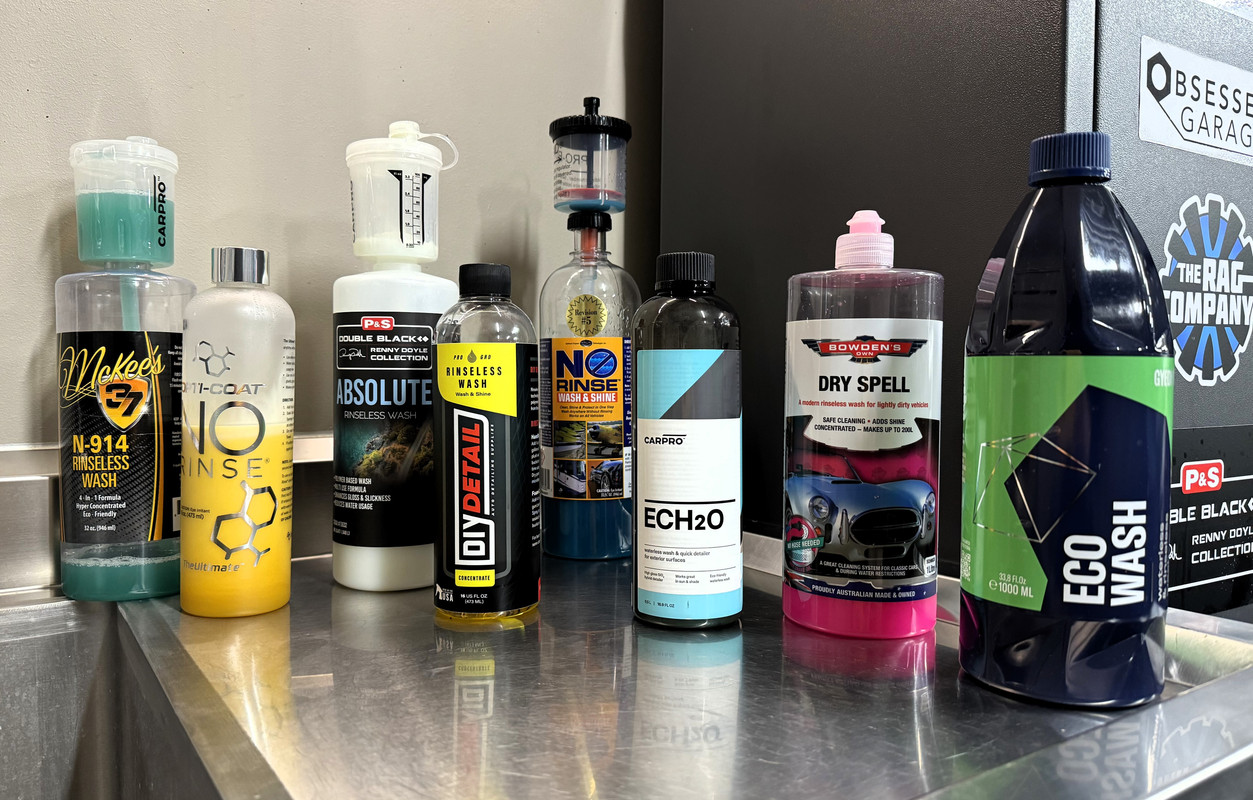
The following test was spread across a few weeks, multiple cars and multiple ambient temperatures. Some rinse-less products provide suggested dilution ratios for glass, others don’t so I had to pick an appropriate number. I also did not buy any specific product for this test, rather I used what was already on hand. Some of these products are surfactant based, some polymer based, some with Si02. Each was mixed using distilled water for consistency, and each used with my preferred TRC Dry Me A River glass towels. The control product was my go-to, never-fail…………..Stoner’s Invisible Glass in liquid form (there is an aerosol version as well. At the end, I calculated a per 500ml cost, which includes the product mixed with demineralized water purchased at $5.49 per 5-litre bottle.
Here are my findings –
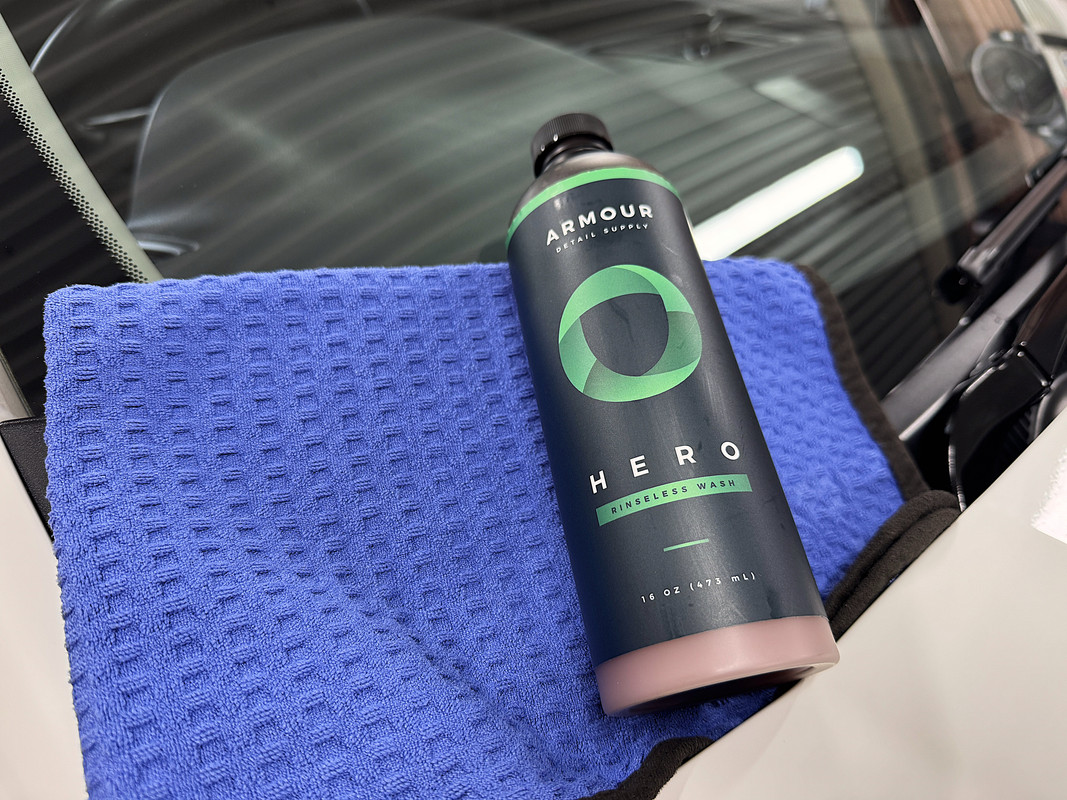
Armour Detail Supply Hero – This is the product that spurred the comparison, mainly because I was hearing so much positive comment about using Hero as a glass cleaner. This product is a hybrid non-residue surfactant/polymer/Si02 based rinse-less wash, and the key attribute that matters here being the "non-streak formula".
In use, Hero doesn’t quite flash as quickly as a IPA-based glass cleaner, but it's not far behind. I was actually surprised at how it flashed away with ease, and you also get a lovely slick finished result. Some feedback that I have come across suggests 128:1 to 256:1 is the sweet spot for glass, I'm told the 64:1 waterless rate can be a little streaky.
NOTE – Unlike some, Hero is safe for use on interior glass and tint. Bradley from ADS provided me the following quote -
“……yes totally (fine) as there is no SiO2 left behind with Hero. The SiO2 in Hero is bonded to the surfactants and it's made to boost cleaning and slickness. The only thing left behind by Hero is a slight polymer film that evaporates in a few days…............…”
In regard to other rinse-less products with a level of “protection” in them, this is what he has to say about them being used on interior glass -
“………I think as long as you aren't using them every day, you'll be fine with any (rinse-less product), especially at the 128:1 to 256:1 dilutions, there's very little activity in that level of solution……..”
Type – Hybrid Polymer/Surfactant
Protection – Non-durable Si02
Suggested Dilution Ratio – Not stated, but 128:1 seems to be the consensus
Tested Dilution Ratio – 128:1
Flash Factor – 4/5
DFB Score – 4/5
Bowden’s Dry Spell – This is a surfactant-based rinse-less wash, basically the only one you can guy in a bricks and mortar store in Australia.
As a rinse-less wash, its ok but nothing special. The same plays out on glass. Actually, Dry Spell was the only major disappointment of the bunch. The first wipes basically push the liquid around, it then requires considerably more wiping to deliver a dry/clear surface. It’s also one of the more expensive per 500ml. Not a product I can recommend in any application.
Type – Surfactant-based
Protection – Nil
Suggested Dilution Ratio – Not Stated
Tested Dilution Ratio – 150:1
Flash Factor – Minimal
DFB Score – 1/5
Carpro ECH20 – This has been a favourite of mine for quite a while now, primarily mixed at the water-less rate for cleaning/drying door jambs and engine bays. It’s primary benefit is the slick, glossy finish it leaves behind. ECH20 is another hybrid, utilizing an Si02 and carnauba wax additives to increase slickness and gloss. But how does that translate to glass cleaning?
In my case, knowing this product can be a little streaky at the usual 15:1 to 25:1 dilutions, I pushed out to a 100:1 ratio. For context, the rinse-less ratio is suggested at 200:1. I have to say, ECH20 has been highly impressive as a glass cleaner. A few sprays to prime the towel, then a light mist onto the glass, the initial wipes spread easily and begin to flash, the final wipes with the dry side of the towel finish it off to a lovely slick feel. And streak free too, which is the whole point after all.
NOTE – I’m not entirely sure you should use this product on interior glass surfaces, especially those that are tinted. See the notes provided with Hero above.
Type – Hybrid Si02
Protection – Mild, Si02 and carnauba wax
Suggested Dilution Ratio – Not stated
Tested Dilution Ratio – 100:1
Flash Factor – Excellent
DFB Score – 5/5
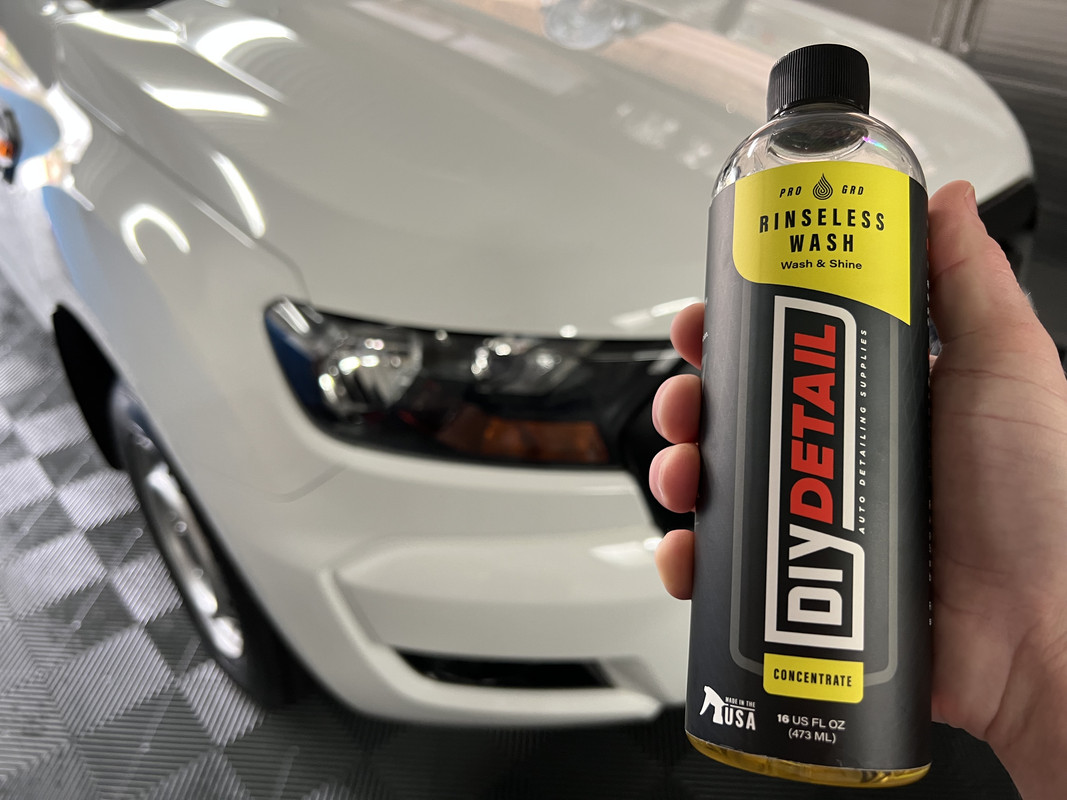
DIY Detail Rinse-less Wash – Despite my dislike of the brands antics, I’ve always liked this product. Out of the others here, DIY aligns with other surfactant-based products such as N-914 and Dry Spell. According to DIY, you can also foam this product, which is permitted by its surfactant base. But who is going to foam a rinse-less wash, you may as well just use soap. If you do want to try it like this, compared to the usual 30ml to 7.5-litres of water in a bucket, you need 120ml-150ml for foaming, which is ridiculous from a cost point of view.
So, how does DIY stack up as a glass cleaner? Being one of the last to try, I was expecting DIY to perform like the other surfactant-based products on test (N-914 and Dry Spell). And yet, it was the complete opposite. For this test, I opted for 128:1 dilution ratio. Where the other two need more wiping to achieve streak free results, DIY seems to flash off very nicely. The only mark against DIY is the lack of slickness when compared directly to the likes of ECH20 or Eco Wash, but then those tend to overachieve on that metric.
Overall, DIY used for glass cleaning exceeded my expectations. A very impressive and surprising result.
NOTE – For this test I used v1 and not the updated v2 formula.
Type – Surfactant
Protection – Nil
Suggested Dilution Ratio – Not stated
Tested Dilution Ratio – 128:1
Flash Factor – 5/5
DFB Score – 5/5
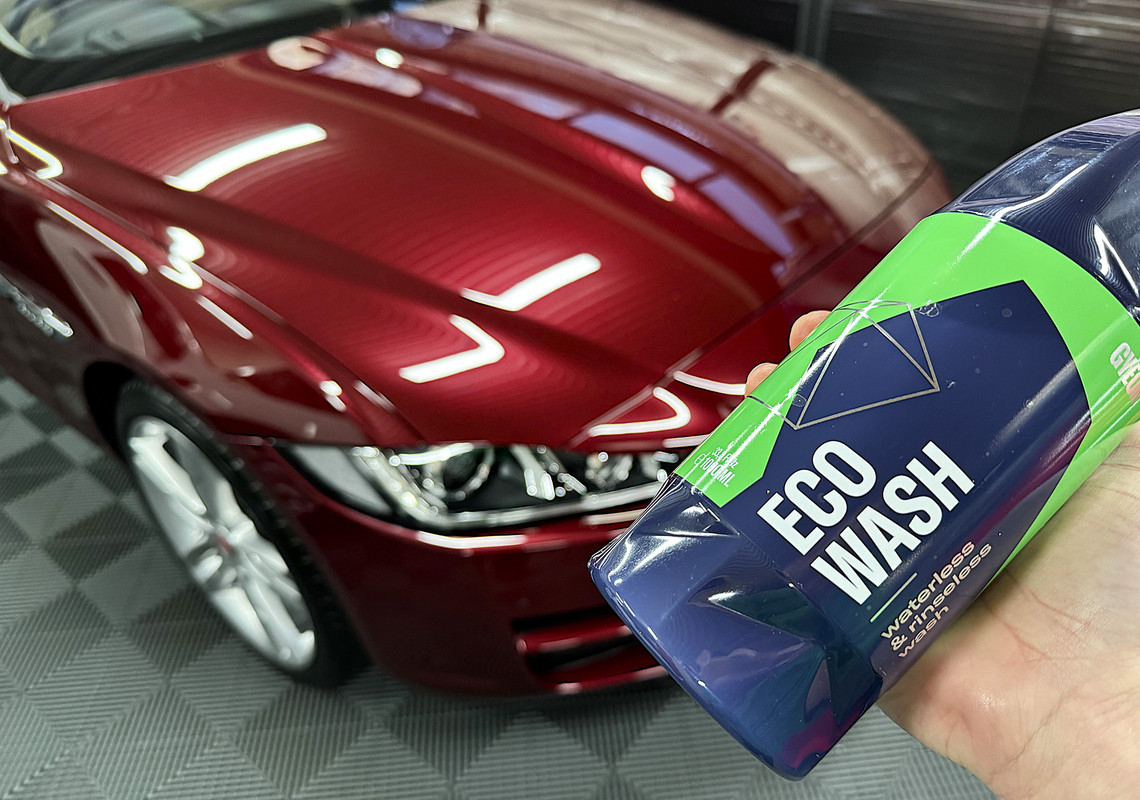
Gyeon Eco Wash – A relative late comer to the rinse-less wash arena, Eco Wash has gone largely unnoticed. For rinse-less washing, I prefer this product over many for its fine mix of lubrication and slickness it leaves behind. The classic Gyeon scent wins me over as well. Where most on the market focus on cleaning, I’ve found Eco Wash to be very similar to Carpro ECH20 in that it probably leans more towards waterless washing and quick-detailer roles.
On glass, Eco Wash is impressive! Like ECH20, I was expecting this to be a little streaky. However, at 100:1 I found it to be surprisingly forgiving. I also love that slick feeling towards the end of the secondary wipes. A very underrated product.
Type – Undetermined
Protection – Yes, Si02
Suggested Dilution Ratio – Not stated
Tested Dilution Ratio – 100:1
Flash Factor – Good
DFB Score – 4.5/5
Koch Chemie Rapid Rinse-less Wash RRW – KCx were late to the rinse-less party, which considering how flooded the market is for these products, I suspect many overlook RRW. Compared to most rinse-less wash concentrates, RRW is acid leaning with a pH of 4.0, however it does move to pH neutral when diluted. I also really like how this product smells, not that it influences the performance, but it's certainly a pleasant difference to others on the market.
So, how does RRW perform on glass. One word, impressive! I had no expectations for this product, but almost instantly I knew this was going to be vying for top spot here. What makes it a winner is how nicely it flashes away, the majority being on those initial wipes before flipping the towel for the final buff. So impressed, RRW ended up being the control product, allowing me to gauge the performance of the other rinse-less products on test.
RRW is known to be one of the stronger rinse-less wash products in terms of outright cleaning ability. That would cause me to caution its use for interior work. However, I’ve been told following –
“A pH of 4 isn't bad, it’s probably closer to neutral once it's diluted down. Interior surfaces like to stay around 4-5 pH………”
Either way, RRW became the biggest surprise of this test.
Type – Hybrid Si02
Protection – Yes, Si02
Suggested Dilution Ratio – Not stated
Tested Dilution Ratio – 128:1
Flash Factor – Excellent, the best on test
DFB Score – 5/5
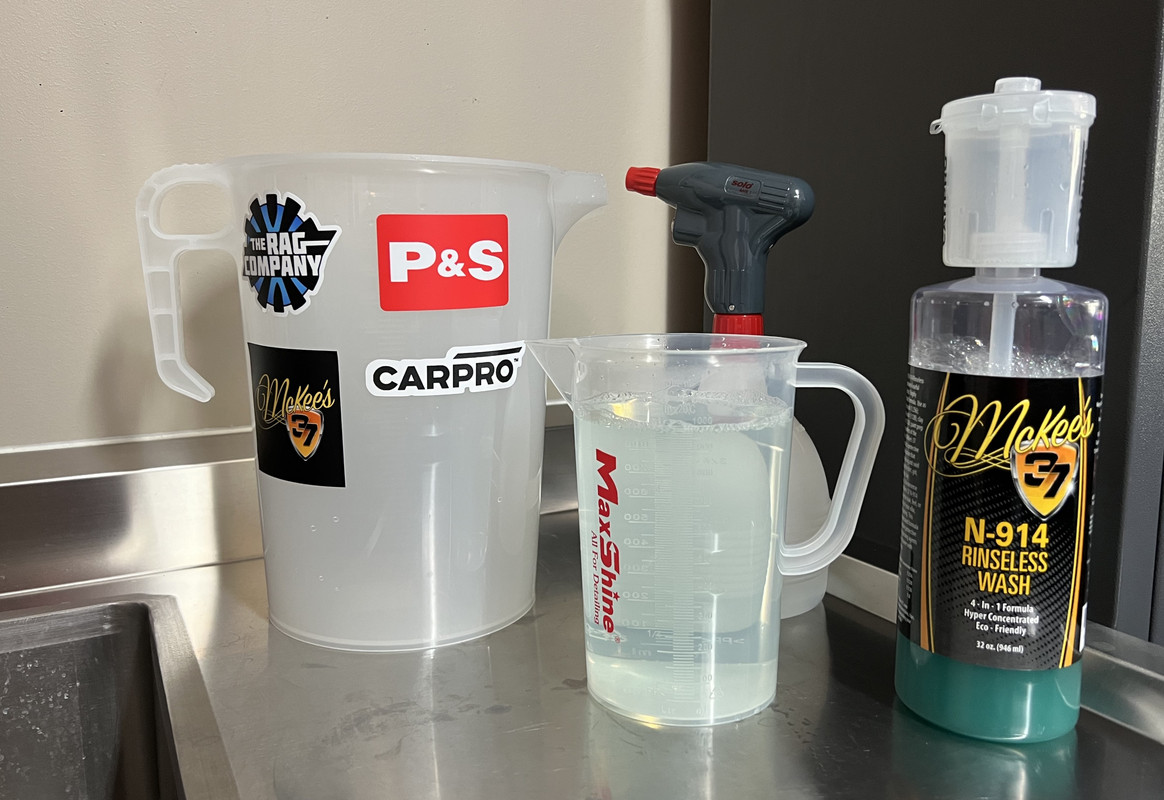
McKee’s N-914 – For quite a while there, N-914 was the go-to rinse-less product. However, with the massive growth in the rinse-less sector in recent years, I suspect McKee’s have lost ground as the fresher products have hit the market. That doesn’t mean it's not worth buying, just that we now have a flooded market.
For whatever reason, I was expecting more from N-914. Can you use it for glass cleaning, for sure. Is it the best option for glass cleaning, not really. The main problem is the slower flash rate and need for additional wipes. This would be a “in a pinch” type situation with N-914, whereas ECH20 and RRW could easily replace a dedicated glass cleaner.
NOTE – For this test I used v1 and not the updated v2 formula, I doubt it would have made much difference.
Type – Surfactant-based
Protection – Nil
Suggested Dilution Ratio – 128:1
Tested Dilution Ratio – 128:1
Flash Factor – Slow
DFB Score – 2/5
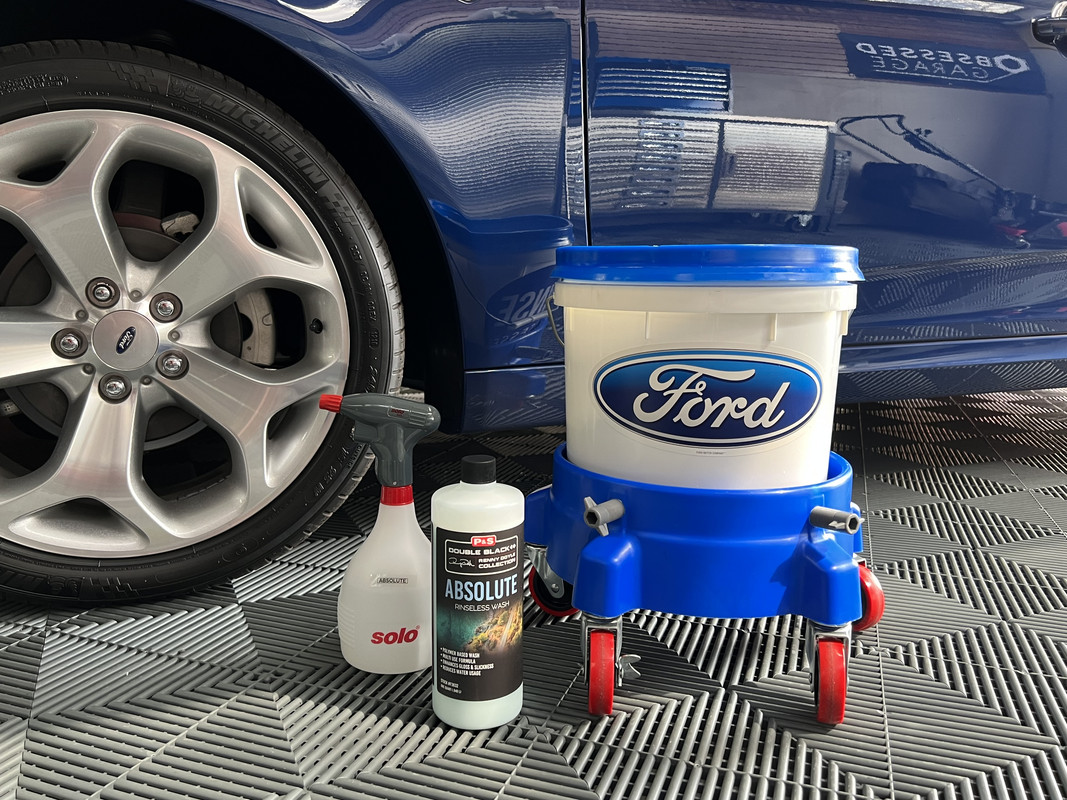
P&S Absolute – This is the product that won me over to rinse-less washing, mainly because of the super slick feeling under the towel, which gave me the confidence to trust the process. I will say, you have to work with a few certain quirks, such as the gloopy nature of the concentrate, and its preference for warm rather than cold water. However, the benefits outweigh the negatives. Team it with a little Bead Maker during the drying step and you will have the slickest and glossiest car on the road!
On glass, Absolute proved to be an excellent option. The “flash factor” is there, and as on paint, the finished result is a lovely slick feel. In my case, I used the 256:1 dilution ratio, I’d probably bump it to 128:1 for a little extra flash and slickness. Along with ONR, Absolute would be one of the safer options for interior glass.
Not the standout here, but the cheapest on test and a worthy option on glass.
Type – Polymer
Protection – Nil
Suggested Dilution Ratio – Not stated
Tested Dilution Ratio – 256:1
Flash Factor – Good
DFB Score – 4/5
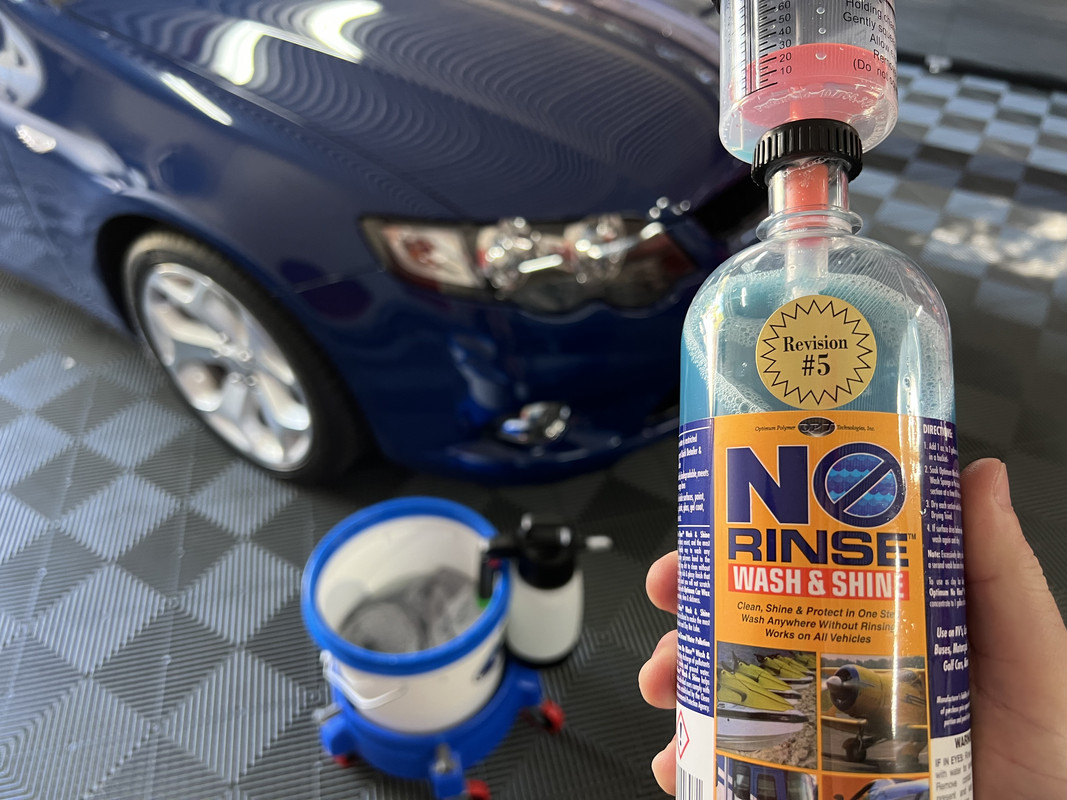
Optimum No Rinse – The OG rinse-less wash that has gone through several revisions since it was launched in 2006, each subtly improving the formula. While revision 6 is current, I’m still working through v4 and v5.
Of all of the products here, I was expecting ONR to be the strong performer on glass. And yet, I found it mid-pack average. That’s not to say ONR is a subpar product, rather it just didn’t really meet my expectations here. While I used it at the suggested 256:1, I found that less is more on glass, a very light mist on the surface and a slightly primed towel. Like Absolute, ONR for interior glass cleaning would be a safe bet. A workable product overall, just not excellent for glass.
Type – Polymer
Protection – Nil
Suggested Dilution Ratio – 256:1
Tested Dilution Ratio – 256:1
Flash Factor – Minimal
DFB Score – 2/5
Opti-Coat No Rinse – This is the Opti-Coat version of classic ONR, which differs in that it’s been tailored for use on Opti-Coat coatings. There are also wax infused versions of ONR, and the recently introduced Foaming No Rinse. This Si02 "yellow ONR" is the best of the range.
On glass, this version of ONR performed about the same of the normal type. Again, less is more, but even then, I felt it needed more towel strokes to get to that steak free finish. Not terrible, but not great either.
NOTE - What annoys me about Opti-Coat maintenance line is the lack of information included with the product descriptions. For the considerable price premium, it’s a little rude to make the customer trawl the internet trying to figure out dilution ratios and usage instructions. Granted, some of this is on the bottle, but none of it printed online, which must surely cost them sales as customers put it in the too hard basket. A shame because there are some gems in the range.
Type – Polymer
Protection – Yes, Si02
Suggested Dilution Ratio – No stated
Tested Dilution Ratio – 256:1
Flash Factor – Minimal
DFB Score – 3/5
Cost Considerations -
Probably the most notable aspect of this test was the cost equation. I knew these products would be cheaper than a traditional glass cleaner, I just didn’t expect the gap to be as pronounced as it turned out to be. The following numbers are an average across the 10 products tested, which includes demineralized water -
Average Product Used – 3.18 ml
Average Product Cost Per Bottle Of Concentrate – $0.11c per ml
Average Product Cost Per Dilution - $0.17c per ml
Average Water Used – 496 ml
Average Water Cost Per ml - $0.0011c
Average Water Cost Per Dilution – $0.55c per ml
Total Average Cost - $0.67c per 500ml
For context, this is how Invisible Glass shapes up -
Average Cost - $18.95 for 946-ml bottle
Average Cost Per ml – $0.02c
Average Cost Per 500 ml - $10.03
So, Invisible Glass is on average over 15 times more expensive than a rinse-less wash mixture. I’m all for setting fire to cash when it comes to detailing products, but that price difference is remarkable.
Glass Cleaning Notes –
- When it comes to “cleaning” exterior glass, I’m not sure how much “cleaning” is going on. In that I mean the glass will have been cleaned during the wash phase, so realistically, we are simply using a glass cleaner product to ensure a streak free surface.
- For interior glass, yes, glass will need periodic “cleaning” to remove a build up of film, usually from off-gassing plastics, oily fingerprints and nicotine haze. In these instances, you may need to clean twice, once to remove the bulk, then a second time with fresh towels for a streak free finish.
- If you do end up needing to clean glass between washes, I’d wager you will get a better “clean” from using these rinse-less wash products instead of IPA-based products, which are basically just IPA and water with a colour and/or scent added. The rinse-less products break down and encapsulate contamination for safer/easier removal.
- I think you would still follow basic glass cleaning rules when using the above products. That would include working out of the sun with cool-to-touch glass, using dense/low pile towels, and working with the box method. For interior glass, never apply directly, always into the towel.
- With the rinse-less products, I found less is more. After an initial priming of a fresh towel, one light mist onto each section of glass is usually enough product to achieve the desired streak-free result.
- Don't be the dork who thinks cleaning glass with newspaper is some sort of magical solution. Originally, petroleum-based newspaper ink provided a light polishing effect on glass, leaving a bright and glossy finish. However, those inks have not been used since the early 90's, so you are better off just using a towel. You also don't waste money buying newspapers.
- There is one product missing from this test, Labocosmetica Idrosave. I have reason to believe my bottle came from a batch that was defective. The first time I used this product, well it ended in tears. After some feedback, its possible my bottle came from a known bad batch. As such, I don’t dare touch it again. I’m sure you will understand.
The Standouts -
Carpro ECH20 – As mentioned earlier, I had expected this to struggle on glass, but I came away very impressed. At the usual water-less/quick detailer rate, it may well have streaked. But at 100:1, ECH20 was nothing but delightful. As on paint, you are left with a lovely slick surface.
Gyeon Eco Wash – In reality, what I said about ECH20 applies here too. However, I feel like this product is worth highlighting as it appears to be slept on. It's way slicker than most products mentioned here, be that on paint or glass. It’s super easy to work with and smells lovely too. While many products listed here I wouldn’t buy again, Eco Wash has earnt my respect for repeat purchases.
DIY Detail – Considering how the traditional polymer and surfactant-based rinse-less products struggled on test, I wasn’t expecting much from DIY. And yet, it became the biggest surprise here. The question I now have is, does the performance of the newer v2 version match the original tested here?
The Winner -
Koch Chemie RRW – This was easily my favourite on test. Actually, I think it performed better than the control product, Invisible Glass. I just love how easily it flashes away and the slick surface it creates. A surprise winner.
Sponsored