
DFB5.0
Well-Known Member
- Thread starter
- #1
EGO LEAF BLOWERS - OVERVIEW & WHICH ONE TO BUY
This is a common question I come across online, “what blower should I buy to help dry my car”. (Take note of the word "help" in that question, which I will explain shortly). Now, the reply to this could go several ways, each having both pros and cons. Which you chose will depend on preference and work environment.
Compressed Air - This is dependent on having an air compressor in your garage. Compressed air is best for grills and badges, but not very efficient for larger surfaces like the hood and roof. I personally don't like this option, mainly because of the hose, but also the noise.
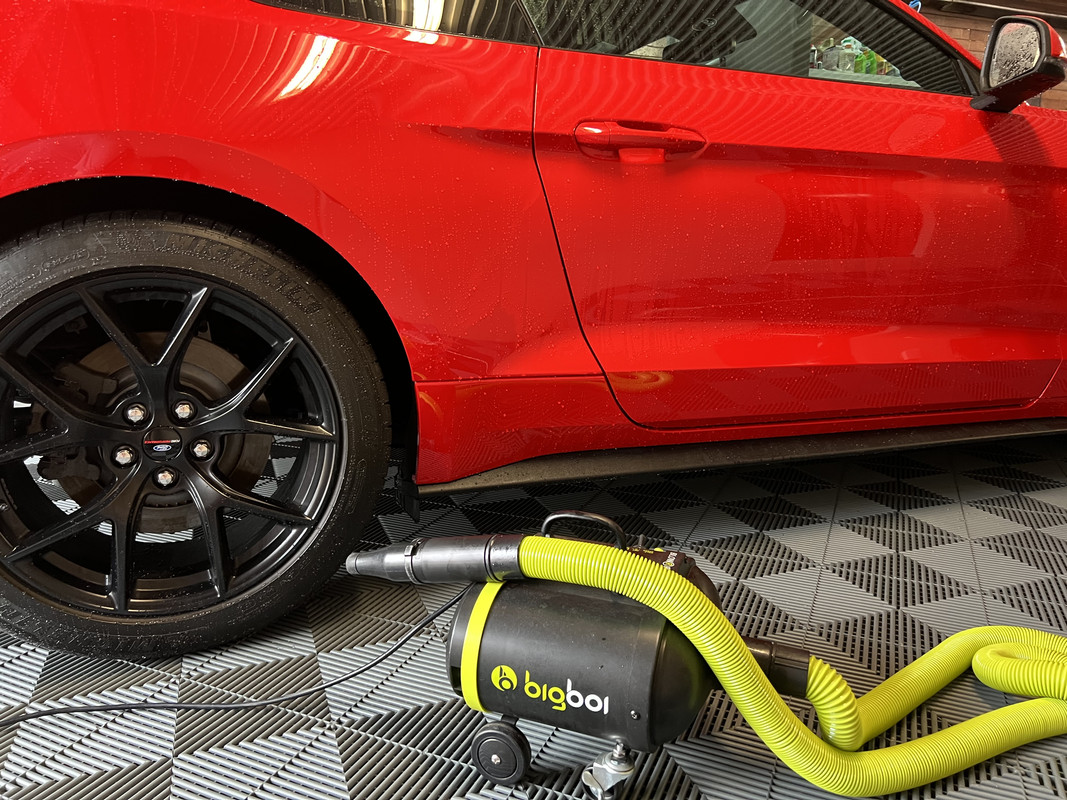
Dedicated Car Dryer (Metrovac, Big Boi, Blo) - Let me be clear, a dedicated car blower from the likes of Metrovac or Big Boi will always do a better job. This comes down to a more output and the concentrated stream of air they produce, which more effectively “drives” the water off the panels and out from behind grills, badges and panel gaps. For context, an EGO leaf blower will deliver up to 200 MPH air speed, while a Big Boi Twin Motor can see 280 MPH. In some cases, the air is heated, which is handy in cold weather. And yes, they also filter the air, but I’ve never really worried about that aspect because if you are working in an environment that requires an air filter, you probably shouldn't be using air to dry a car. However, dedicated blowers are more cumbersome to use owing to the power cord and dragging that long hose around the car. I personally have twin-motor dedicated car blower, but I haven’t used it in years because of the convenience that comes from battery powered leaf blowers.
Construction Blowers - These handheld worksite blowers typically run on a battery from the likes of Milwaukee, Makita, Ryobi ect. I'd probably put this type of blower in the same category as compressed air, as in ideal for door jambs and badges, but not ideal on larger panels or vehicles. The same applies to all of those Amazon/Temu mini blowers that are heavily promoted on social media. I actually started out with one of these (Makita), a workable proposition but not exactly efficient.
Leaf Blower - For me, a battery powered leaf blower represents the ideal middle ground. In that I mean being generally capable but without the hose and power cord (dedicated blower), or the limited use case scenario (compressed air).

WHICH LEAF BLOWER?
I’ve been a horticulturist for 25 years, so I’ve used my fair share of leaf blowers ranging from handheld to backpack, gas powered to battery electric. First of all, lets rule out gas powered units, they are too noisy, smelly, produce carbon monoxide (not ideal when working in a closed shop), require maintenance and a fuel supply, are heavy and potentially contaminate your freshly cleaned car with exhaust residue (just a fact of life with 2-stroke engines). Electric blowers don't solve the power cord matter. And so that leaves us with battery powered leaf blowers..............................
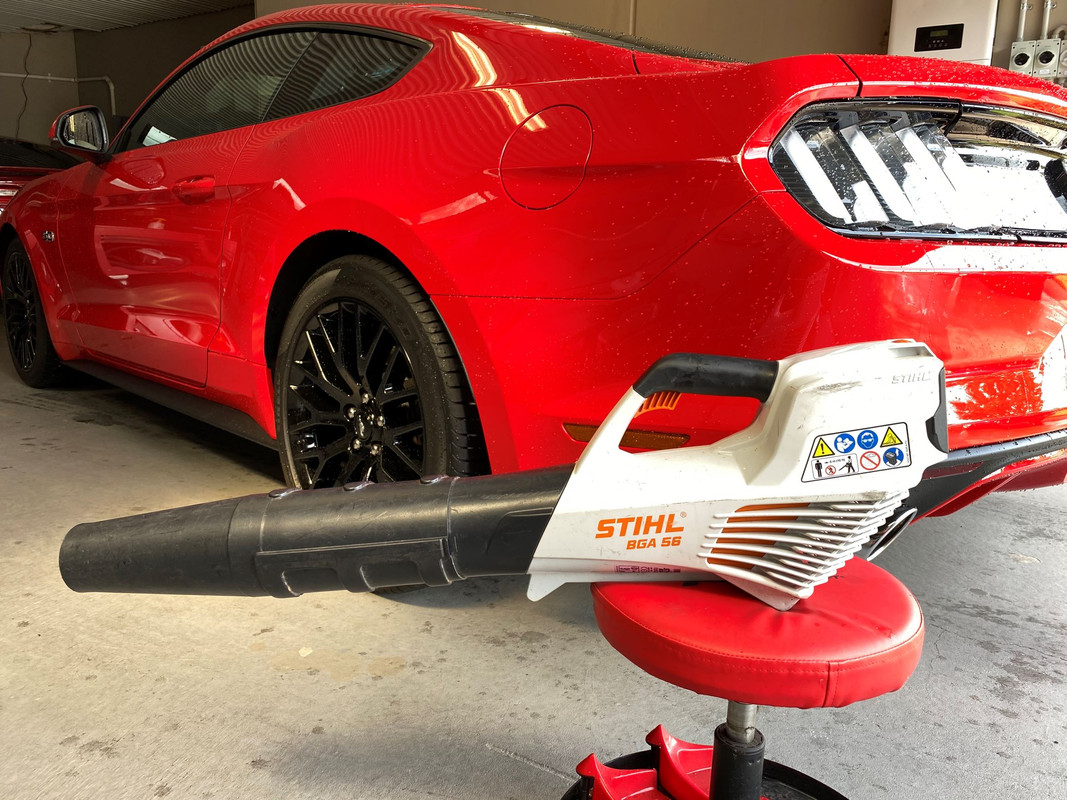
I’ve used several battery powered blowers, including the mid and professional-grade Stihl's, but even when being used for their intended roles (leaves), they mostly all suck (or is that blow?). My main beef is the lack of balance, which amplifies when it comes to holding them at awkward angles like you do when drying a car. Also, a lot of them are very lean for output, which reduces work efficiency and increases battery consumption due to the extended run time. And so, when I say THE BEST leaf blower on the market for car detailing comes from the EGO line, I feel like I have the runs on the board to make that statement.
WHICH EGO TO BUY -
With so many models in the lineup, which EGO blower do you choose? For the record, the numbers on each machine represent the CFM rating.
LBX1000 - This a commercial model that centres around a battery backpack, which transfers power to the unit via a cord. I wouldn't bother with this model, it's far too bulky and the backpack aspect is not what you want or need for detailing.
LB530 - The entry level blower in the range, I would bypass this model. It's waaay too lean, even in turbo mode, and has an extremely annoying throttle lag that really is a deal breaker. I actually bought my father a LB530 for yard work and I’ve found it to be very ordinary.
LB580 - Apparently this model was very good, and I actually tried to buy one, but EGO have discontinued it. If you can find one still in stock, this would be the bare minimum that I’d recommend.
LB615, LB650 & LB670 - From what I have seen and heard, the 600-series seem to have an unpleasant shrill to them. My thought here would buy once cry once, the more powerful models below are marginally more expensive but deliver a superior tool.
And so, that leaves two models, the LB765 that's been out for a few years, and the latest and greatest LB880....................................
LB765 - For quite a while there, the LB765 was THE MOST powerful handheld leaf blower on the market, be that battery or gas powered! That power output is most noticeable when comparing my LB765 back-to-back with the LB530.
LB880 - Last year, EGO went one better with the LB880, supplanting the 765’s title. The 880 also has a fancy carbon fibre outlet and a digital screen displaying real time battery charge statis and selected speed.
So, which one? Both blowers are supremely capable, and I’d happily buy and recommend either. However, there are two factors that might sway your decision. Firstly, the LB765 is about $100 cheaper, but it’s certainly not $100 less of a machine. Meanwhile, for the LB880 to achieve that additional peak performance, you need at least the 5.0 ah battery as it will otherwise power-limit to protect the smaller batteries. So, if you are already in the EGO battery system with 2.5 and 4.0 ah batteries, you’d probably stick with the LB765 or buy the larger 5.0 ah batteries. To me, it would be pointless spending the extra on the 880 if you didn't have the battery size to achieve that additional output.


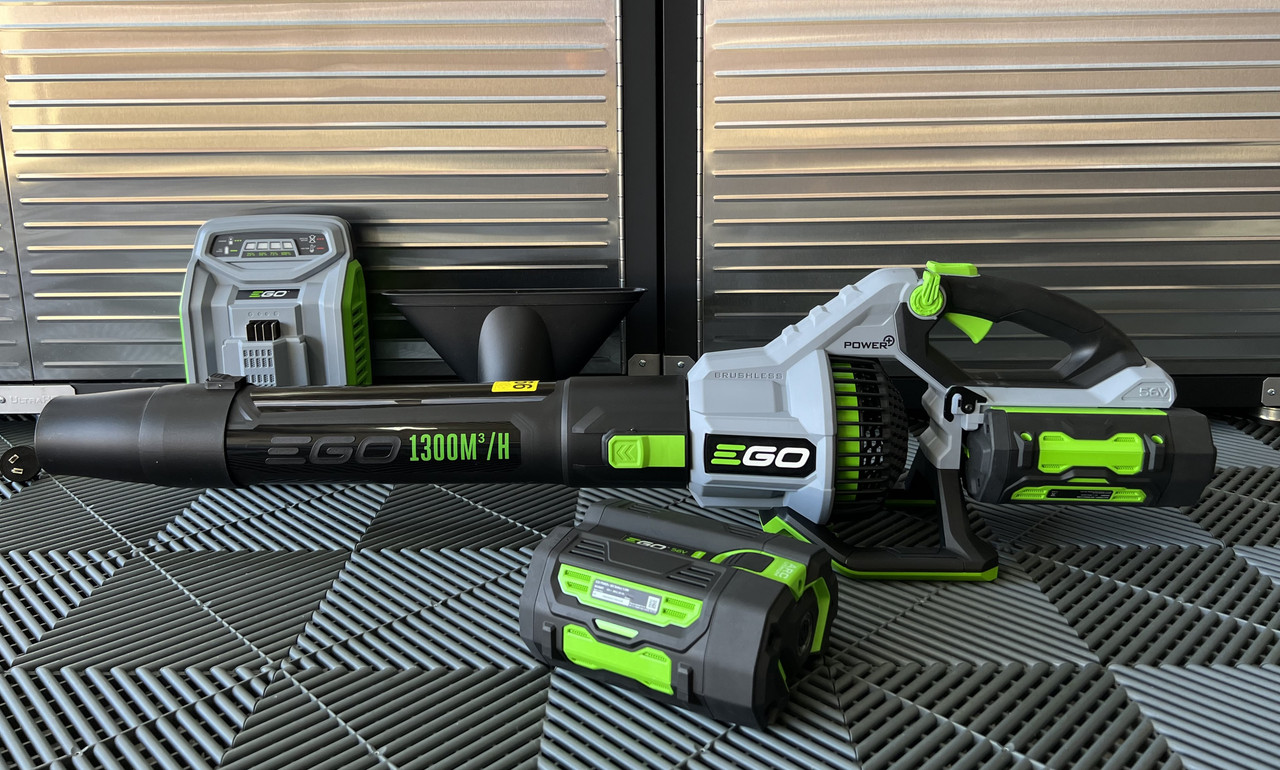
In my case, I resisted the urge to buy an EGO blower, mainly because of how good the Big Boi was. But I eventually relented and bought the then current LB765 in November 2022. This was my first EGO purchase, so I went with the kit, which included two batteries and the Turbo Charger (more on this in the next post).


BATTERIES -
While on batteries, this is where EGO have the advantage over the alternative. The 56-volt EGO battery platform is the best in this space, the robustness is why the tools produce more power and run for longer. The smaller and lighter 2.5 ah unit helps reduce the operating weight and can get around a small to medium sized vehicle on one charge. Even if the larger 4.0 and 5.0 ah batteries add weight, you get much more headroom to work with when dealing with larger vehicles, SUV’s and trucks.
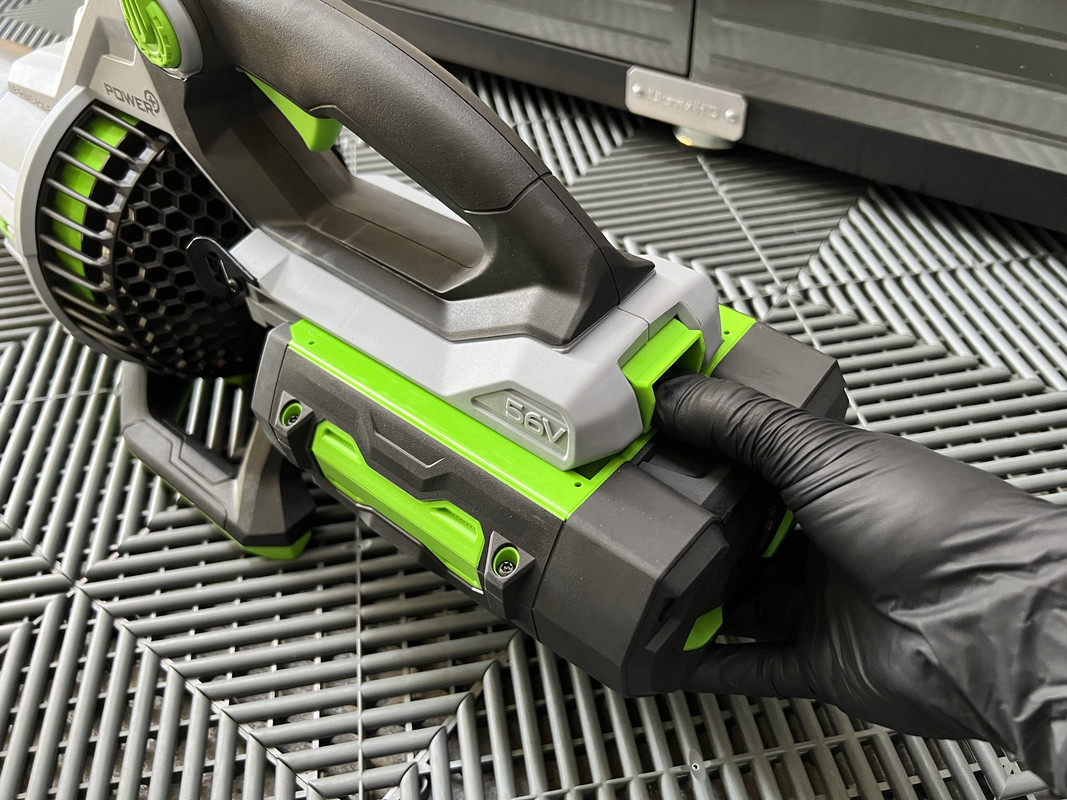
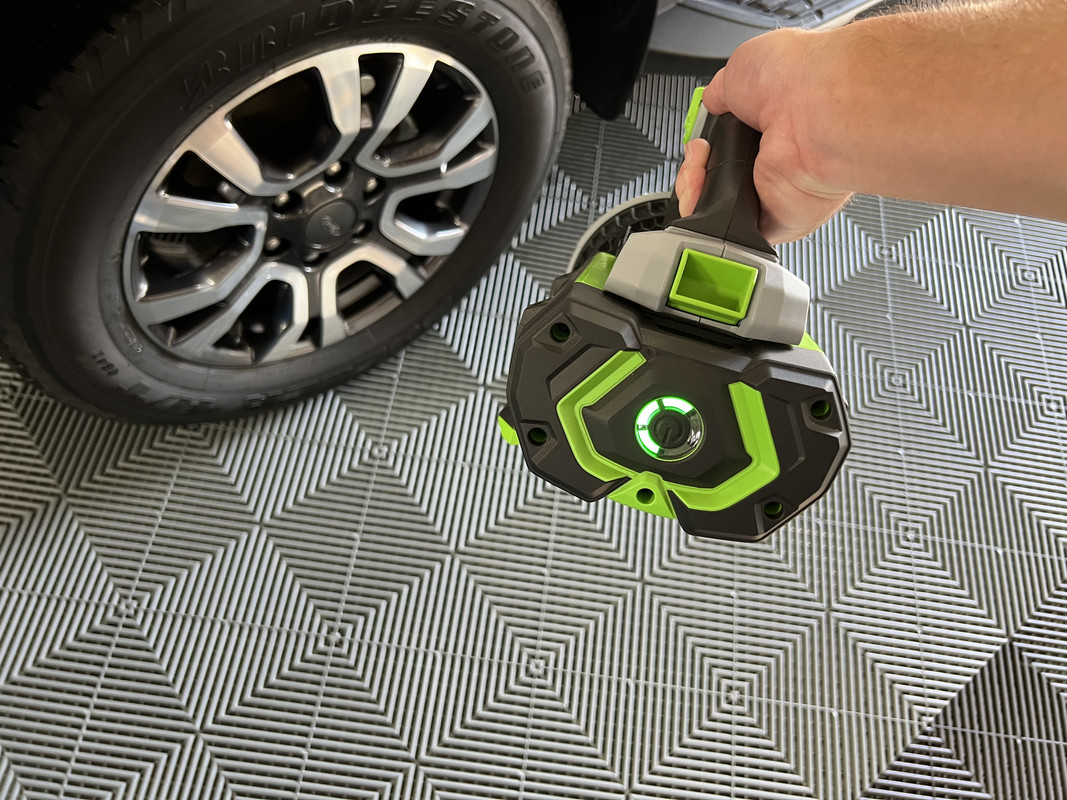
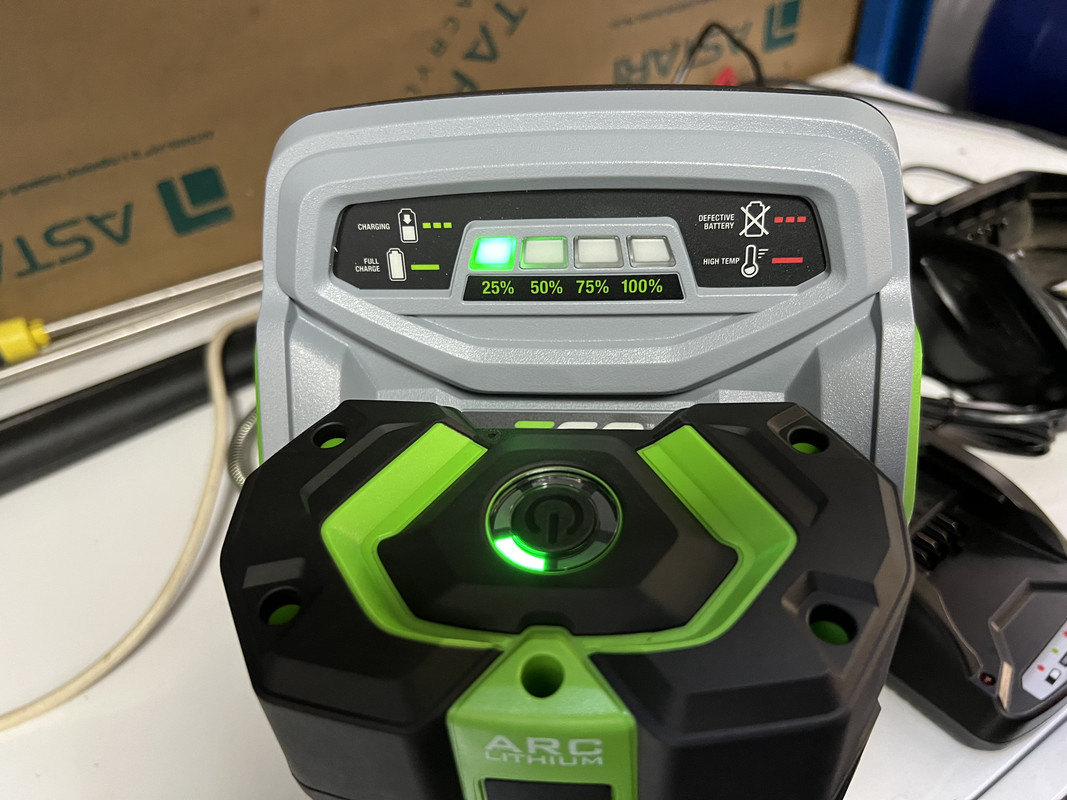
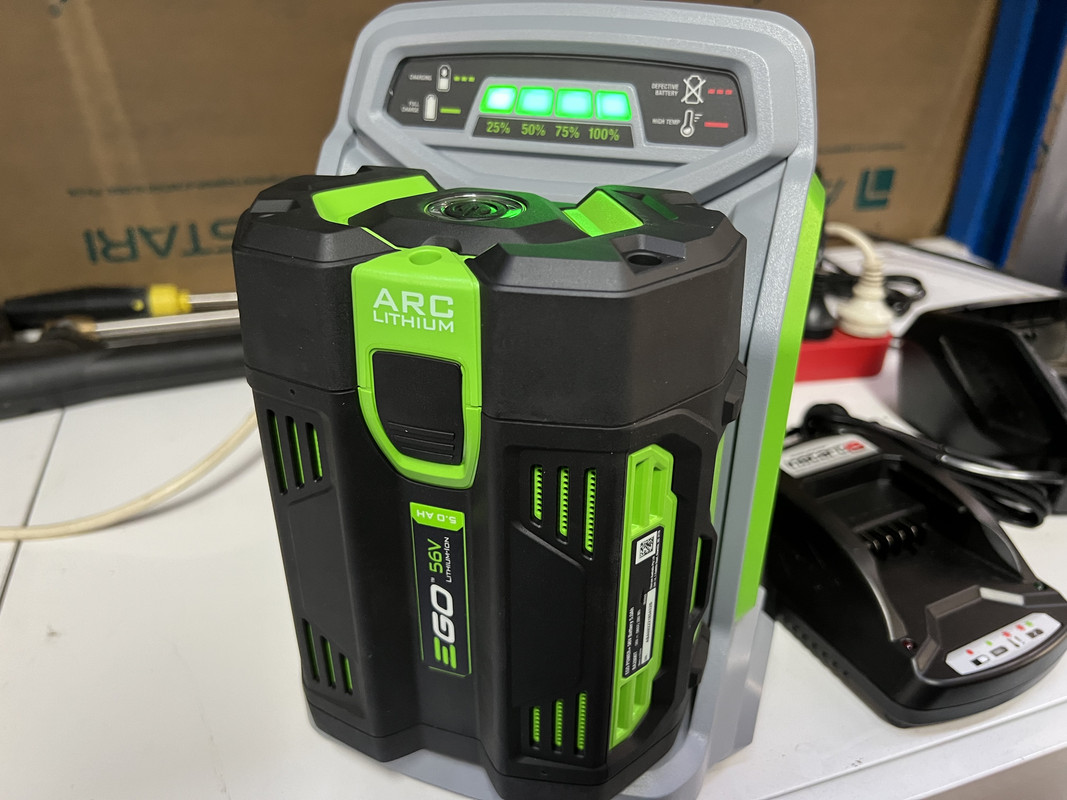
The battery charge indicator is activated by a soft button, which then illuminates with LED's. Green light is displayed while charging or in normal use, while flashing red indicates the end of charge, or if the battery has overheated. EGO offer two main chargers, the entry level Standard Charger and 700w Turbo Charger. There is also a 3-battery dock that charges three batteries simultaneously. Most will go for the Turbo Charger, which includes a cooling fan to control battery temperature...............heat kills batteries like this.
Approximate Charge Times (Turbo Charger) -
2.5 Ah Battery - 30-minutes
5.0 Ah Battery - 30-minutes
7.5 Ah Battery - 45-minutes
10.0 Ah Battery - 60-minutes
I would also say that if you are new to EGO, then I’d prioritize buying a kit with two batteries. As per any battery tool, all the money is tied up in the batteries. Quite often those kits work out to be cheaper than buying an additional battery down the track. The only drawback to that path is if you already have EGO tools, you'll end up with duplicated battery chargers.
The batteries are warranted for 3-years, 5-years on the machine. The charger itself can be stood up like below, or laid down depending on the space you have for it.
ERGONOMICS & NOZZLES -
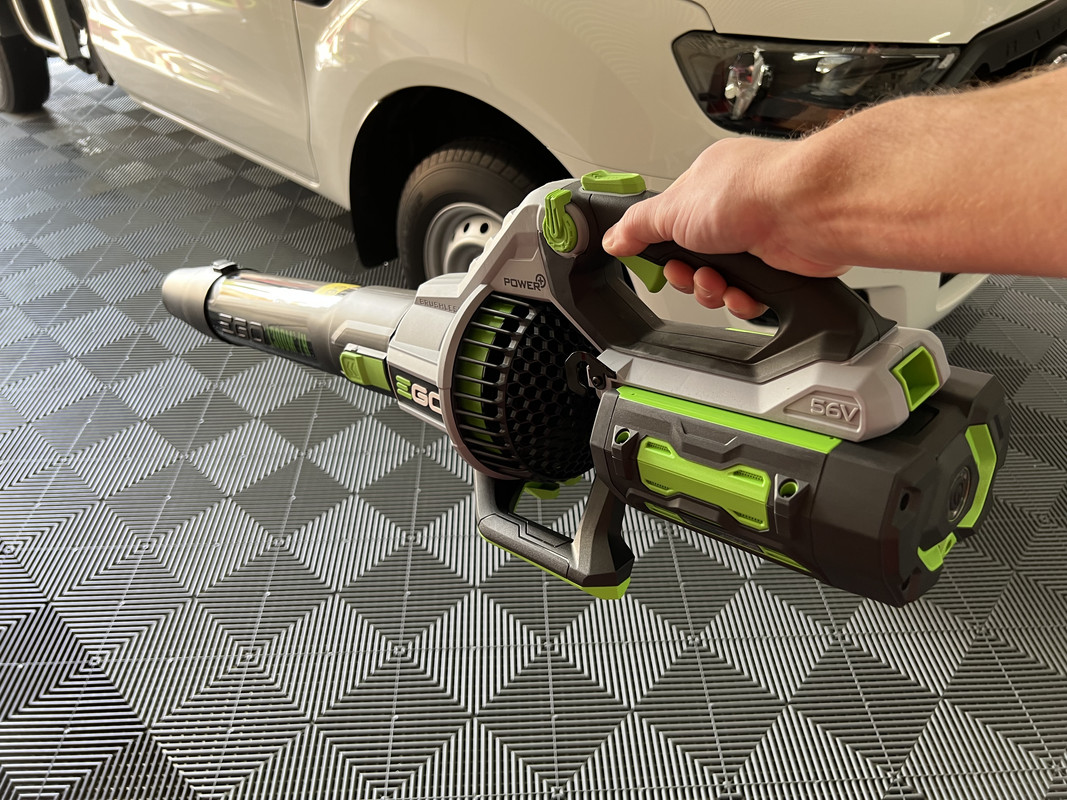
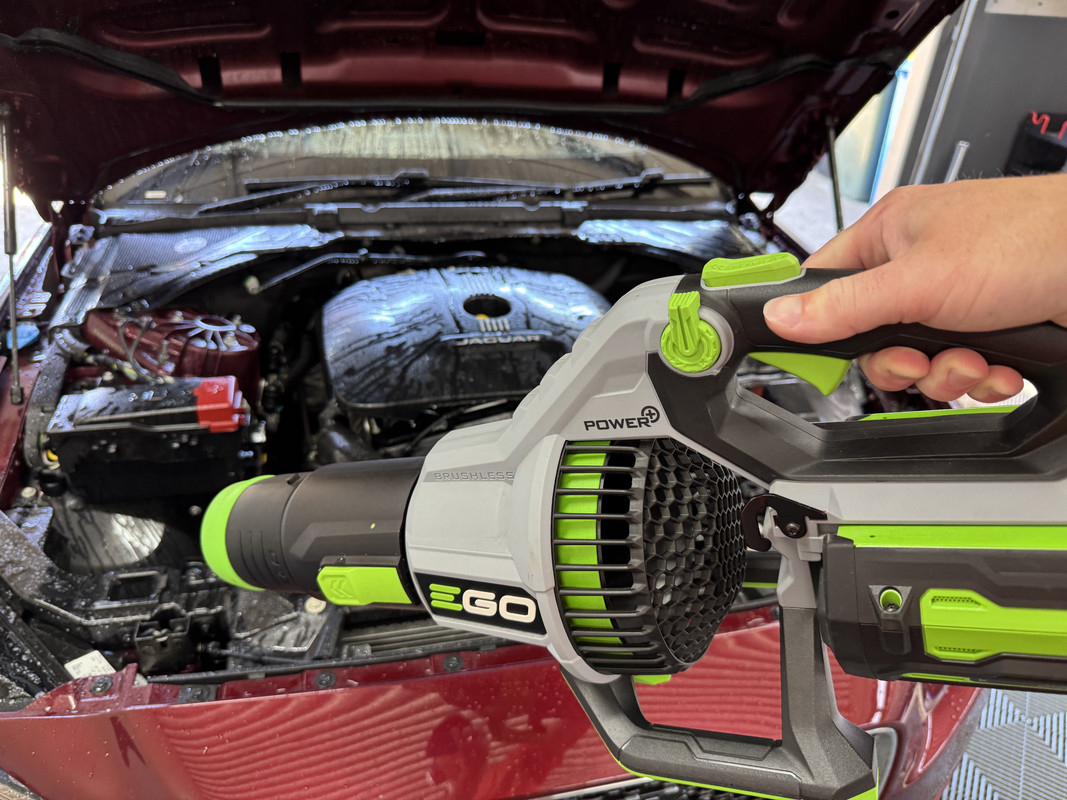
What I love about these EGO blowers is compact size and grab handles on the base of the unit. Those handles help make a massive difference in how you hold the machine at different angles and elevations, it basically gives you a more solid grip and superior ergonomics.
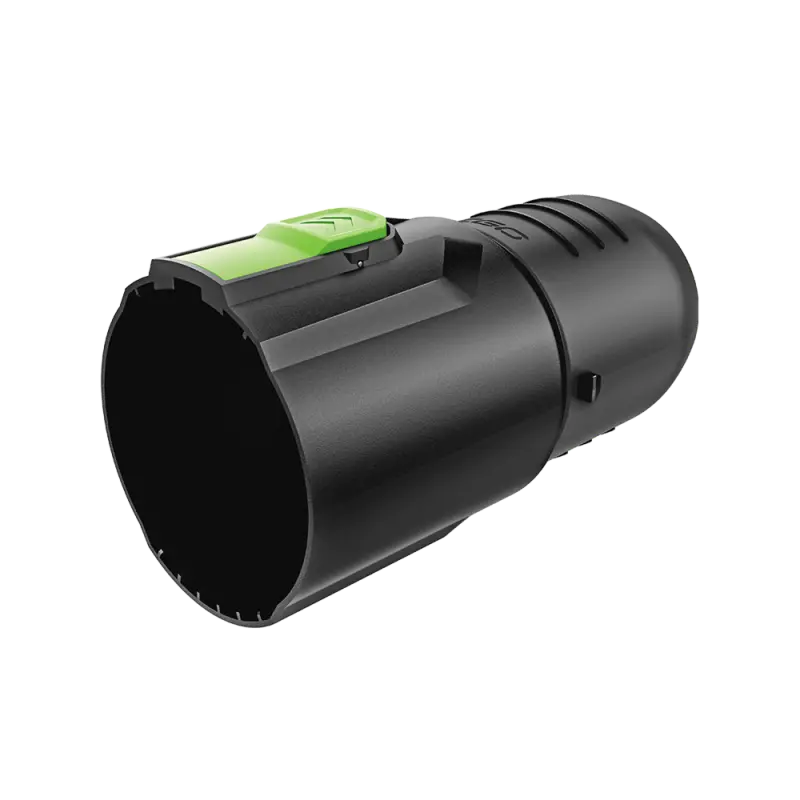
A stubby nozzle to replace the long tube is a must, without one any leaf blower is cumbersome. For a while, the only options were plastic 3D printed nozzles, but EGO have cottoned on and now provide an OEM stubby nozzle. You’d think the 3D printed versions would be cheaper, but that’s not the case. The AST2000 Stubby Nozzle is an injection moulded part with the same quick release tabs common to the other EGO blower attachments. It also has an integrated rubber tip, not an elastic-fitted secondary silicone band. A no brainer.
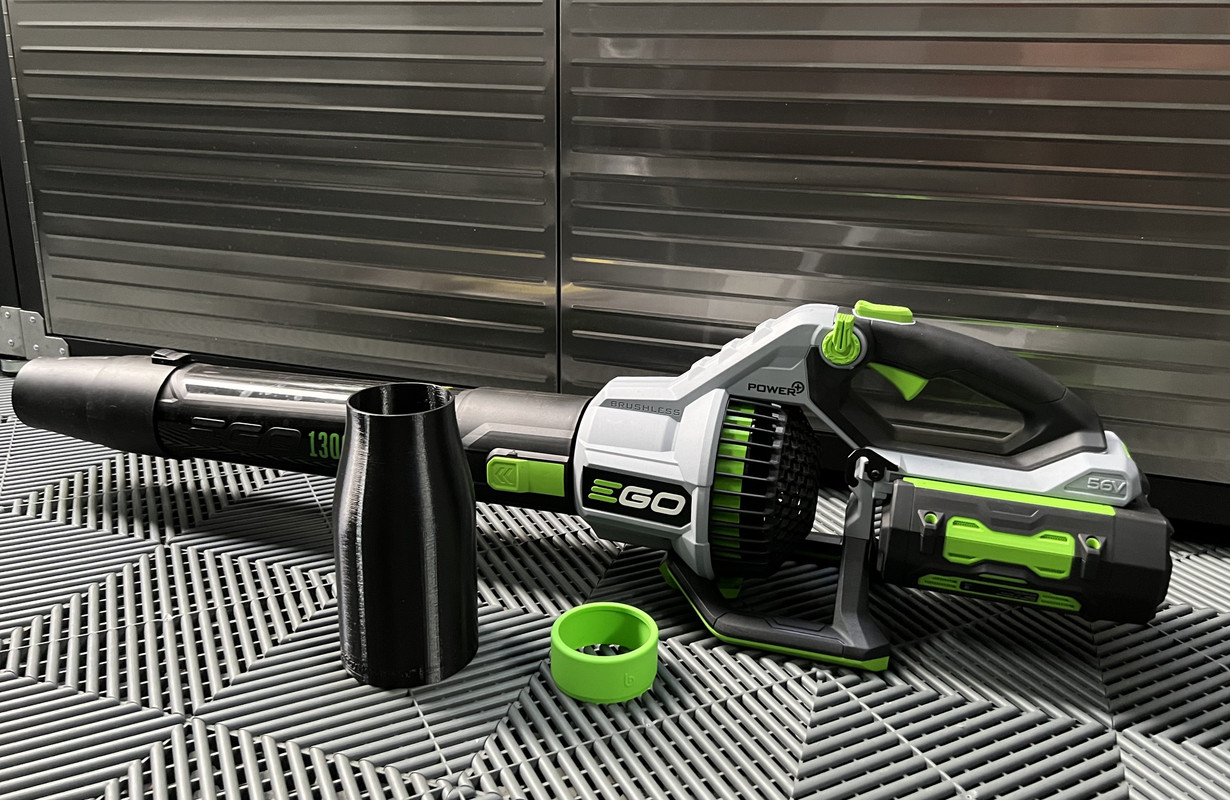
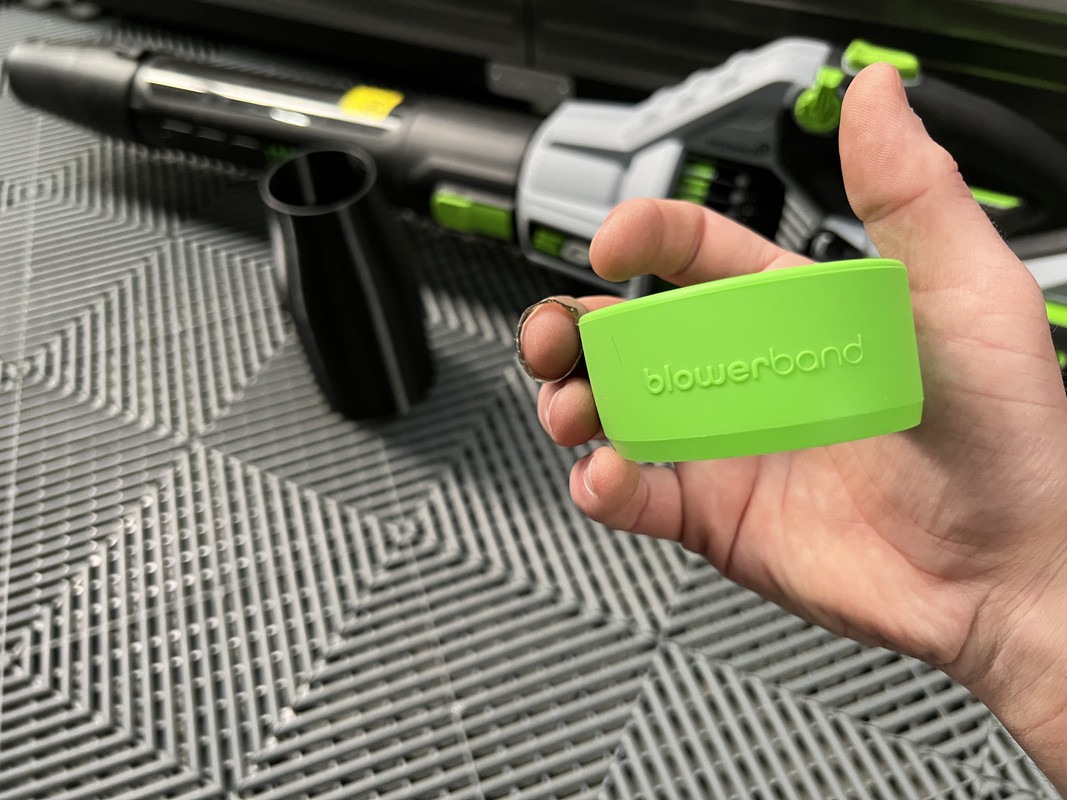
These images are of the Stubby Nozzle Co. 3D printed item. Take note that the 3D printed type lack a release tab, which can be tricky to remove if you want to return to the long tube for yard work. These 3D printed nozzles can be bought for a variety of leaf blower brands. If you go this way, I'd suggest pairing it with a silicone Blower Band.

It's worth noting that you do need a nozzle attached to the blower rather than just removing it entirely, the taper helps with concentration and air speed. Without a nozzle, you are just moving air around.

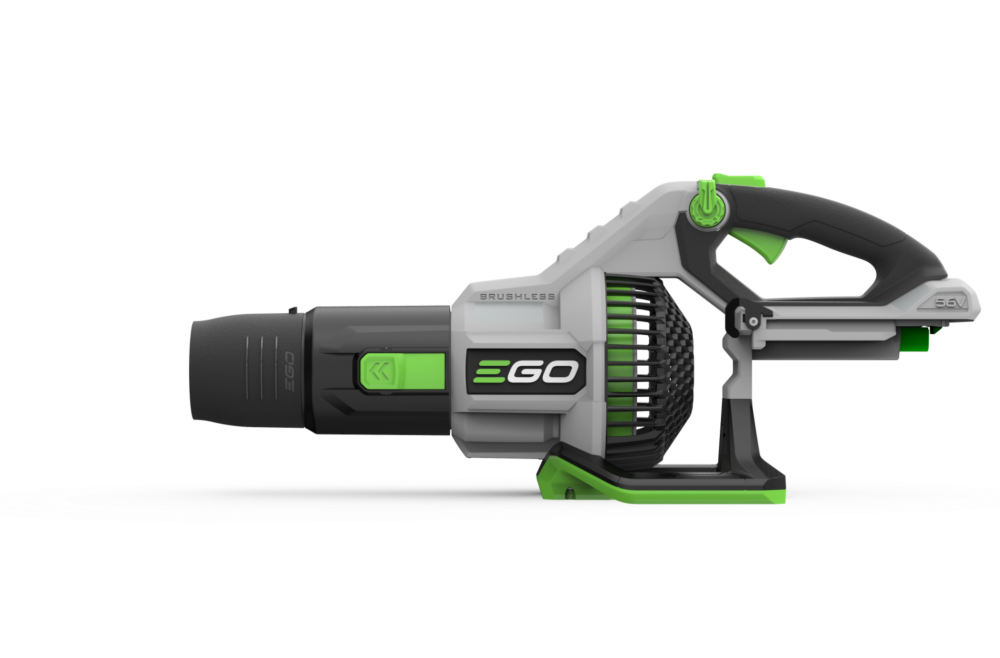
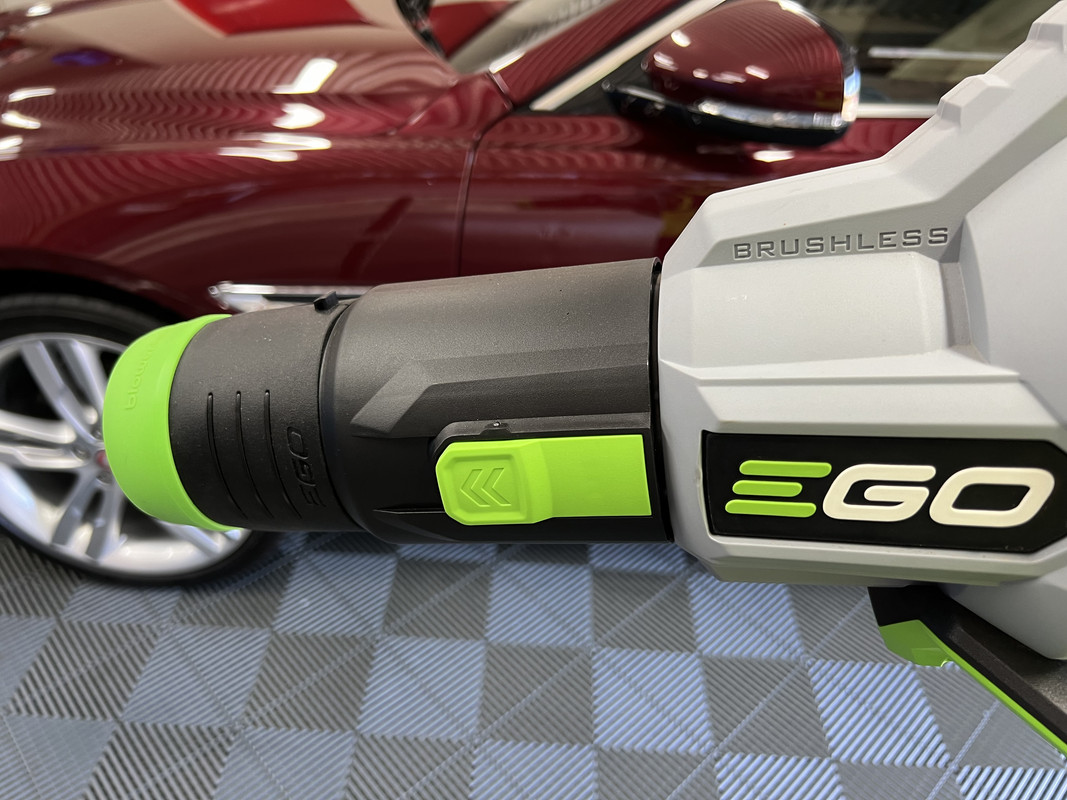
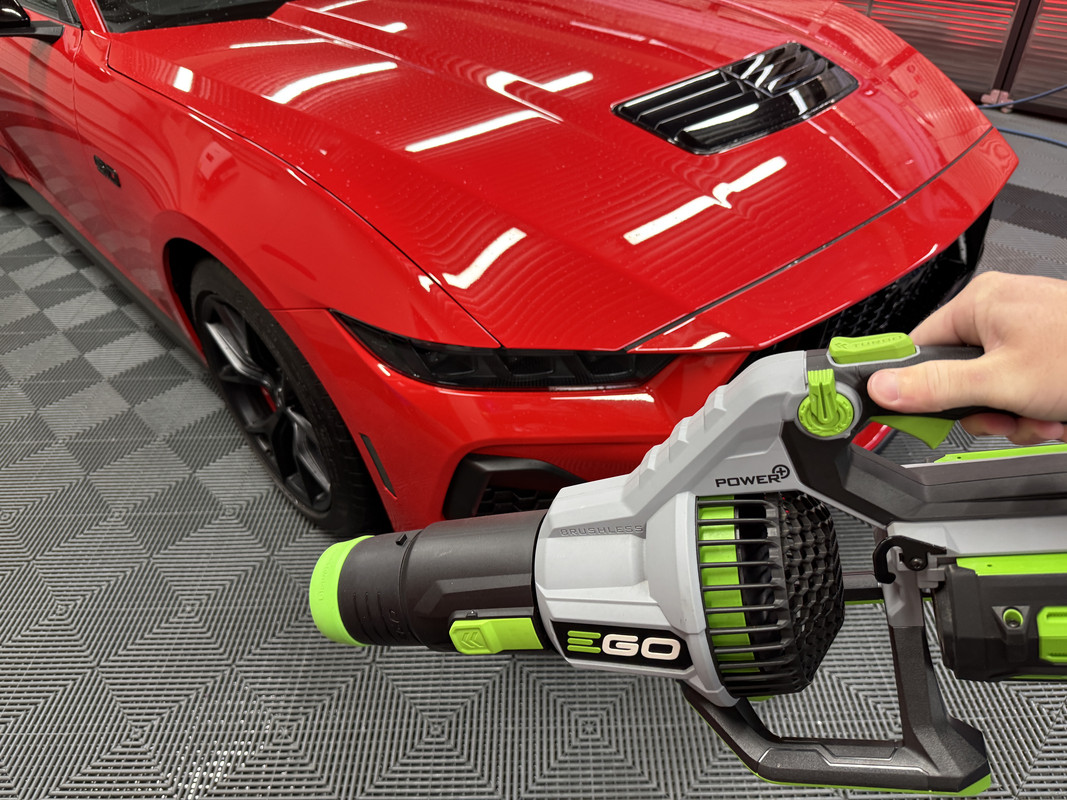
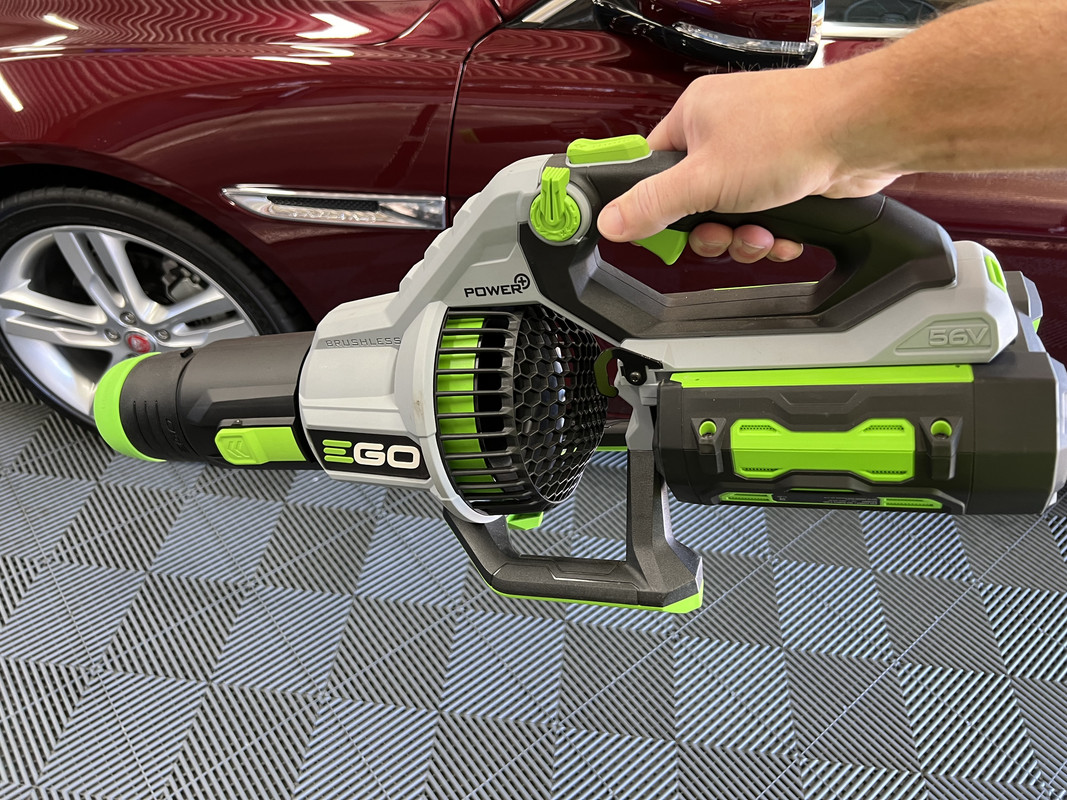
The following images are of the EGO OEM AST2000 Stubby Nozzle. These come with an integrated black rubber tip, I've fitted the green Blower Band to mine for looks. Take note of the quick release tabs, as per the other EGO attachments.

FINAL NOTES -
When using a blower to dry your car, you need to have adequate protection on the surface to provide sufficient hydrophobic properties. If you don't, a blower will be virtually useless. A proper ceramic coating is going to be the asset here, but so long as you have a wax, sealant or spray coating on the car, you will be fine.
Also, try to keep in mind that you won't always get a car 100% dry using a blower. You either do your best to limit any remaining drips and call it good, or finish off with a towel. In my case, I blow the bulk of the water from the vehicle, then circle back with a small drying towel and drying aid. From my perspective, the idea of using a blower is to permit the use of a smaller and more manageable 16x16 towel rather than messing around with those oversized things you see the TRC crew draping over cars. That won't suit everyone, your preferred method may vary to mine, but the result is the same.............................a clean, dry vehicle. So, please see the above as just one piece to a larger puzzle.
Happy Drying!
This is a common question I come across online, “what blower should I buy to help dry my car”. (Take note of the word "help" in that question, which I will explain shortly). Now, the reply to this could go several ways, each having both pros and cons. Which you chose will depend on preference and work environment.
Compressed Air - This is dependent on having an air compressor in your garage. Compressed air is best for grills and badges, but not very efficient for larger surfaces like the hood and roof. I personally don't like this option, mainly because of the hose, but also the noise.
Dedicated Car Dryer (Metrovac, Big Boi, Blo) - Let me be clear, a dedicated car blower from the likes of Metrovac or Big Boi will always do a better job. This comes down to a more output and the concentrated stream of air they produce, which more effectively “drives” the water off the panels and out from behind grills, badges and panel gaps. For context, an EGO leaf blower will deliver up to 200 MPH air speed, while a Big Boi Twin Motor can see 280 MPH. In some cases, the air is heated, which is handy in cold weather. And yes, they also filter the air, but I’ve never really worried about that aspect because if you are working in an environment that requires an air filter, you probably shouldn't be using air to dry a car. However, dedicated blowers are more cumbersome to use owing to the power cord and dragging that long hose around the car. I personally have twin-motor dedicated car blower, but I haven’t used it in years because of the convenience that comes from battery powered leaf blowers.
Construction Blowers - These handheld worksite blowers typically run on a battery from the likes of Milwaukee, Makita, Ryobi ect. I'd probably put this type of blower in the same category as compressed air, as in ideal for door jambs and badges, but not ideal on larger panels or vehicles. The same applies to all of those Amazon/Temu mini blowers that are heavily promoted on social media. I actually started out with one of these (Makita), a workable proposition but not exactly efficient.
Leaf Blower - For me, a battery powered leaf blower represents the ideal middle ground. In that I mean being generally capable but without the hose and power cord (dedicated blower), or the limited use case scenario (compressed air).
WHICH LEAF BLOWER?
I’ve been a horticulturist for 25 years, so I’ve used my fair share of leaf blowers ranging from handheld to backpack, gas powered to battery electric. First of all, lets rule out gas powered units, they are too noisy, smelly, produce carbon monoxide (not ideal when working in a closed shop), require maintenance and a fuel supply, are heavy and potentially contaminate your freshly cleaned car with exhaust residue (just a fact of life with 2-stroke engines). Electric blowers don't solve the power cord matter. And so that leaves us with battery powered leaf blowers..............................
I’ve used several battery powered blowers, including the mid and professional-grade Stihl's, but even when being used for their intended roles (leaves), they mostly all suck (or is that blow?). My main beef is the lack of balance, which amplifies when it comes to holding them at awkward angles like you do when drying a car. Also, a lot of them are very lean for output, which reduces work efficiency and increases battery consumption due to the extended run time. And so, when I say THE BEST leaf blower on the market for car detailing comes from the EGO line, I feel like I have the runs on the board to make that statement.
WHICH EGO TO BUY -
With so many models in the lineup, which EGO blower do you choose? For the record, the numbers on each machine represent the CFM rating.
LBX1000 - This a commercial model that centres around a battery backpack, which transfers power to the unit via a cord. I wouldn't bother with this model, it's far too bulky and the backpack aspect is not what you want or need for detailing.
LB530 - The entry level blower in the range, I would bypass this model. It's waaay too lean, even in turbo mode, and has an extremely annoying throttle lag that really is a deal breaker. I actually bought my father a LB530 for yard work and I’ve found it to be very ordinary.
LB580 - Apparently this model was very good, and I actually tried to buy one, but EGO have discontinued it. If you can find one still in stock, this would be the bare minimum that I’d recommend.
LB615, LB650 & LB670 - From what I have seen and heard, the 600-series seem to have an unpleasant shrill to them. My thought here would buy once cry once, the more powerful models below are marginally more expensive but deliver a superior tool.
And so, that leaves two models, the LB765 that's been out for a few years, and the latest and greatest LB880....................................
LB765 - For quite a while there, the LB765 was THE MOST powerful handheld leaf blower on the market, be that battery or gas powered! That power output is most noticeable when comparing my LB765 back-to-back with the LB530.
LB880 - Last year, EGO went one better with the LB880, supplanting the 765’s title. The 880 also has a fancy carbon fibre outlet and a digital screen displaying real time battery charge statis and selected speed.
So, which one? Both blowers are supremely capable, and I’d happily buy and recommend either. However, there are two factors that might sway your decision. Firstly, the LB765 is about $100 cheaper, but it’s certainly not $100 less of a machine. Meanwhile, for the LB880 to achieve that additional peak performance, you need at least the 5.0 ah battery as it will otherwise power-limit to protect the smaller batteries. So, if you are already in the EGO battery system with 2.5 and 4.0 ah batteries, you’d probably stick with the LB765 or buy the larger 5.0 ah batteries. To me, it would be pointless spending the extra on the 880 if you didn't have the battery size to achieve that additional output.
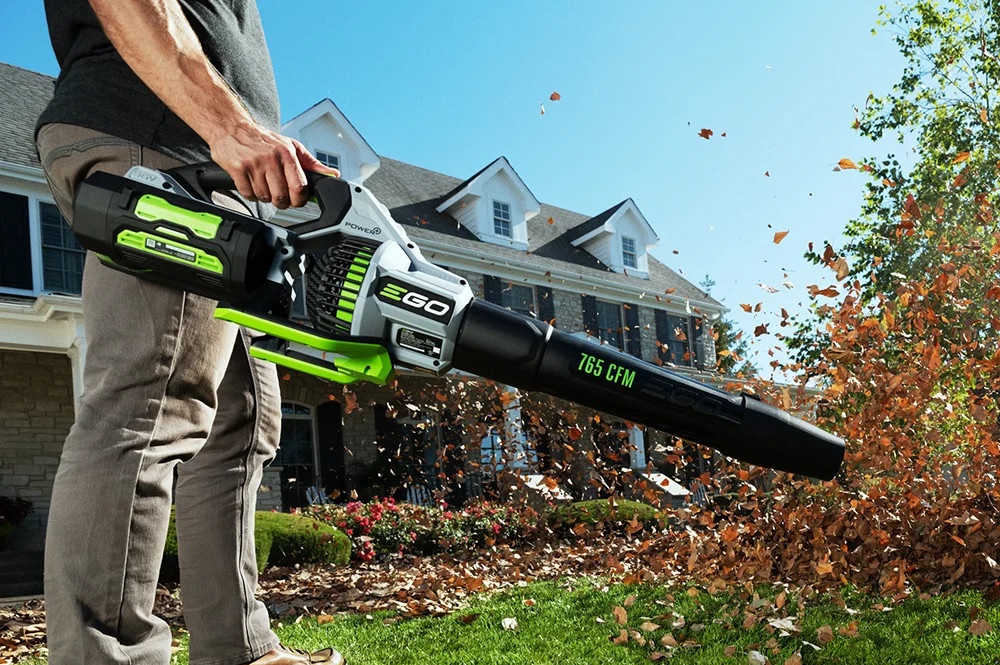
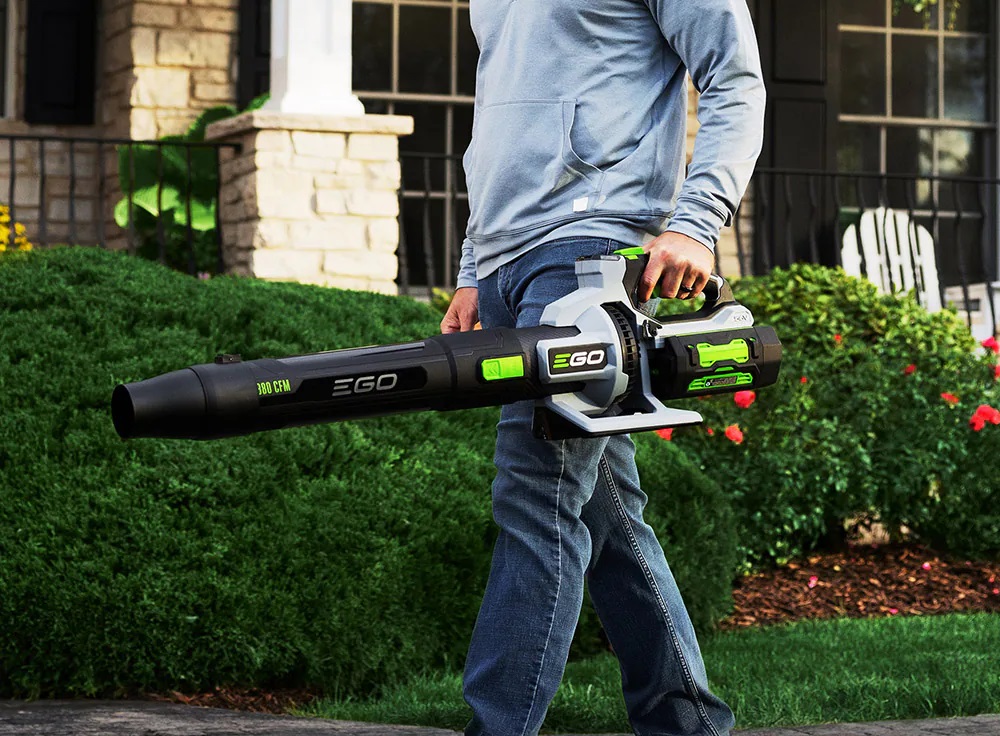
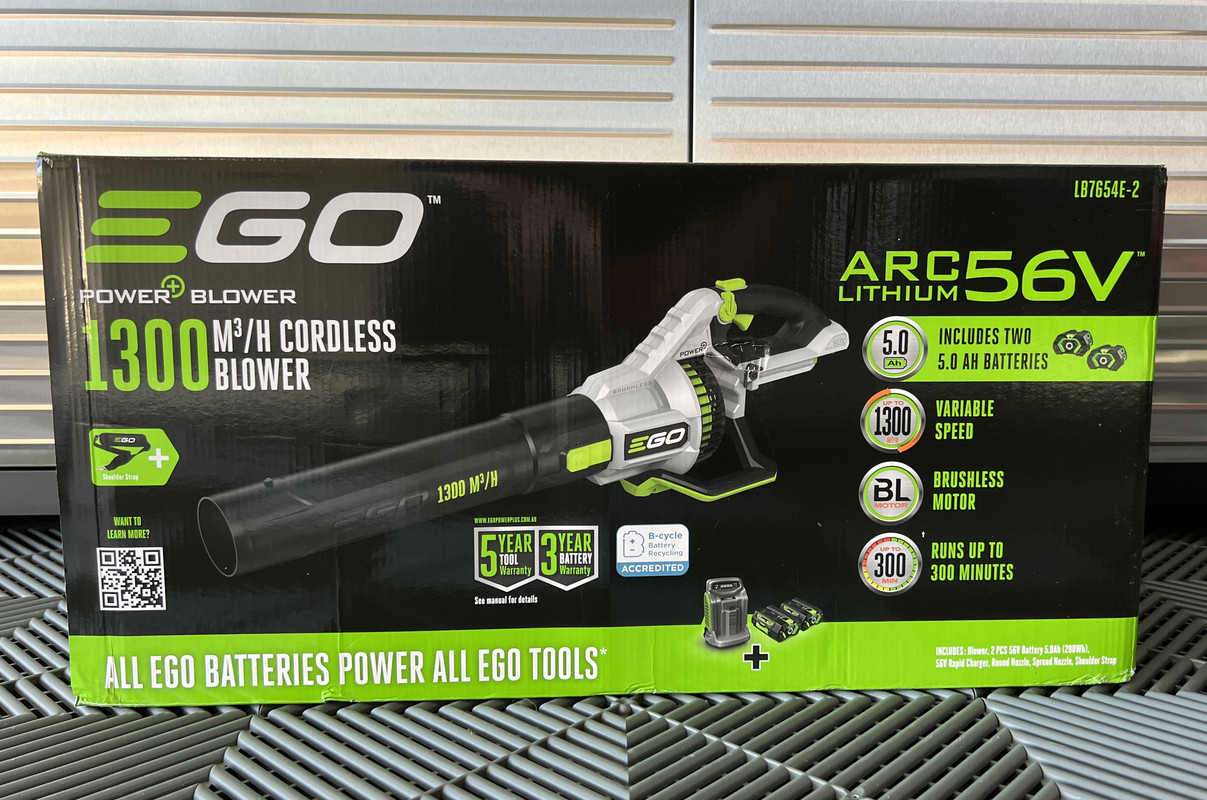
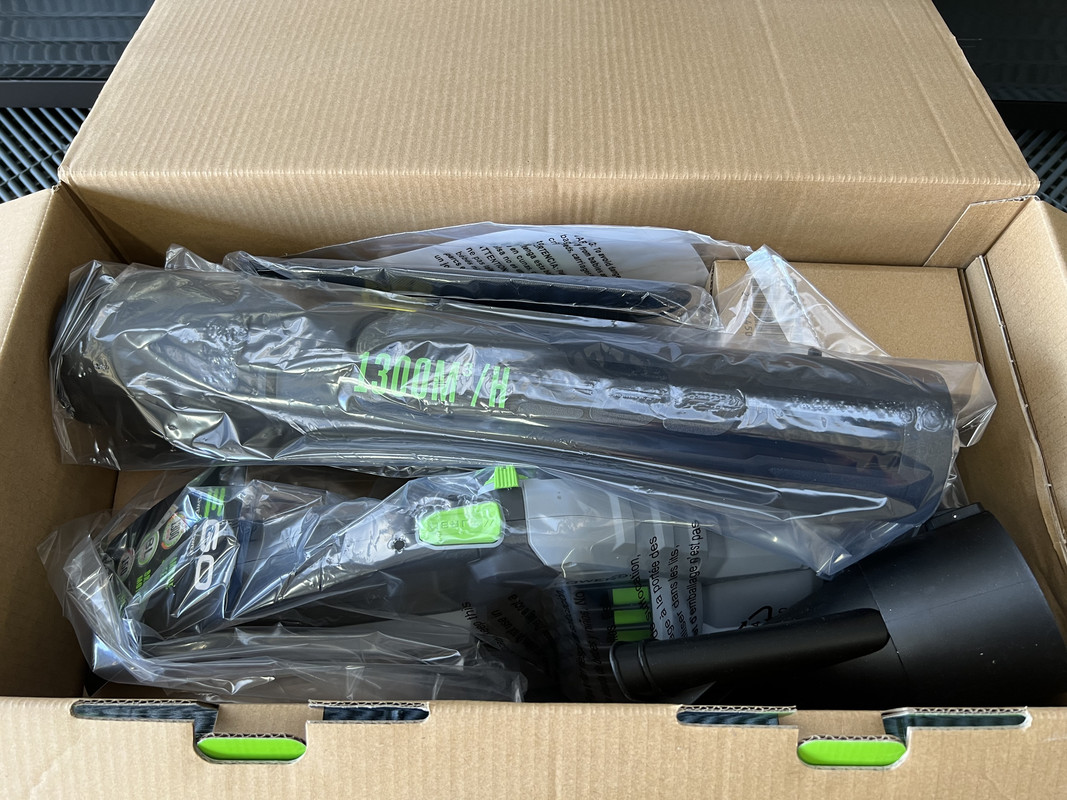
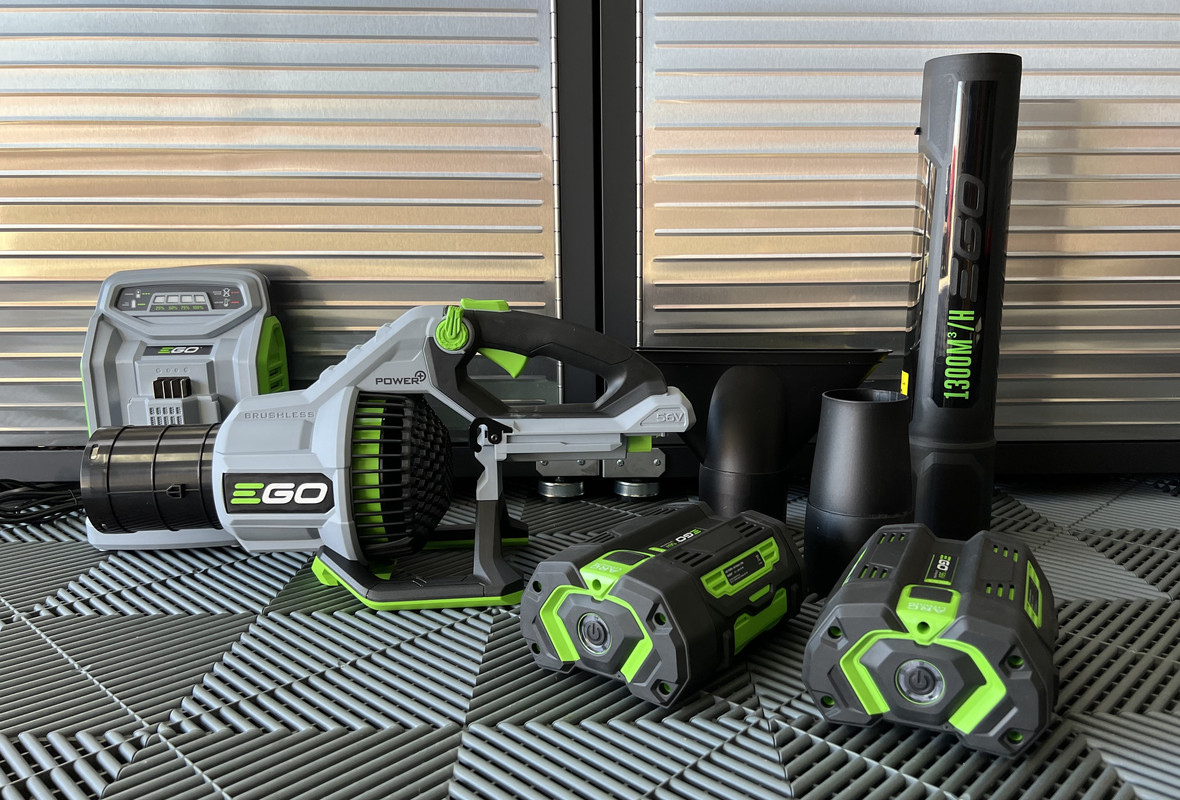
In my case, I resisted the urge to buy an EGO blower, mainly because of how good the Big Boi was. But I eventually relented and bought the then current LB765 in November 2022. This was my first EGO purchase, so I went with the kit, which included two batteries and the Turbo Charger (more on this in the next post).
BATTERIES -
While on batteries, this is where EGO have the advantage over the alternative. The 56-volt EGO battery platform is the best in this space, the robustness is why the tools produce more power and run for longer. The smaller and lighter 2.5 ah unit helps reduce the operating weight and can get around a small to medium sized vehicle on one charge. Even if the larger 4.0 and 5.0 ah batteries add weight, you get much more headroom to work with when dealing with larger vehicles, SUV’s and trucks.
The battery charge indicator is activated by a soft button, which then illuminates with LED's. Green light is displayed while charging or in normal use, while flashing red indicates the end of charge, or if the battery has overheated. EGO offer two main chargers, the entry level Standard Charger and 700w Turbo Charger. There is also a 3-battery dock that charges three batteries simultaneously. Most will go for the Turbo Charger, which includes a cooling fan to control battery temperature...............heat kills batteries like this.
Approximate Charge Times (Turbo Charger) -
2.5 Ah Battery - 30-minutes
5.0 Ah Battery - 30-minutes
7.5 Ah Battery - 45-minutes
10.0 Ah Battery - 60-minutes
I would also say that if you are new to EGO, then I’d prioritize buying a kit with two batteries. As per any battery tool, all the money is tied up in the batteries. Quite often those kits work out to be cheaper than buying an additional battery down the track. The only drawback to that path is if you already have EGO tools, you'll end up with duplicated battery chargers.
The batteries are warranted for 3-years, 5-years on the machine. The charger itself can be stood up like below, or laid down depending on the space you have for it.
ERGONOMICS & NOZZLES -
What I love about these EGO blowers is compact size and grab handles on the base of the unit. Those handles help make a massive difference in how you hold the machine at different angles and elevations, it basically gives you a more solid grip and superior ergonomics.
A stubby nozzle to replace the long tube is a must, without one any leaf blower is cumbersome. For a while, the only options were plastic 3D printed nozzles, but EGO have cottoned on and now provide an OEM stubby nozzle. You’d think the 3D printed versions would be cheaper, but that’s not the case. The AST2000 Stubby Nozzle is an injection moulded part with the same quick release tabs common to the other EGO blower attachments. It also has an integrated rubber tip, not an elastic-fitted secondary silicone band. A no brainer.
These images are of the Stubby Nozzle Co. 3D printed item. Take note that the 3D printed type lack a release tab, which can be tricky to remove if you want to return to the long tube for yard work. These 3D printed nozzles can be bought for a variety of leaf blower brands. If you go this way, I'd suggest pairing it with a silicone Blower Band.
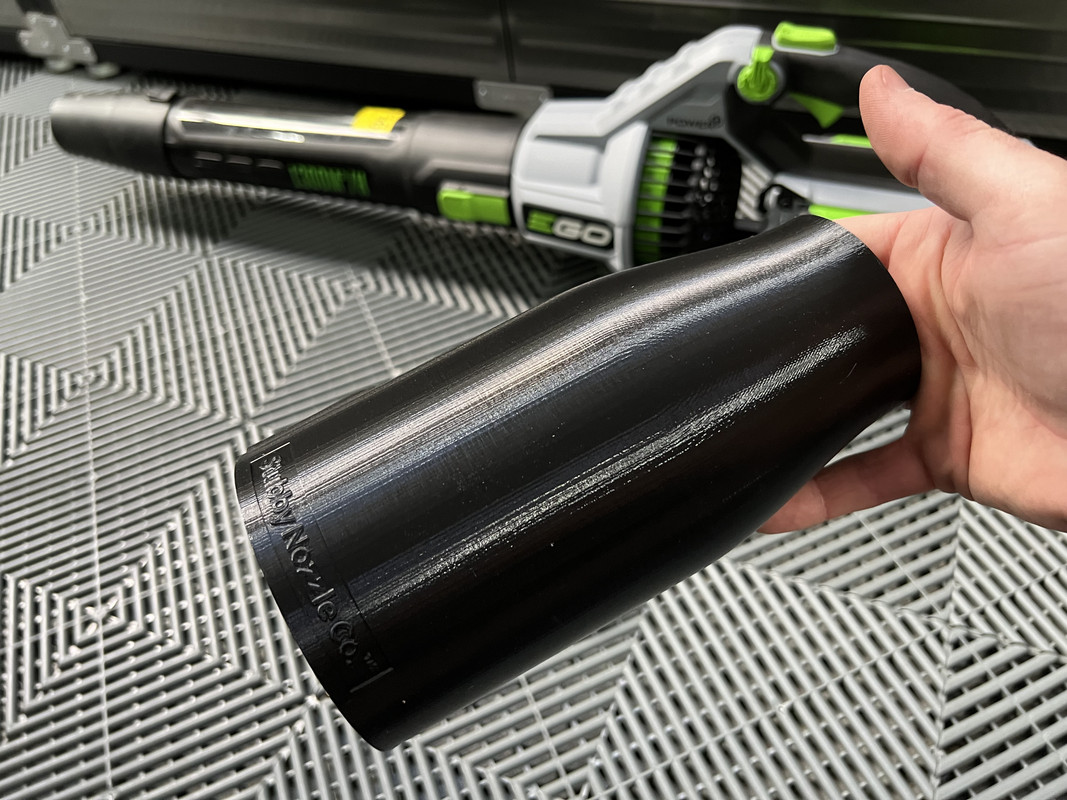
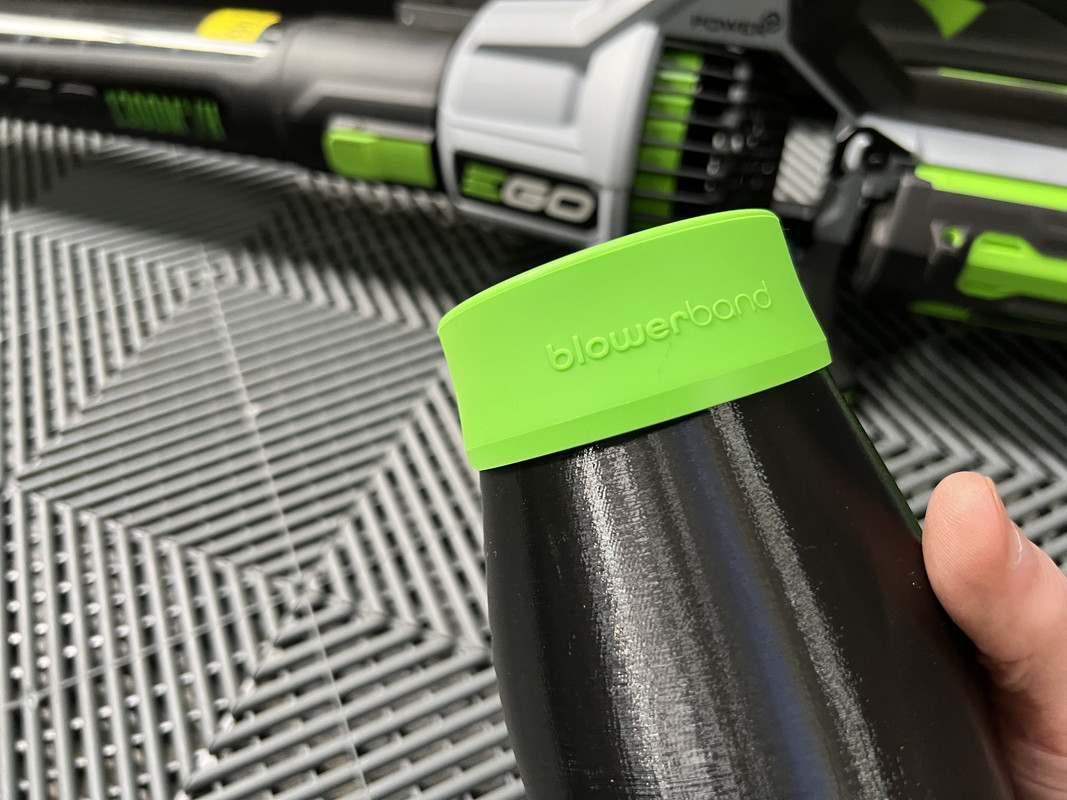
It's worth noting that you do need a nozzle attached to the blower rather than just removing it entirely, the taper helps with concentration and air speed. Without a nozzle, you are just moving air around.
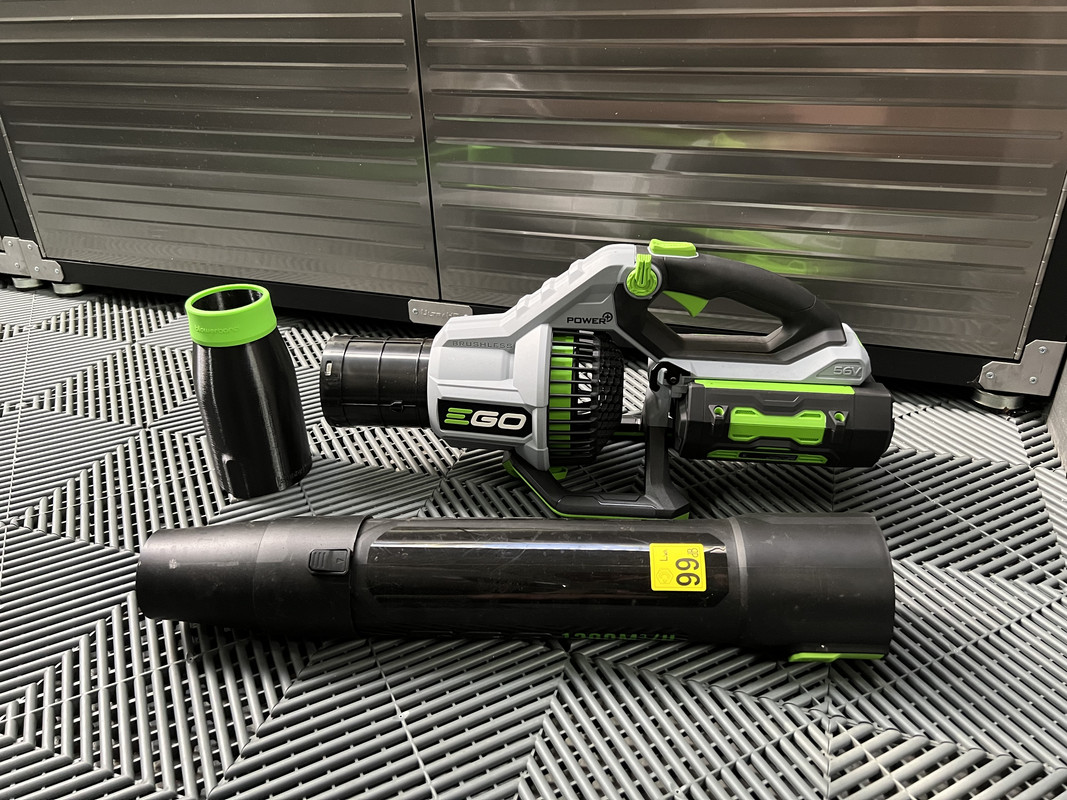
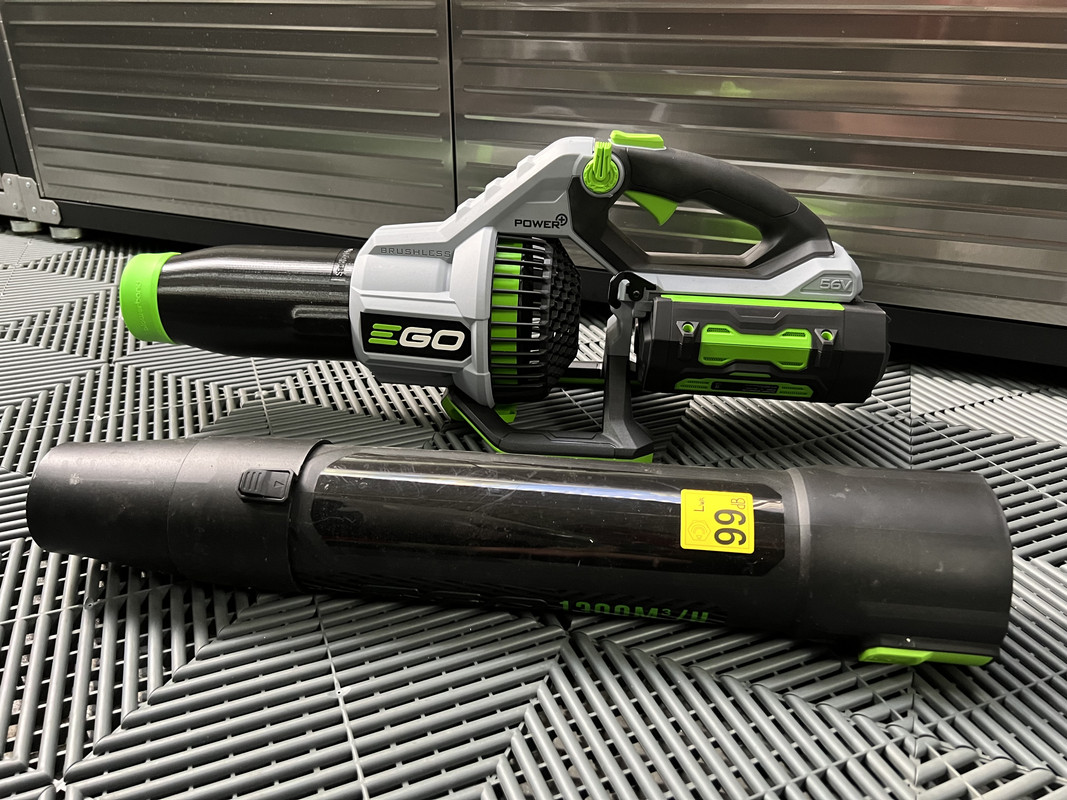
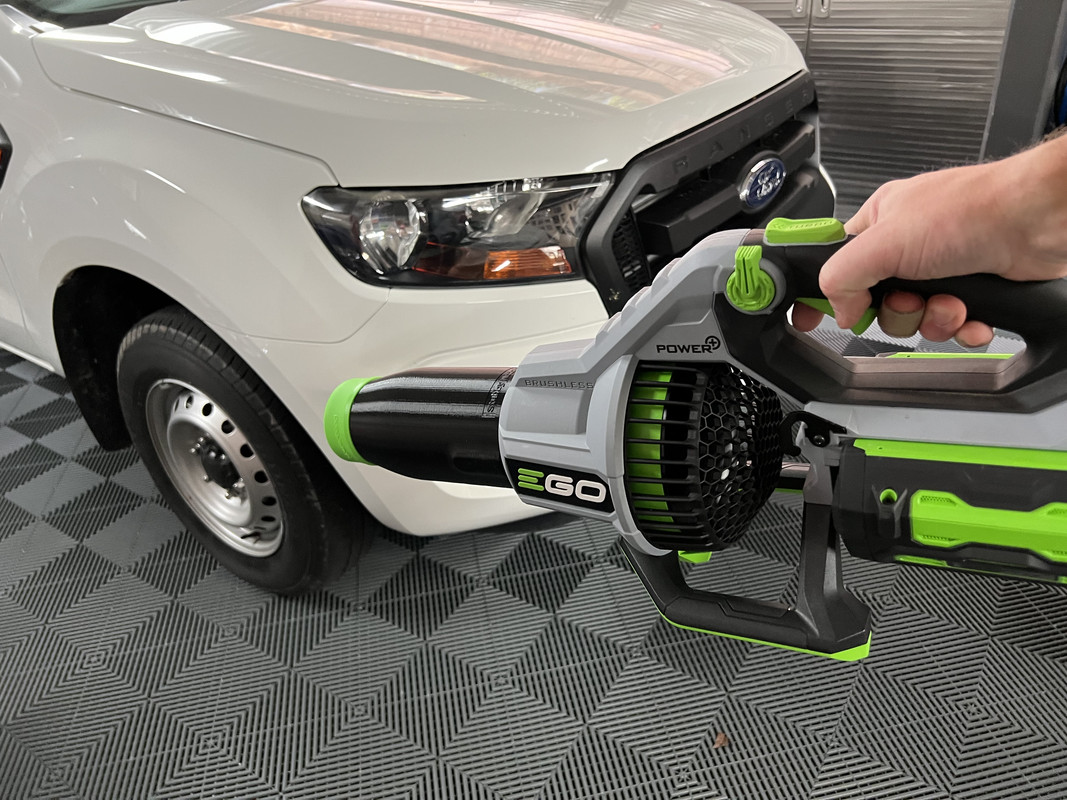
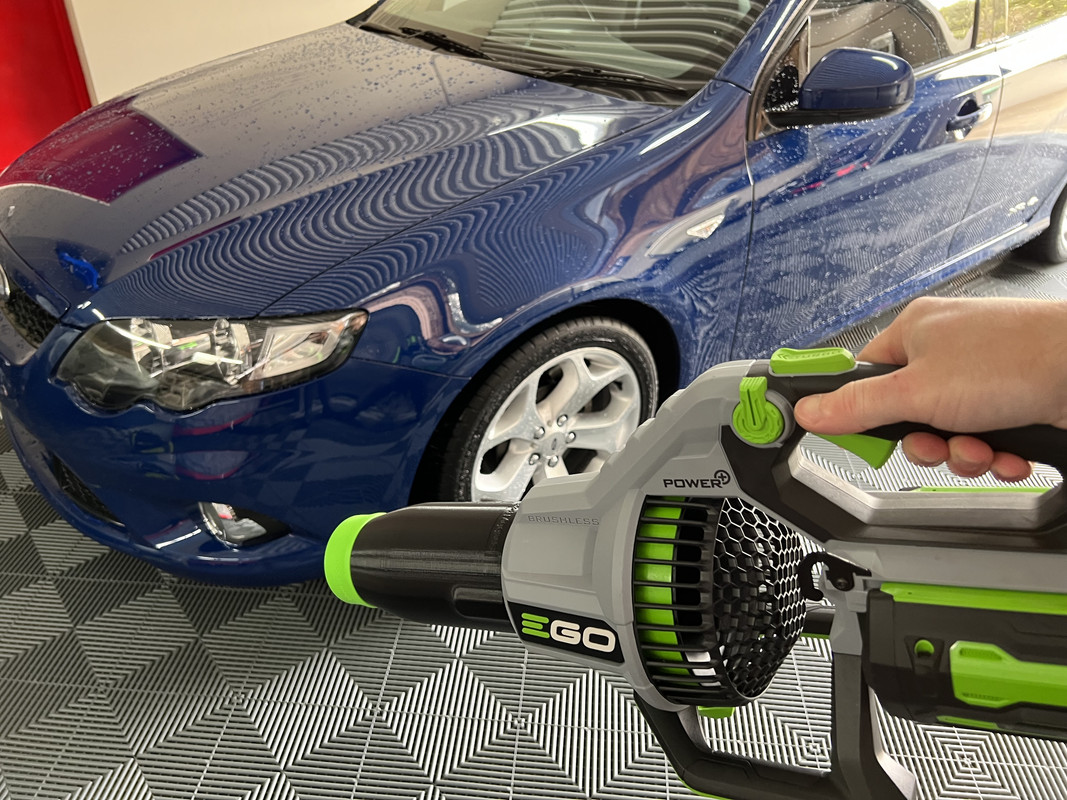
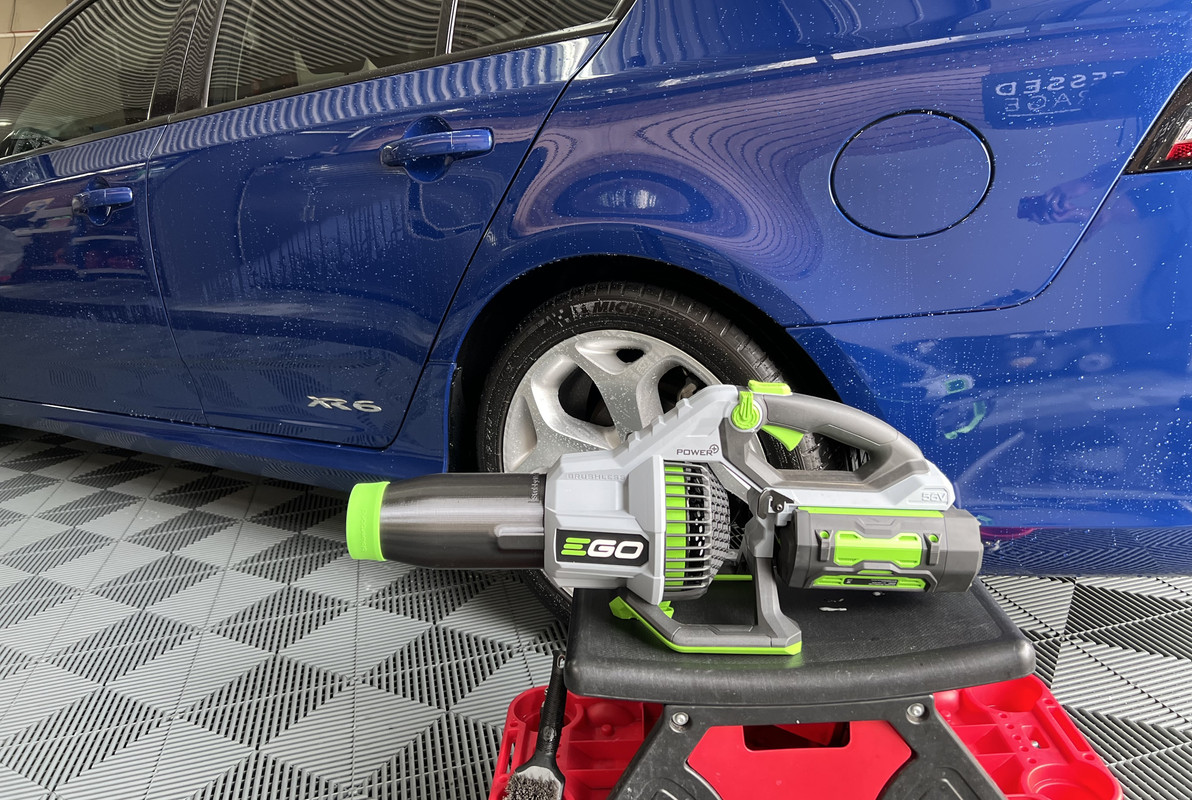
The following images are of the EGO OEM AST2000 Stubby Nozzle. These come with an integrated black rubber tip, I've fitted the green Blower Band to mine for looks. Take note of the quick release tabs, as per the other EGO attachments.
FINAL NOTES -
When using a blower to dry your car, you need to have adequate protection on the surface to provide sufficient hydrophobic properties. If you don't, a blower will be virtually useless. A proper ceramic coating is going to be the asset here, but so long as you have a wax, sealant or spray coating on the car, you will be fine.
Also, try to keep in mind that you won't always get a car 100% dry using a blower. You either do your best to limit any remaining drips and call it good, or finish off with a towel. In my case, I blow the bulk of the water from the vehicle, then circle back with a small drying towel and drying aid. From my perspective, the idea of using a blower is to permit the use of a smaller and more manageable 16x16 towel rather than messing around with those oversized things you see the TRC crew draping over cars. That won't suit everyone, your preferred method may vary to mine, but the result is the same.............................a clean, dry vehicle. So, please see the above as just one piece to a larger puzzle.
Happy Drying!
Sponsored


